
Dizzy Gillespie
John Birks "Dizzy" Gillespie (October 21, 1917 – January 6, 1993) was an American jazz trumpeter, bandleader, composer and occasional singer. Dizzy Gillespie was a trumpet virtuoso and improviser, building on the virtuoso style of Roy Eldridge but adding layers of harmonic complexity previously unknown in jazz. His beret and horn-rimmed spectacles, his scat singing, his bent horn, pouched cheeks and his light-hearted personality were essential in popularizing bebop. In the 1940s Gillespie, together with Charlie Parker, became a major figure in the development of bebop and modern jazz. He taught and influenced many other musicians, including trumpeters Miles Davis, Clifford Brown, Lee Morgan and Arturo Sandoval a.o.. Gillespie was born in Cheraw, South Carolina, USA the youngest of nine children of James and Lottie Gillespie. James was a local bandleader, so instruments were made available to Dizzy. He started to play the piano at the age of four (1921). Gillespie's father died when the boy was only ten years old. Gillespie taught himself how to play the trombone as well as the trumpet by the age of twelve. From the night he heard his idol, Roy Eldridge, play on the radio, he dreamed of becoming a jazz musician. He received a music scholarship to the Laurinburg Institute in Laurinburg, North Carolina, which he attended for two years before accompanying his family when they moved to Philadelphia. Gillespie's first professional job was with the Frank Fairfax Orchestra in 1935, after which he joined the respective orchestras of Edgar Hayes and Teddy Hill, essentially replacing Roy Eldridge as first trumpet in 1937. Teddy Hill’s band was where Gillespie made his first recording, "King Porter Stomp". In August 1937 while gigging with Hayes in Washington D.C., Dizzy met a young dancer named Lorraine Willis who worked a Baltimore–Philadelphia–New York circuit which included the Apollo Theatre. Willis was not immediately friendly but Gillespie was attracted anyway. The two finally married on May 9, 1940. They remained married until his death in 1993. Dizzy stayed with Teddy Hill’s band for a year, then left and free-lanced with numerous other bands. In 1939, Gillespie joined Cab Calloway's orchestra, with which he recorded one of his earliest compositions, the instrumental "Pickin' the Cabbage", in 1940. (Originally released on Paradiddle, a 78rpm backed with a co-composition with Cozy Cole, Calloway's drummer at the time, on the Vocalion label, No. 5467). Dizzy was fired by Calloway in late 1941, after a notorious altercation between the two. The incident is recounted by Gillespie, along with fellow Calloway band members Milt Hinton and Jonah Jones, in Jean Bach's 1997 film, The Spitball Story. Calloway did not approve of Gillespie's mischievous humor, nor of his adventuresome approach to soloing; according to Jones, Calloway referred to it as “Chinese music”. During one performance, Calloway saw a spitball land on the stage, and accused Gillespie of having thrown it. Dizzy denied it, and the ensuing argument led to Calloway striking Gillespie, who then pulled out a switchblade knife and charged Calloway. The two were separated by other band members, during which scuffle Calloway was cut on the hand. During his time in Calloway's band, Gillespie started writing big band music for bandleaders like Woody Herman and Jimmy Dorsey. He then freelanced with a few bands – most notably Ella Fitzgerald's orchestra, composed of members of the late Chick Webb's band, in 1942. In 1943, Gillespie joined the Earl Hines band. Composer Gunther Schuller said: ... In 1943 I heard the great Earl Hines band which had Bird in it and all those other great musicians. They were playing all the flatted fifth chords and all the modern harmonies and substitutions and Gillespie runs in the trumpet section work. Two years later I read that that was 'bop' and the beginning of modern jazz ... but the band never made recordings. Gillespie said of the Hines band, "People talk about the Hines band being 'the incubator of bop' and the leading exponents of that music ended up in the Hines band. But people also have the erroneous impression that the music was new. It was not. The music evolved from what went before. It was the same basic music. The difference was in how you got from here to here to here ... naturally each age has got its own shit". Next, Gillespie joined Billy Eckstine's (Earl Hines' long-time collaborator) big band and it was as a member of Eckstine's band that he was reunited with Charlie Parker, a fellow member of Hines's band. In 1945, Gillespie left Eckstine's band because he wanted to play with a small combo. A "small combo" typically comprised no more than five musicians, playing the trumpet, saxophone, piano, bass and drums. The rise of bebop Bebop was known as the first modern jazz style. However, it was unpopular in the beginning and was not viewed as positively as swing music was. Bebop was seen as an outgrowth of swing, not a revolution. Swing introduced a diversity of new musicians in the bebop era like Charlie Parker, Thelonious Monk, Bud Powell, Kenny Clarke, Oscar Pettiford, and Gillespie. Through these musicians, a new vocabulary of musical phrases was created. With Charlie Parker, Gillespie jammed at famous jazz clubs like Minton's Playhouse and Monroe's Uptown House. Charlie Parker's system also held methods of adding chords to existing chord progressions and implying additional chords within the improvised lines. Gillespie compositions like "Groovin' High", "Woody n' You" and "Salt Peanuts" sounded radically different, harmonically and rhythmically, from the swing music popular at the time. "A Night in Tunisia", written in 1942, while Gillespie was playing with Earl Hines' band, is noted for having a feature that is common in today's music, a non-walking bass line. The song also displays Afro-Cuban rhythms. One of their first small-group performances together was only issued in 2005: a concert in New York's Town Hall on June 22, 1945. Gillespie taught many of the young musicians on 52nd Street, including Miles Davis and Max Roach, about the new style of jazz. After a lengthy gig at Billy Berg's club in Los Angeles, which left most of the audience ambivalent or hostile towards the new music, the band broke up. Unlike Parker, who was content to play in small groups and be an occasional featured soloist in big bands, Gillespie aimed to lead a big band himself; his first, unsuccessful, attempt to do this was in 1945. After his work with Parker, Gillespie led other small combos (including ones with Milt Jackson, John Coltrane, Lalo Schifrin, Ray Brown, Kenny Clarke, James Moody, J.J. Johnson, and Yusef Lateef) and finally put together his first successful big band. Gillespie and his band tried to popularize bop and make Gillespie a symbol of the new music. He also appeared frequently as a soloist with Norman Granz's Jazz at the Philharmonic. He also headlined the 1946 independently-produced musical revue film Jivin' in Be-Bop. In 1948 Gillespie was involved in a traffic accident when the bicycle he was riding was bumped by an automobile. He was slightly injured, and found that he could no longer hit the B-flat above high C. He won the case, but the jury awarded him only $1000, in view of his high earnings up to that point. In 1956 he organized a band to go on a State Department tour of the Middle East which was extremely well received internationally and earned him the nickname "the Ambassador of Jazz". During this time, he also continued to lead a big band that performed throughout the United States and featured musicians including Pee Wee Moore and others. This band recorded a live album at the 1957 Newport jazz festival that featured Mary Lou Williams as a guest artist on piano. Afro-Cuban music In the late 1940s, Gillespie was also involved in the movement called Afro-Cuban music, bringing Afro-Latin American music and elements to greater prominence in jazz and even pop music, particularly salsa. Afro-Cuban jazz is based on traditional Afro-Cuban rhythms. Gillespie was introduced to Chano Pozo in 1947 by Mario Bauza, a Latin jazz trumpet player. Chano Pozo became Gillespie's conga drummer for his band. Gillespie also worked with Mario Bauza in New York jazz clubs on 52nd Street and several famous dance clubs such as Palladium and the Apollo Theater in Harlem. They played together in the Chick Webb band and Cab Calloway's band, where Gillespie and Bauza became lifelong friends. Gillespie helped develop and mature the Afro-Cuban jazz style. Afro-Cuban jazz was considered bebop-oriented, and some musicians classified it as a modern style. Afro-Cuban jazz was successful because it never decreased in popularity and it always attracted people to dance to its unique rhythms. Gillespie's most famous contributions to Afro-Cuban music are the compositions "Manteca" and "Tin Tin Deo" (both co-written with Chano Pozo); he was responsible for commissioning George Russell's "Cubano Be, Cubano Bop", which featured the great but ill-fated Cuban conga player, Chano Pozo. In 1977, Gillespie discovered Arturo Sandoval while researching music during a tour of Cuba. Later years His biographer Alyn Shipton quotes Don Waterhouse approvingly that Gillespie in the fifties "had begun to mellow into an amalgam of his entire jazz experience to form the basis of new classicism". Another opinion is that, unlike his contemporary Miles Davis, Gillespie essentially remained true to the bebop style for the rest of his career. In 1960, he was inducted into the Down Beat magazine's Jazz Hall of Fame. During the 1964 United States presidential campaign the artist, with tongue in cheek, put himself forward as an independent write-in candidate. He promised that if he were elected, the White House would be renamed "The Blues House," and a cabinet composed of Duke Ellington (Secretary of State), Miles Davis (Director of the CIA), Max Roach (Secretary of Defense), Charles Mingus (Secretary of Peace), Ray Charles (Librarian of Congress), Louis Armstrong (Secretary of Agriculture), Mary Lou Williams (Ambassador to the Vatican), Thelonious Monk (Travelling Ambassador) and Malcolm X (Attorney General). He said his running mate would be Phyllis Diller. Campaign buttons had been manufactured years ago by Gillespie's booking agency "for publicity, as a gag", but now proceeds from them went to benefit the Congress of Racial Equality, Southern Christian Leadership Conference and Martin Luther King, Jr.; in later years they became a collector's item. In 1971 Gillespie announced he would run again but withdrew before the election for reasons connected to the Bahá'í Faith. Gillespie published his autobiography, To Be or Not to Bop, in 1979. Gillespie was a vocal fixture in many of John Hubley and Faith Hubley's animated films, such as The Hole, The Hat, and Voyage to Next. In the 1980s, Gillespie led the United Nation Orchestra. For three years Flora Purim toured with the Orchestra and she credits Gillespie with evolving her understanding of jazz after being in the field for over two decades. David Sánchez also toured with the group and was also greatly influenced by Gillespie. Both artists later were nominated for Grammy awards. Gillespie also had a guest appearance on The Cosby Show as well as Sesame Street and The Muppet Show. In 1982, Gillespie had a cameo appearance on Stevie Wonder's hit "Do I Do". Gillespie's tone gradually faded in the last years in life, and his performances often focused more on his proteges such as Arturo Sandoval and Jon Faddis; his good-humoured comedic routines became more and more a part of his live act. In 1988, Gillespie had worked with Canadian flautist and saxophonist Moe Koffman on their prestigious album Oo Pop a Da. He did fast scat vocals on the title track and a couple of the other tracks were played only on trumpet. In 1989 Gillespie gave 300 performances in 27 countries, appeared in 100 U.S. cities in 31 states and the District of Columbia, headlined three television specials, performed with two symphonies, and recorded four albums. He was also crowned a traditional chief in Nigeria, received the Ordre des Arts et des Lettres; France's most prestigious cultural award. He was named Regent Professor by the University of California, and received his fourteenth honorary doctoral degree, this one from the Berklee College of Music. In addition, he was awarded the Grammy Lifetime Achievement Award the same year. The next year, at the Kennedy Center for the Performing Arts ceremonies celebrating the centennial of American jazz, Gillespie received the Kennedy Center Honors Award and the American Society of Composers, Authors, and Publishers Duke Ellington Award for 50 years of achievement as a composer, performer, and bandleader. In 1993 he received the Polar Music Prize in Sweden. November 26, 1992 at Carnegie Hall in New York, following the Second Bahá'í World Congress was Gillespie's 75th birthday concert and his offering to the celebration of the centenary of the passing of Bahá'u'lláh. Gillespie was to appear at Carnegie Hall for the 33rd time. The line-up included: Jon Faddis, Marvin "Doc" Holladay, James Moody, Paquito D'Rivera, and the Mike Longo Trio with Ben Brown on bass and Mickey Roker on drums. But Gillespie didn't make it because he was in bed suffering from cancer of the pancreas. "But the musicians played their real hearts out for him, no doubt suspecting that he would not play again. Each musician gave tribute to their friend, this great soul and innovator in the world of jazz." Gillespie also starred in a film called The Winter in Lisbon released in 2004. He has a star on the Hollywood Walk of Fame at 7057 Hollywood Boulevard in the Hollywood section of the City of Los Angeles. He is honored by the December 31, 2006 – A Jazz New Year's Eve: Freddy Cole & the Dizzy Gillespie All-Star Big Band at The John F. Kennedy Center for the Performing Arts. A longtime resident of Englewood, New Jersey, he died of pancreatic cancer January 6, 1993, aged 75, and was buried in the Flushing Cemetery, Queens, New York. Mike Longo delivered a eulogy at his funeral. He was also with Gillespie on the night he died, along with Jon Faddis and a select few others. At the time of his death, Gillespie was survived by his widow, Lorraine Willis Gillespie; a daughter, jazz singer Jeanie Bryson; and a grandson, Radji Birks Bryson-Barrett. Gillespie had two funerals. One was a Bahá'í funeral at his request, at which his closest friends and colleagues attended. The second was at the Cathedral of St. John the Divine in New York open to the public. Gillespie, a Bahá'í since 1970, was one of the most famous adherents of the Bahá'í Faith which helped him make sense of his position in a succession of trumpeters as well as turning his life from knife-carrying roughneck to global citizen, and from alcohol to soul force, in the words of author Nat Hentoff, who knew Gillespie for forty years. He spoke about the Baha'i Faith frequently on his trips abroad. He is often called the Bahá'í Jazz Ambassador. He is honored with weekly jazz sessions at the New York Bahá'í Center in the memorial auditorium. As a tribute to him, DJ Qualls' character in the 2002 American teen comedy film, The New Guy, was named Dizzy Gillespie Harrison. The Marvel Comics current Hawkeye comic written by Matt Fraction features Gillespie's music in a section of the editorials called the "Hawkguy Playlist". Also, Dwight Morrow High School, the public high school of Englewood, New Jersey, renamed their auditorium, the Dizzy Gillespie Auditorium, in memory of him. Gillespie has been described as the "Sound of Surprise". The Rough Guide to Jazz describes his musical style: The whole essence of a Gillespie solo was cliff-hanging suspense: the phrases and the angle of the approach were perpetually varied, breakneck runs were followed by pauses, by huge interval leaps, by long, immensely high notes, by slurs and smears and bluesy phrases; he always took listeners by surprise, always shocking them with a new thought. His lightning reflexes and superb ear meant his instrumental execution matched his thoughts in its power and speed. And he was concerned at all times with swing—even taking the most daring liberties with pulse or beat, his phrases never failed to swing. Gillespies’s magnificent sense of time and emotional intensity of his playing came from childhood roots. His parents were Methodists, but as a boy he used to sneak off every Sunday to the uninhibited Sanctified Church. He said later, ‘The Sanctified Church had deep significance for me musically. I first learned the significance of rhythm there and all about how music can transport people spiritually.'" In Gillespie's obituary, Peter Watrous describes his performance style: In the naturally effervescent Mr. Gillespie, opposites existed. His playing—and he performed constantly until nearly the end of his life—was meteoric, full of virtuosic invention and deadly serious. But with his endlessly funny asides, his huge variety of facial expressions and his natural comic gifts, he was as much a pure entertainer as an accomplished artist." Wynton Marsalis summed up Gillespie as a player and teacher: His playing showcases the importance of intelligence. His rhythmic sophistication was unequaled. He was a master of harmony—and fascinated with studying it. He took in all the music of his youth—from Roy Eldridge to Duke Ellington—and developed a unique style built on complex rhythm and harmony balanced by wit. Gillespie was so quick-minded, he could create an endless flow of ideas at unusually fast tempo. Nobody had ever even considered playing a trumpet that way, let alone had actually tried. All the musicians respected him because, in addition to outplaying everyone, he knew so much and was so generous with that knowledge..." Allmusic's Scott Yanow wrote, "Dizzy Gillespie's contributions to jazz were huge. One of the greatest jazz trumpeters of all time (some would say the best), Gillespie was such a complex player that his contemporaries ended up copying Miles Davis and Fats Navarro instead, and it was not until Jon Faddis's emergence in the 1970s that Dizzy's style was successfully recreated [...] Arguably Gillespie is remembered, by both critics and fans alike, as one of the greatest jazz trumpeters of all time." "Bent" trumpet Gillespie's trademark trumpet featured a bell which bent upward at a 45-degree angle rather than pointing straight ahead as in the conventional design. According to Gillespie's autobiography, this was originally the result of accidental damage caused by the dancers Stump and Stumpy falling onto it while it was on a trumpet stand on stage at Snookie's in Manhattan on January 6, 1953, during a birthday party for Gillespie's wife Lorraine. The constriction caused by the bending altered the tone of the instrument, and Gillespie liked the effect. He had the trumpet straightened out the next day, but he could not forget the tone. Gillespie sent a request to Martin Committee to make him a "bent" trumpet from a sketch produced by Lorraine, and from that time forward Gillespie played a trumpet with an upturned bell. Gillespie's biographer Alyn Shipton writes that Gillespie probably got the idea for a bent trumpet when he saw a similar instrument in 1937 in Manchester, England, while on tour with the Teddy Hill Orchestra. According to this account (from British journalist Pat Brand) Gillespie was able to try out the horn and the experience led him, much later, to commission a similar horn for himself. Whatever the origins of Gillespie's upswept trumpet, by June 1954, he was using a professionally manufactured horn of this design, and it was to become a visual trademark for him for the rest of his life. Such trumpets were made for him by Martin (from 1954), King Musical Instruments (from 1972) and Renold Schilke (from 1982, a gift from Jon Faddis). Gillespie favored mouthpieces made by Al Cass. In December 1986 Gillespie gave the National Museum of American History his 1972 King "Silver Flair" trumpet with a Cass mouthpiece. In April 1995, Gillespie's Martin trumpet was auctioned at Christie's in New York City, along with instruments used by other famous musicians such as Coleman Hawkins, Jimi Hendrix and Elvis Presley. An image of Gillespie's trumpet was selected for the cover of the auction program. The battered instrument sold to Manhattan builder Jeffery Brown for $63,000, the proceeds benefiting jazz musicians suffering from cancer.
Biography from Last.fm, available under CC BY-SA.
Country: US
Deathdate: 1993-01-06
Gender: Male
Is Living: No
Groups
The Dizzy Gillespie United Nation All Star OrchestraThe Giants of JazzDizzy Gillespie SextetThe Trumpets of Roy Eldridge, Dizzy Gillespie and Harry EdisonDizzy Gillespie-Phil Woods All StarsCharlie Parker’s Ree BoppersRed Norvo & His Selected SextetRed Norvo All-StarsDizzy Gillespie JazzmenDizzy Gillespie JamDizzy Gillespie QuartetThe Dizzy Gillespie 6Dizzy Gillespie’s All‐Star QuintetDizzy Gillespie and His OrchestraDizzy Gillespie QuintetDizzy Gillespie's Cool Jazz StarsDizzy Gillespie Big BandDizzy Gillespie and His All StarsDizzy Gillespie – Stan Getz SextetDizzy Gillespie His Rebop SixAlbums
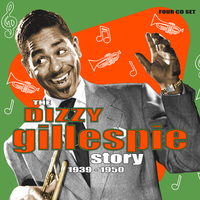 The Dizzy Gillespie Story 1939-19502001
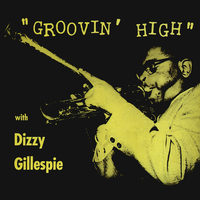 Groovin' High1997
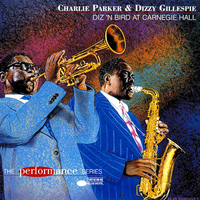 Diz ’n Bird at Carnegie Hall1997
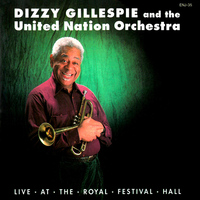 Live at the Royal Festival Hall1990
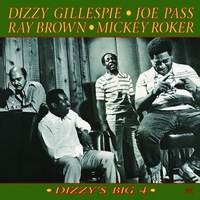 Dizzy's Big 41990
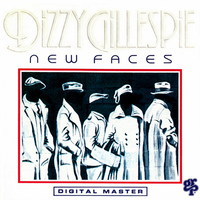 New Faces1985
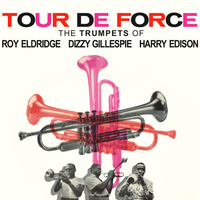 Tour de Force1957
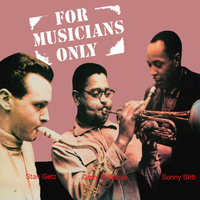 For Musicians Only1957
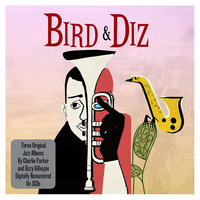 Bird and Diz1952
 Their Greatest Recordings Together2025istina (Live Belgrade '74)2025Manteca2024Hot House: The Complete Jazz at Massey Hall Recordings2023The Giants Of Jazz (Live Paris '72)2023Work From Home with Dizzy Gillespie2020Live At Monterey Jazz Festival, Monterey, CA. September 17th 1982, KJAZ‐FM Broadcast (Remastered)2019For Musicians Only - The Complete Sessions: Live & Studio2019The Extravagant Mr. Gillespie2017The Essential Dizzy Gillespie (Remastered)2017Night In Tunisia2017Live At Singer Concert Hall 19732017The Essential Recordings2017Concert of the Century (A Tribute to Charlie Parker)2016England 1958 / Chicago 19572014Dizzy Gillespie Collection: 1937-462013Neuland2013Mitos do jazz, Volume 14: Dizzy Gillespie2012Four Classic Albums All-Star Groups & Big Band2011No Brasil com Trio Mocotó2011Complete Big Band Studio Sessions 1946-19602010When Be-Bop Was King2010Four Classic Albums2009Kind of Gillespie2009gettin' dizzy2009Featuring Charlie Parker2009Diggin' Dizz2009All Star Sessions: Three Classic Albums Plus2009Complete Live at Birdland2009Unissued in Europe 19712008Dizzy Gillespie & James Moody With Gil Fuller & The Monterey Jazz Festival Orchestra2008Live in Paris & Copenhagen 19742008I Love Paris2008Live at the 1965 Monterey Jazz Festival2007Live at the Jazz Plaza Festival 19852007Montreux '772006The Trumpet Kings Meet Joe Turner2006The Verve & Philips Small Group Sessions2006Dizzy Digs Paris2006The Legendary Town Hall Concert: New York City, 19452006The Chronological Classics: Dizzy Gillespie 1953-19542006Live in Berlin2006The Verve/Phillips Dizzy Gillespie Small Groups Sessions2006Live In '58 & '702006Workin' His Greatest Tunes2006The Jazz Biography2005The Chronological Classics: Dizzy Gillespie 19532005Dizzy Atmosphere2005The best of Dizzy Gillespie2005Hot House2005Town Hall, New York City, June 22, 19452005Career 1937-19922005Sittin' In2005Just Jazz: Groovin' With Diz & Co.2005Jazz Ballads 13: Roy Eldridge & Dizzy Gillespie2004Salt Peanuts2004Alone Together2004The Chronological Classics: Dizzy Gillespie 1952-19532004The Discovery of Jazz: Dizzy Gillespie2004Ultimate Jazz and Blues2004Together2003The Chronological Classics: Dizzy Gillespie 19522003BD Music Presents: Dizzy Gillespie2003Marian McPartland's Piano Jazz2003Jazz in Paris: Dizzy Gillespie & his Operatic Strings Orchestra2002Groovin' High2002Hall of Fame2002Timeless Dizzy Gillespie2002Be-Bop2002Impromptu2002I Grandi Del Jazz - Dizzie Gillespie - Ultimate Dizzy Gillespie2002Bebop Professor2002Odyssey: 1945-19522002Groovin' High: Classic Recordings 1942-19492002Night in Tunisia2001Jazz in Paris: Cognac Blues2001Ohh-Shoo-Be-Doo-Bee2001Sweet Stuff2001Ralph Gleason's Jazz Casual2001Dizzy In South America Vol. 32001Jazz Studies: The Best of the Perception Years2001Jazz Collection2001Ken Burns Jazz: Definitive Dizzy Gillespie2000Live at the Royal Festival Hall 19872000Midnite Jazz & Blues: Dizzy Atmosphere2000Cubana Be, Cubana Bop2000Midnite Jazz & Blues: The Talk of the Town2000Absolutely the Best Dizzy Gillespie2000Dizzy in South America, Volume 22000Matrix: The Perception Sessions2000Good Bait2000
Singles
Unicorn / Free Ride1977Soul Kiss1970Swing Low, Sweet Cadillac, Part 1 and 21967Winchester Cathedral / The Song Is Ended (But the Melody Lingers on)1966Love Theme From the Sandpiper / Be's That Way1965Don't Throw Your Back Outa Wack / N.A.T.R.A.1965Groovin' High / Ow1964Joogie Boogie / Doodlin'1962Olé / In a Shanty in Old Shanty Town1962Love Is Here to Stay / Mrs. Diz1961The Winners of Down Beat's Readers Poll 1960 (Hall of Fame)1960Sweet Lorraine / Dizzy Does It1954I've Got the Bluest Blues1953Bongo Beep / Trumpet at Tempo1953Cripple Craple Crutch / Somebody Loves Me1952School Days / I'll Get You Yet1951Love Me Pretty Baby / Nobody Knows1951Thinking of You / Nice Work If You Can Get It1951O-Sho-Be-Do-Be / Sunny Side of the Street1951Lady Be Good / Klook Returns1951Blue Skies / Pop's Confessin'1951The Champ1951Alone Together / There Are Things I Love1951I Can't Get Started / Good Bait1946Somethin' for You / Empty Bed Blues1946Dream of You / Ooh! Ooh! My! My! Oh! Oh!1946Salt Peanuts / Hot House1945Lover Man / Shaw 'Nuff1945Salted Peanuts / Be-Bop1945MantecaJazz at Massey Hall – Salt Peanuts - Night in TunisiaEPs
Dizzy Bird2009Dizzy Gillespie1969It Shouldn't Happen to a Dream1965Film Themes1964The New Sound in Jazz: "Bossa Nova: - Desafinado1962Une Nuit À Carnegie Hall1961Bird and Diz1960Boppin' the Blues1960Jazz De Poche N°121958The Immortal Session, Vol. 11957Round About Midnight1957On the Alamo1956Oo-Shoo-Be-Doo-Be1956Dizzy Gillespie En Buenos Aires1956I Can't Get Started Part I and II1955Featuring The Trumpet of Dizzy Gillespie1955I've Found a New Baby Part 1 and 21955Dizzy Gillespie Plays1953Jazz Session Featuring Dizzy Gillespie, Vol. 21953Bird - Diz - Bud - Max, Vol. 11953Volume 61952Dizzy Gillespie Plays & Johnny Richards Conducts, Vol. 11950Charlie Parker & Dizzy Gillespie Avec Slim Gaillard Et Son OrchestreOne More TimeThe Immortal Session, Vol. 2Volume 2Bird & Diz in ConcertDizzy in ConcertDizzy Gillespie