
Barış Manço
Barış Manço (also spelt Baris Mancho or Baris Manco in some European album releases) (1943 -1999) was a Turkish singer, composer, and television producer. Manço was born on 2nd January 1943 in Istanbul. His mother, Rikkat Uyanık, had been a famous singer in the early 1940s. His older brother, who was born during World War II, was named Savaş ("war" in Turkish) while he was named Barış ("peace" in Turkish) by his parents to celebrate the end of the war. While at secondary school at the Galatasaray Lisesi (and later at Şişli Terakki High School) he formed his first band, Kafadarlar ("The Buddies"), all students of a nearby highschool. Asaf Savaş Akat, who became a famous economist, played saxophone, and guitarist Ender Enön made his own guitar because it was difficult to find a real one on the market at that time. In 1962 and 1963, with his next band, Harmoniler ("The Harmonies"), he recorded cover versions of some popular American twist songs and rearrangements of Turkish folk songs in rock-and-roll form, marking the beginning of the Anatolian rock movement, a synthesis of Turkish folk music and rock. In this period, his key visual and musical influence was Elvis Presley. After leaving school in 1963 he won a scholarship to the Belgian Royal Academy, and went to Belgium to study graphics and art. He toured with his band Les Mistigris (not related to Mistigris) in Germany, Belgium, France, and Turkey until 1967, when he was in a serious car accident, after which he started to grow his signature mustache to disguise his scar. Frustrated by the difficulties of working with musicians from different nationalities, he formed Kaygısızlar (The Carefrees), featuring Mazhar Alanson and Fuat Güner, future members of the band MFÖ. He recorded several singles and toured with the band, both domestically and internationally, until the band members revealed that they did not want to live abroad. In 1970, he formed Barış Manço ve... ("Barış Manço and ..."), again with foreign musicians, to record his first hit single, both in Turkey and in Belgium, "Dağlar Dağlar" (Mountains, Mountains!), selling over 700,000 copies. After the success of "Dağlar Dağlar", Manço recorded a couple of singles with Moğollar (The Mongols), another influential Turkish Anatolian rock band. He then decided to return to Turkey where he recorded with the reformed Kaygısızlar for a short period. In 1971, his early works were compiled under his first full length album Dünden Bugüne, today commonly referred to as "Dağlar Dağlar". In 1972, he formed Kurtalan Ekspres, the band that would accompany him until his death. He continued to release singles until 1975, when he released his first non-compilation album, 2023, a concept album that included many instrumental pieces. As a last attempt to reach international success, he released the album Baris Mancho (1976), mostly with the George Hayes Orchestra, in Europe and South Africa. Although the album did not bring the fame he was expecting, it did reach the top of the charts in Romania and Morocco. The following year the album was released in Turkey under the title Nick the Chopper. From 1977 to 1980,he released three more albums in Turkey, partly consisting of compilations of older singles: Sakla Samanı Gelir Zamanı (1977), Yeni Bir Gün (1979), and 20. Sanat Yılı Disko Manço (1980), all with a similar sound to his earlier album 2023. All these albums are now rarity items, but most of the material from the era is available in the later compilations Ben Bilirim and Sarı Çizmeli Mehmet Ağa. In 1981 Manço released Sözüm Meclisten Dışarı with Kurtalan Ekspres, containing many hit songs including "Alla Beni Pulla Beni", "Arkadaşım Eşşek", "Gülpembe", "Halhal", and "Dönence". The album remains one of their most popular works, and boosted Manço's popularity in the 1980s. "Arkadaşım Eşşek" ("My Friend Donkey"), quickly grew very popular among children (the song is about rural nostalgia ,and was not initially intended as a children's song). Throughout his career he went on to write many other songs primarily for children. On the other hand "Gülpembe", composed by Kurtalan Ekspres bassist Ahmet Güvenç, a requiem for Manço's grandmother, caught the attention of older audiences, and is probably the artist's most popular song, competing only with "Dağlar Dağlar". In 1983, Estağfurullah, Ne Haddimize was released. It contained the hit songs "Halil İbrahim Sofrası" and "Kol Düğmeleri", a new version of the artist's very first song. "Halil İbrahim Sofrası" exemplified Manço's signature moral-themed lyrics, a rare feature in Turkish pop music. In 1985, 24 Ayar Manço which included "Gibi Gibi" and a long conceptual song "Lahburger", was released. It marked the beginning of the shift in Manço's sound characterised by the heavy use of synthesisers and drum machine, in contrast with his older works consisting of a rock-based sound. Manço went on to release Değmesin Yağlı Boya (1986), Sahibinden İhtiyaçtan (1988), and Darısı Başınıza (1989), each containing a couple of hit songs and demonstrating his new sound. In 1988 7'den 77'ye (From age 7 to 77), a television series directed and presented by Manço, began to run on TRT 1, the national TV channel of Turkey. It was a combined music, talk show, and documentary programme which was a major hit during the eight years it stayed on the air. Manço travelled to nearly 150 countries for the series. "Adam Olacak Çocuk" , a part of the show, strengthened Manço's acceptance among children Although his popularity continued mostly due to this series, his musical work in 1990s wasn't so well received. The albums Mega Manço (1992) and Müsadenizle Çocuklar (1995) were considered the weakest of his career, despite the limited success of the 1992 children's hit "Ayı" (The Bear). On the other hand, in 1995 he toured in Japan with Kurtalan Ekspres, leading to Live in Japan (1996), his first and only live album. He released two albums in that country with some recognition as "the man who writes songs about vegetables", referring to "Domates, Biber, Patlıcan" ("Tomato, Pepper, Aubergine") and "Nane, Limon Kabuğu" (Mint, Lemon Rind), two of his hit songs from the 1980s. Manço died on 31st January 1999 of a sudden heart attack, just before the release of his newly finished album Mançoloji (Mançology) (1999), a double album containing new recordings of his hit songs along with an unfinished instrumental song "40. Yıl" ("The 40th Anniversary"), celebrating his fortieth year in music. Over his career he had composed about 200 songs, some of which were translated into a variety of languages including Greek, Bulgarian, Romanian, Persian, Japanese, and Arabic.
Biography from Last.fm, available under CC BY-SA.
Country: TR
Deathdate: 1999-01-31
Gender: Male
Is Living: No
Albums
 Manlac Blues 9, Volume 1 (Demo 1965 - 1966)2019Barış Manço Arşiv 1 (Arşiv Serisi 1)2012Barış Manço2010Barış Manço2009Live in Tarsus 19752007Çocuk Şarkıları, Volume 1200720232003Senfonik200020. Sanat Yılı Disko Manço1999Mançoloji1999Kol Basti1999Sanat'ta 41 Yıl Nostalji1999Genc Osman1999Lambaya Puf De1999Üçüncü Yolculuk1999Barış Manço 20.Sanat Yılı Disco Manço1999Çoban Baba1998Live in Japan1996Barış Manço1995Müsaadenizle Çocuklar1995The Best of Barış Manço1995Mega Manço1993Ben Bilirim1993Taş Yüzük1992İşte Barış İşte Erkin1990Klasikleri: Dağlar Dağlar1990Nostalji1990İşte Barış İşte Manço1989Darısı Başınıza1989Ful Aksesuar'88 Manço - Sahibinden İhtiyaçtan1988Değmesin… Yağlı Boya1986İşte Hendek İşte Deve198624 Ayar1985Estağfurullah.. Ne Haddimize1983Sözüm Meclisten Dışarı1981Disco Manço1980Yeni Bir Gün1979Sarı Çizmeli Mehmet Ağa1977Baris Mancho1977Sakla Samanı Gelir Zamanı197620231975Dünden Bugüne...1971The Blues AloneBaris MancoThe Rarities 66-81Dağlar Dağlar (İşte Hendek, İşte Deve)
Singles
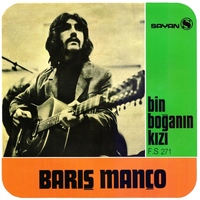 Bin Boğanın Kızı / Ay Osman1971Susanna / Fairground2020Lale & Barış1978Fil İle Kurbağa / Je Te Retrouverais1972Ağlama Değmez Hayat1971Dağlar Dağlar1970Kağızman / Anadolu1969Ağlama Değmez Hayat Bu Göz Yaşlarına / Kirpiklerin Ok Ok Eyle1969Flower Of Love / Boğaziçi1968Karanlıkların İçinde / Trip (To A Fair)1968Bebek / Keep Lookin'1968Kızılcıklar / I'll Go Crazy1968Jenny Jenny1965The Twist / Let's Twist Again1962Twistin U.S.A. / The Jet1962
EPs
Others
Barış Manço-4Hal HalBir Bahar Akşamı / Estergon KalesiRezil Dede / Vur Ha VurLambaya Püf de! / Kalk Gidelim KüheylanDeruleİşte Hendek İşte Deve / Kâtip Arzuhalim Yaz Yare BöyleGül PembeGolden RollersNotre Maison1962-1963Bizim Gibi – Big Boss Man / Seher Vakti – Good Golly Miss MollyBien Fait Pour Toi / Aman Avcı Vurma BeniGönül Dağı / Genç Osman (Hey Koca Topçu)Eğri Eğri Doğru Doğru Eğri Büğrü Ama Yine De DoğruIl Arrivera / Une FilleKızılcıklar Oldu mu? (Fransızca Sözlerle)Sarı Çizmeli Mehmet Ağa / Aynalı Kemer İnce BeleÖlüm Allahın Emri / Gamzedeyim Deva Bulmam