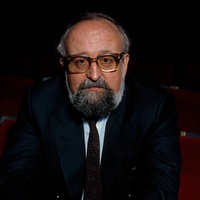
Krzysztof Penderecki
Krzysztof Penderecki (born 23 November 1933 in Dębica; died 29 March 2020 in Kraków) was a Polish composer and conductor. His 1960 avant-garde Threnody to the Victims of Hiroshima for string orchestra brought him to international attention, and this success was followed by acclaim for his choral St. Luke Passion. Both these works exhibit compositional techniques that were novel for their time. From the mid-1970s onward, Penderecki's style changed to encompass a post-Romantic idiom. He won prestigious awards including Grammy Awards in 1987 and 1998 and 2001, and the Grawemeyer Award for Music Composition in 1992. As well as the works already mentioned, his compositions include four operas, eight symphonies and other orchestral pieces, a variety of instrumental concertos, choral settings of mainly religious texts, as well as chamber and instrumental works. After taking private composition lessons with Franciszek Skolyszewski, Penderecki studied music at Jagiellonian University and the Academy of Music in Kraków under Artur Malawski and Stanislaw Wiechowicz. Having graduated in 1958, he took up a teaching post at the Academy. Penderecki's early works show the influence of Anton Webern and Pierre Boulez (he was also influenced by Igor Stravinsky). Penderecki's international recognition began in 1959 at the Warsaw Autumn with the premieres of the works Strophen, Psalms of David, and Emanations, but the piece that truly brought him to international attention was Threnody to the Victims of Hiroshima, written for 52 string instruments. In it, Penderecki made use of extended instrumental techniques (for example, playing on the "wrong" side of the bridge, bowing on the tailpiece). There are many novel textures in the work, which makes great use of tone clusters. He originally titled the work 8' 37", but decided to dedicate it to the victims of Hiroshima. Fluorescences followed a year later; it increases the orchestral density with more wind and brass, and an enormous percussion section of 32 instruments for six players including a Mexican güiro, typewriters, gongs and other unusual instruments. The piece was composed for the Donaueschingen Festival of contemporary music of 1962, and its performance was regarded as provocative and controversial. Penderecki's intentions at this stage were quite Cagean: "All I'm interested in is liberating sound beyond all tradition". This preoccupation with sound culminated in De Natura Sonoris I, which frequently calls upon the orchestra to use non-standard playing techniques to produce original sounds and colours. A sequel, De Natura Sonoris II, was composed in 1971: with its more limited orchestra, it incorporates more elements of post-Romanticism than its predecessor. This foreshadowed Penderecki's renunciation of the avant-garde in the mid-1970s, although both pieces feature dramatic glissandos, dense clusters, and a use of harmonics, and unusual instruments (the musical saw features in the second piece). Around the mid-1970s, while he was a professor at the Yale School of Music Penderecki's style began to change. The Violin Concerto No. 1 largely leaves behind the dense tone clusters with which he had been associated, and instead focuses on two melodic intervals: the semitone and the tritone. Some commentators compared this new direction to Anton Bruckner. This direction continued with the Symphony No. 2, Christmas (1980), which is harmonically and melodically quite straightforward. It makes frequent use of the tune of the Christmas carol Silent Night. Penderecki explained this shift by stating that he had come to feel that the experimentation of the avant-garde had gone too far from the expressive, non-formal qualities of Western music: "The avant-garde gave one an illusion of universalism. The musical world of Stockhausen, Nono, Boulez and Cage was for us, the young - hemmed in by the aesthetics of socialist realism, then the official canon in our country - a liberation...I was quick to realise however, that this novelty, this experimentation and formal speculation, is more destructive than constructive; I realised the Utopian quality of its Promethean tone". Penderecki concluded that he was "saved from the avant-garde snare of formalism by a return to tradition". In 1980, Penderecki was commissioned by Solidarity to compose a piece to accompany the unveiling of a statue at the Gdańsk shipyards to commemorate those killed in anti-government riots there in 1970. Penderecki responded with Lacrimosa, which he later expanded into one of the best known works of his later period, the Polish Requiem (1980–84, 1993, 2005). Again the harmonies are rich, although there are moments which recall his work in the 1960s. In his later years, he tended towards more traditionally conceived tonal constructs, as heard in works like the Cello Concerto No. 2 and the Credo. He conducted Credo on the occasion of the 70th birthday of Helmuth Rilling, 29 May 2003. In celebration of his 75th birthday he conducted three of his works at the Rheingau Musik Festival in 2008, among them Ciaccona from the Polish Requiem. In 2001, Penderecki's Credo received the Grammy Award for best choral performance for the world-premiere recording made by the Oregon Bach Festival, which commissioned the piece. The same year, Penderecki was awarded with the Prince of Asturias Prize in Spain, one of the highest honours given in Spain to individuals, entities, organizations or others from around the world who make notable achievements in the sciences, arts, humanities, or public affairs. Invited by Walter Fink, he was the eleventh composer featured in the annual Komponistenporträt of the Rheingau Musik Festival in 2001. Penderecki received an honorary doctorate from the Seoul National University, Korea in 2005, as well as from the University of Münster, Germany in 2006. His notable students include Chester Biscardi and Walter Mays. Some of Penderecki's music has been adapted for film soundtracks. The Shining (1980) features six pieces of Penderecki's music: Utrenja II: Ewangelia, Utrenja II: Kanon Paschy, The Awakening of Jacob, De Natura Sonoris No. 1, De Natura Sonoris No. 2 and Polymorphia. The Exorcist (1973) features Polymorphia as well as his String Quartet and Kanon For Orchestra and Tape; fragments of the Cello Concerto and The Devils of Loudun are also used in the film. Writing about The Exorcist, the film critic for The New Republic wrote "even the music is faultless, most of it by Krzysztof Penderecki, who at last is where he belongs." David Lynch has used Penderecki's music in the soundtracks of the movies Wild at Heart (1990) and Inland Empire (2006). Penderecki's piece, Threnody for the Victims of Hiroshima, was also used during one of the final sequences in the film Children of Men. Penderecki composed music for Andrzej Wajda's 2007 film Katyń, while Martin Scorsese's Shutter Island featured his Symphony No. 3 and Fluorescences. Penderecki had three children, a daughter from his first marriage, and a son and daughter with his wife Ezbieta Solecka, whom he married in 1965. He died at his home in Kraków on 29 March 2020, at the age of 86.
Biography from Last.fm, available under CC BY-SA.
Country: PL
Deathdate: 2020-03-29
Disambiguation: Polish composer
Gender: Male
Is Living: No
Albums
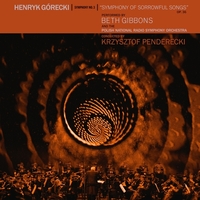 Symphony no. 3, op. 36 "Symphony of Sorrowful Songs"2019
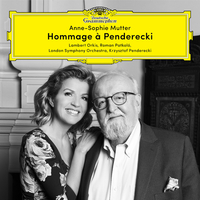 Hommage à Penderecki2018
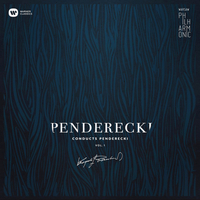 Penderecki Conducts Penderecki, Vol. 12016
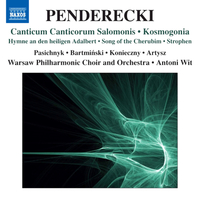 Canticum Canticorum Salomonis / Kosmogonia / Hymne an den heiligen Adalbert / Song of the Cherubim / Strophen2012
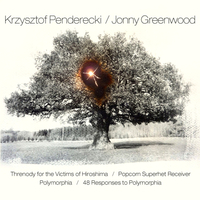 Threnody for the Victims of Hiroshima / Popcorn Superhet Receiver / Polymorphia / 48 Responses to Polymorphia2012
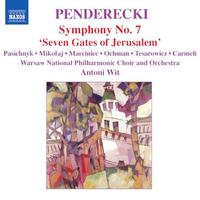 Symphony no. 7 "Seven Gates of Jerusalem"2006
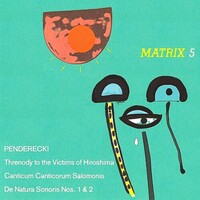 Threnody to the Victims of Hiroshima / Canticum Canticorum Salomonis / De Natura Sonoris nos. 1 & 21994
 Actions1971
 Chamber Works2025Serenade: Works for Clarinet and Strings2024Sacred Choral Works2023Symphony no. 6 “Chinese Songs” / Trumpet Concertino / Concerto doppio2023Szymanowski: Stabat Mater, op. 53 / Penderecki: Dies irae / Threnody to the Victims of Hiroshima2022Muzyka teatralna i filmowa2022Complete Quartets2021Complete Music For String Quartet / String Trio2021Penderecki’s Sinfonietta(s)2020Quatuors nos 1-3 / Unterbrochen Gedanke / Quatuor avec clarinette / Trio à cordes2020St. Luke Passion2020Horn Concerto / Adagio for Strings / Violin Concerto no. 1 / Threnody for the Victims of Hiroshima2020Penderecki2019Weinberg, Penderecki, Schnittke: String Trios2019Sonoristic Penderecki by Penderecki2019Symphony no. 6 "Chinese Songs" / Concerto per clarinetto2019Concerto per violoncello ed orchestra no. 2 / Sonata per violoncello ed orchestra2019Cello Concertos2018Penderecki Conducts Penderecki, Vol. 2: Choral Music2017Kosmogonia2017Penderecki / Dvořák2017Piano Concertos2016Oriental Trumpet Concertos2016Homo ludens2015A Sea of Dreams Did Breathe on Me…2015Polska2015Clarinet Concerto / Flute Concerto / Concerto Grosso no. 12015Magnificat / Kadisz2015Soli2015Piano Concerto »Resurrection«2013The Complete Symphonies2013Complete Works for Cello Solo2013Piano Concerto "Resurrection" / Flute Concerto2013String Quartets2013Fonogrammi / Horn Concerto / Partita / The Awakening of Jacob / Anaklasis / De natura sonoris2012Changing Colors2012Sinfoniettas / Oboe Capriccio / Three Pieces in Old Style / Serenade / Intermezzo2012A Portrait of Krzysztof Penderecki2012Viola Concerto / Cello Concerto no. 22011Credo2010Horn Concerto / Violin Concerto2010Rękopis znaleziony w Saragossie2009Complete Choral Works2009Utrenja2009Symphony no. 2 "Christmas" / Sacred Works2008Works for Cellos and Orchestra: Concerto Grosso no. 1 / Largo / Cello Sonata2008Music for Chamber Orchestra2008Seven Gates of Jerusalem2008Symphony no. 8 / Dies irae / Aus den Psalmen Davids2008Te Deum / Hymne an den Heiligen Daniel / Polymorphia2007Capriccio / De natura sonoris II / Piano Concerto2007Clarinet Concerto / Flute Concerto / Agnus Dei2006Cello Concerto / The Awakening of Jacob / Adagietto / Concerto for viola and orchestra2006Miserere2005Cello Concerto no. 2 / Partita / Stabat Mater2005A Polish Requiem2004Paradisi Gloria: Stabat Mater2004Violin Sonatas nos. 1 and 22004St. Luke Passion2003Threnos / Als Jakob erwachte / 2 Capriccios2003Sextet / Clarinet Quartet2003Violin Concertos nos. 1 and 22003Contemporary Quartet Plays Music of Bacewicz, Kisielewski, Komsta, Lutosławski, Penderecki2002Complete Cello Concertos2001Shostakovich: Violin Sonata / Penderecki / Pärt / Schnittke2000Seven Gates of Jerusalem2000Clarinet Quartet / String Trio2000Passio et mors Domini nostri Jesu Christi secundum Lucam2000Orchestral Works, Volume 3: Symphonies nos. 2 and 42000Orchestral Works, Vol. 1: Symphony no. 3 / Threnody2000Orchestral Works, Vol. 2: Symphonies Nos. 1 and 52000Credo1999Chamber Music199920th Century Music for Flute and Orchestra1999Lutosławski: Cello Concerto / Penderecki: Cello Concerto no. 21999Credo1998Utrenja1998Seven Gates of Jerusalem1997Violin Concerto No. 2 "Metamorphosen"1997Penderecki: Konzert für Flöte und Kammerorchester / Bartok: Suite Paysanne Hongroise / Eespere: Konzert für Flöte und Kammerorchester1996A Polish Requiem / The Dream of Jacob1996Die Teufel von Loudun1995Emanationen / Partita / Cello Concerto / Symphony1995Complete sacred works for chorus a cappella1995Violin Concertos1995Penderecki Gala1995Polska! A Celebration of Polish Music1994String Quartets nos. 1 & 2 / Prelude for Clarinet Solo / Der unterbrochene Gedanke / String Trio / Quartet for Clarinet & String Trio1994Carmina Burana1994Musica da camera1994Penderecki dirigiert Penderecki: 2. Sinfonie / Adagio (4. Sinfonie)1994String Quartets1994