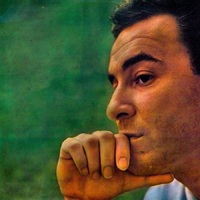
João Gilberto
João Gilberto (João Gilberto Prado Pereira de Oliveira, Juazeiro, Bahia, Brazil, June 10, 1931 - July 6, 2019) was a Brazilian singer, acoustic guitarist and ocasional songwriter, considered one of the creators of bossa nova with Antônio Carlos Jobim and Vinícius de Moraes. One of his most famous nicknames is "Pai da Bossa Nova" (Father of Bossa Nova). A self-taught guitarist and singer, Gilberto moved to Rio de Janeiro in 1950 and joined the vocal group Garotos da Lua ("The Boys of the Moon") as their lead singer. After a year and a half, he was kicked out of the group for his lack of discipline and spent the next several years in a marginal existence. Eventually, he found his way, creating a new way to express himself in voice and on the guitar. The result of his obsessive experiments became known as bossa nova. Bossa nova is a refined version of samba, deemphasizing the percussive aspect of its rhythm and enriching the melodic and harmonic content. Rather than relying on the traditional Afro-Brazilian percussive instruments, bossa nova usually utilizes a drum set. João Gilberto often eschews all accompaniment, using only his guitar, which he uses as a percussive as well as a harmonic instrument. The singing style he developed is almost whispering, economical, and without vibrato. He creates his tempo tensions by singing ahead or behind the guitar. This style, which Gilberto introduced in 1957, created a sensation in the musical circles of Rio's Zona Sul, and many young guitarists sought to imitate it. It was first heard on record in 1958 when João Gilberto accompanied singer Elizete Cardoso in a recording of "Chega de Saudade", a song by Antonio Carlos Jobim and Vinicius de Moraes. Shortly after this recording, João Gilberto made his own debut single of the same song, followed by the 1959 LP, Chega de Saudade. The song became a hit, launching Gilberto's career and the bossa nova craze. Besides a number of Jobim compositions, the album Chega de Saudade featured older sambas and popular songs from the 1940s and '50s, all performed in the distinctive bossa nova style. This album was followed by two more in 1960 and 1961, by which time the singer featured new songs by a younger generation of performer/composers such as Carlos Lyra and Roberto Menescal. By 1962, bossa nova had been embraced by such North American jazz musicians as Herbie Mann, Charlie Byrd, and Stan Getz, who invited Gilberto and Jobim to collaborate on what became one of the best-selling jazz albums of all time, Getz/Gilberto. Through this album, Gilberto's wife, Astrud, became an international star, and the Jobim/de Moraes composition "The Girl from Ipanema" became a worldwide pop music standard for the ages. João Gilberto continued to perform through the 1960s but did not release another studio album until João Gilberto en México, recorded in 1970 during a period of residence in Mexico. João Gilberto, aka the "White Album" (1973), featured hypnotic minimalist execution and is widely considered to be his best album. The year 1976 saw the release of The Best of Two Worlds, a reunion with Stan Getz, featuring singer Miúcha, sister of Chico Buarque, who had become Gilberto's second wife in April 1965. Amoroso (1977) backed Gilberto with the lush string orchestration of Claus Ogerman, who had provided a similar sound to Jobim's instrumental recordings in the late 1960s and early 1970s. As had been the case for all of Gilberto's albums, the album consisted mostly of Jobim compositions, mixed with older sambas and an occasional North American standard from the 1940s. Having lived in the US since 1962, João Gilberto returned to Brazil in 1980. The following year saw the release of Brasil, with guests Gilberto Gil and Caetano Veloso, who in the late 1960s had founded the Tropicalia movement, a fusion of Brazilian popular music with foreign pop. The 1991 release, João, with orchestrations by Clare Fischer, was unusual in its lack of even a single Jobim composition, instead featuring songs in English, French, Italian, and Spanish, plus old sambas and the solitary contemporary song "Sampa" (Caetano Veloso). Also released in 1991 was the album Canto Do Pajé by Veloso's sister Maria Bethânia on which Bethânia and Gilberto sing an intimate duet Maria/Linda Flor (Barroso, Peixoto, Vogler, Costa, and Pôrto) accompanied solely by his guitar. João Voz e Violão (2000) was an homage to the music of Gilberto's youth as well as a nod to producer Caetano Veloso. Evenly interspersed with these studio recordings have been the live recordings, Live in Montreux; João Gilberto Prado Pereira de Oliveira; Eu Sei Que Vou Te Amar; Live at Umbria Jazz, and Live in Tokyo. While all of Gilberto's albums since Getz/Gilberto have been released on CD, the first three domestic albums were released in 1988 by EMI on a single CD entitled The Legendary João Gilberto: The Original Bossa Nova Recordings (1958-1961). The disc also included three tracks from the singer's 1959 Orfeu Negro EP: "Manhã de Carnaval," O Nosso Amor, and A Felicidade, the latter two merged into a single medley track to fit within the recording time of a CD. After its release, Gilberto successfully sued to have the title removed from sale as an unauthorized release of his artistic works. João Gilberto has long had a reputation as an eccentric recluse and a nearly neurotic perfectionist. He lives in an apartment in Leblon, Rio de Janeiro, refusing all interviews and avoiding crowds. He has been known to walk out on performances in response to an audience he considers disrespectful or out of theaters possessing acoustics below his standards, and at times demands that the air conditioning be turned off at concert venues. Yet he continues to perform to sell-out crowds in Brazil as well as in Europe, North America, and Japan. Discography: 1959 - Chega de Saudade (Odeon) 1960 - O Amor, o Sorriso e a Flor (Odeon) 1961 - João Gilberto (Odeon) 1962 - The Boss of the Bossa Nova (Atlantic) 1963 - The Warm World of João Gilberto (Atlantic) 1964 - Getz/Gilberto (Verve) 1965 - Herbie Mann & João Gilberto (Atlantic) 1974 - João Gilberto en Mexico (PolyGram) 1976 - Best of Two Worlds (Columbia) 1977 - Amoroso (Warner Brothers) 1981 - Brasil (Warner Brothers) 1986 - João Gilberto Live in Montreux (WEA) 1991 - João (PolyGram) 2000 - João Voz e Violão (Universal) 2002 - Live at Umbria Jazz (Egea) 2004 - João Gilberto in Tokyo (Verve)
Biography from Last.fm, available under CC BY-SA.
Country: BR
Deathdate: 2019-07-06
Disambiguation: Brazilian bossa nova guitarist, singer, and composer
Gender: Male
Is Living: No
Groups

Albums
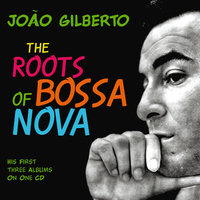 The Roots of Bossa Nova2012
 João Gilberto in Tokyo2004
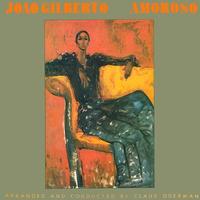 Amoroso1977
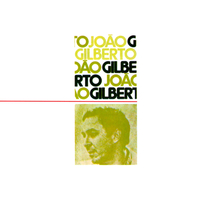 João Gilberto1973
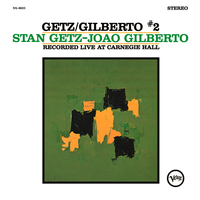 Getz/Gilberto #21966
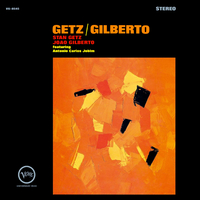 Getz/Gilberto1964
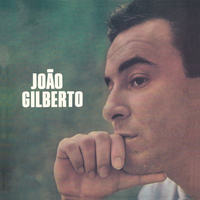 João Gilberto1962
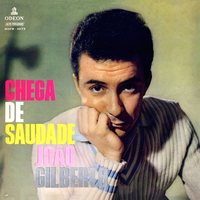 Chega de saudade1959
 A Summer Night2024Exclusive2024Live In San Francisco, 20032024Relicário: João Gilberto (Ao Vivo no Sesc 1998)2023Ao Vivo em Recife20221951 - 1958 - Com Garotos Da Lua: Early 78s (Remastered)2019Quando você recordar2018Ten Songs for You2018Getz/Gilberto '762016Bossa nova estival2014The Bossa Nova Vibe of João Gilberto2012Amor Certinho2012Live in New York City - 9th October 1964 / Live in Mexico - 19742011Joao Gilberto for Tokyo2007Samba e bossa nova: Saudaçoes do Rio2005The Girl From Ipanema2003Live at Umbria Jazz2002Acapulco2002Brazil2000Ao vivo em Buenos Aires1999Millennium1999João voz e violão1999Mestres da Mpb1998MÚSICA! O Melhor da Música de João Gilberto1998Blue Rondo1997Selection of João & Astrud Gilberto1996Eu sei que vou te amar (ao vivo)1994Jazz Samba1994The Carnegie Hall Concert199338 Titres Bossa Nova1993Desafinado1992The Girl From Ipanema1992João1991Personalidade - The Best Of Brazil1990Autour de Minuit1989Live in Montreux1987Brasil1981Prado Pereira de Oliveira1980The Best of Two Worlds1976Braziliana1975Ela é carioca1970Recorded in Rio de Janeiro1965O amor, o sorriso e a flor1960The Girl From IpanemaSamba & Bossa NovaSambaEl creador del Bossa NovaBlack Orpheus (US Edition)Gilberto and Jobim