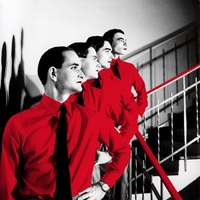
Kraftwerk
Kraftwerk ("power plant" in English) are an electronic band founded in 1970 in Düsseldorf, Germany. They pioneered electronic music in the 70s and are considered the most important and influential band of their genre, often described as "the godfathers of electronic music". Kraftwerk's sound is minimalistic and strictly electronic; it combines driving, repetitive rhythms with catchy melodies and vocals usually sung through a vocoder. The current line-up consists of Ralf Hütter (the only original member), Fritz Hilpert, Henning Schmitz and Falk Grieffenhagen. The other original founding member Florian Schneider left the band in 2008 and died on May 6th, 2020, following a short battle with cancer, just a few days after his 73rd birthday. Ralf Hütter (born 1946, Krefeld, Germany) and Florian Schneider (born 1947, Düsseldorf, Germany) met while they were studying improvised music in Düsseldorf, Germany. In 1967 Ralf Hütter (organ), Florian Schneider (violin, flute), Basil Hammoudi (vocals), Butch Hauf (bass) and Fred Monics (drums) formed the group Organisation, released the album Tone Float and split shortly thereafter. The album features repetitive percussion and bass drum patterns embellished with guitar, flute, violin and organ. After disbanding Organisation, Ralf Hütter and Florian Schneider adopted the name Kraftwerk. Early Kraftwerk line-ups from 1970–1974 fluctuated, as Hütter and Schneider worked with around a half-dozen other musicians, most notably Andreas Hohmann (drums; 1970), Houschäng Néjadepour (guitar; 1970), Charly Weiss (drums; 1970/71), Eberhard Kranemann (cello, bass, hawaii-guitar; 1970/71), Klaus Röder (electric guitar, electronic violin; 1974), Michael Rother (guitar; 1970-71) and Klaus Dinger (drums; 1970-71). For a short period in 1970/71 Ralf Hütter left the band to complete his degree in architecture. There were some sessions/concerts with the line-up "Schneider, Kranemann, Weiss", "Schneider, Hohmann, Kranemann, Rother, Dinger" and "Schneider, Rother, Dinger" in that time. In 1971 Rother and Dinger left Kraftwerk to form the band Neu!. Their first three albums were more free-form experimental rock without the pop hooks or the more disciplined strong structure of its later work. Their debut album, Kraftwerk, released in 1970, and Kraftwerk 2, released in 1972, were mostly exploratory jam music, played on a variety of traditional instruments including guitar, bass, drums, electric organ, flute and violin. Post-production modifications to these recordings were then used to distort the sound of the instruments, particularly audio-tape manipulation and multiple dubbings of one instrument on the same track. Connie Plank co-produced the first four Kraftwerk albums. Emil Schult has also collaborated on many releases, contributing both lyrics and graphics. Live performances from 1972–73 were made as a duo, using a simple beat-box-type electronic drum machine, with preset rhythms taken from an electric organ. These shows were mainly in Germany, with occasional shows in France. In 1973, Wolfgang Flür (electronic percussion) joined the group. With Ralf und Florian, released in 1973, the band began to move closer to its classic sound, relying more heavily on synthesisers and drum machines. Although almost entirely instrumental, the album marks Kraftwerk's first use of the vocoder, which would, in time, become one of its musical signatures. In 1974, they issued the fourth studio album, Autobahn. This critically acclaimed album marked Kraftwerk's breakthrough and established them as purveyors of electronic music. The title track is intended to capture the feeling of driving on the Autobahn: from travelling through the landscape, the high-speed concentration on the fast lane, to tuning the car radio and the monotony of a long trip. An edited version of "Autobahn" song reached #25 on the US Billboard Hot 100 chart and #11 in the UK. In 1975, Karl Bartos (electronic percussion, live vibraphone, live keyboards) joined the band. The Hütter-Schneider-Bartos-Flür formation is now regarded as the classic line-up of Kraftwerk, which remained in place until the late 80s. In 1975, Kraftwerk released the concept album Radio-Activity (German version: Radio-Aktivität). The hyphenated album title displays Kraftwerk's typical deadpan humour, being a pun on the twin themes of the songs, half being about radioactivity and the other half about activity on the radio. The title track "Radioactivity" was released as a single, and became a hit in France after it was used as the theme to a popular music show. This was the first Kraftwerk album to be entirely self-produced by Hütter & Schneider in their Kling Klang studio, and the first one to be performed by the classic line-up of Kraftwerk. In 1977, Kraftwerk released the highly influential album, Trans-Europe Express. Critics have described the album as having two specific themes: celebration of Europe and the disparities between reality and image. Musically, the songs on this album differ from the group's earlier Krautrock style with a focus on electronic mechanized rhythms, minimalism, and occasional manipulated vocals. Two singles supported the album: "Trans-Europe Express" and "Showroom Dummies". By the time of 1978's The Man-Machine (German version: Die Mensch-Maschine), Kraftwerk had created their own unmistakable brand of "robot pop". NME said of The Man-Machine: 'It is the only completely successful visual/aural fusion rock has produced so far". Kraftwerk spent three years building their own Kling Klang studios in the late 70s, complete with, inevitably, scores of computers. The single "The Model", gave the band a surprise hit when it topped the UK charts in 1982. In 1981 Kraftwerk released their eight studio album, Computer World (German version: Computerwelt). This album combined the use of the sequencer to create the sound now known as electro, inspiring the first producers in Detroit in creating techno, as well as innumerable other artists including Gary Numan, Depeche Mode, and New Order, among many others. This album had the theme of computers taking over the world in the future. It was a commercial success, spawning the singles "Pocket Calculator", "Computer World" and "Computer Love". For this album, the band embarked on the massive Computer World world tour. The EP Tour De France was issued in 1983. This song was featured in the film Breakdance and became the theme for the cycling event of the same name in that year. In 1986, the ninth studio album Electric Café was released. The album received mixed reviews. Two singles were issued from the album: "Musique Non-Stop" and "The Telephone Call". In 1987 Wolfgang Flür departed and it was replaced by Fritz Hilpert. In 1991, Kraftwerk's best known songs were collected together and re-recorded on the compilation The Mix. The single Expo 2000 released in December 1999 came as a surprise for Kraftwerk fans. A brand new song, although low key, sparked hopes of a new album. A video was released for this track, showing the band playing in wireframe suits, but no public appearances or interviews until 2003. In 2003 the band released Tour de France Soundtracks, its first album of new material since 1986's Electric Café. The album was recorded for the 100th anniversary of the first Tour de France bicycle race, although it missed its original release date during the actual Tour. A completely new recording was made for the "Tour De France" track, based on the original 1983 arrangement. In June 2005, Kraftwerk released Minimum-Maximum, their first official live album. It features two CDs and tracks recorded on their world tour during 2004, including concerts in Warsaw, Moscow, Berlin, London, Budapest, Tallinn, Riga, Tokyo and San Francisco. The band also released a live DVD. Florian Schneider officially left the band in January 2009, though news of his departure was reported as early as April 2008. His place was taken over by Stefan Pfaffe. In 2009, the band issued The Catalogue (German version: Der Katalog), a box-set comprising eight albums by Kraftwerk that were released from 1974 to 2003. All albums were digitally remastered, with most of the cover art redesigned, including rare photographs in the liner notes that were not part of each album's original release. Following the release of The Catalogue and Florian Schneider's departure, Kraftwerk began a series of live tours, in which they would perform the entirety of the eight albums included in that box set. These performances featured surround sound and live video in 3D with provided glasses. During these tours, in 2012, Falk Grieffenhagen replaced Stefan Pfaffe as live video operator. In 2017, Kraftwerk released 3-D The Catalogue (German version: 3-D Der Katalog), containing the live performance versions of the tracks on The Catalogue, available with visuals on Blu-ray. It won a Grammy Award that year for Best Electronic/Dance Album. Kraftwerk's influence has been incalculable. Hundreds of artists today in nearly every electronic music subgenre bear witness to their work. They are also reclusive, rarely giving interviews and making no media appearances. To this day Kraftwerk continues to tour precisely crafted sets of their classic songs with 3-D visuals. Official site: http://www.kraftwerk.com
Biography from Last.fm, available under CC BY-SA.
Country: DE
Members
 Klaus DingerFormer (1970–1971)
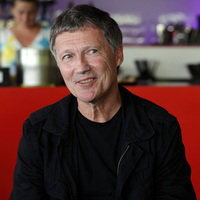 Michael RotherFormer (1971–1971)Eberhard KranemannFormer (1970–1971)Andreas HohmannFormer (1970–1970)Thomas LohmannFormer (1970–1970)Ralf HütterHouschäng NejadépourFormer (1970–1971)Peter SchmidtFormer (1970–1971)Florian SchneiderFormer (1970–2008-11)Plato KosticFormer (1973–1973)Emil SchultFormer (1973–1973)Wolfgang FlürFormer (1973–1987)Klaus RöderFormer (1974–1974)
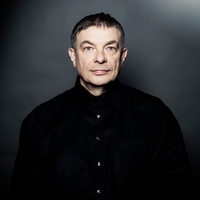 Karl BartosFormer (1975–1990)Fritz HilpertFormer (1987–2022-09-02)Fernando AbrantesFormer (1991–1991)Henning SchmitzStefan PfaffeFormer (2008–2012)Falk GrieffenhagenGeorg Bongartz
Albums
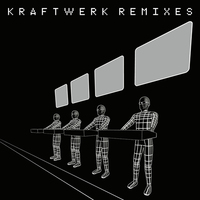 Remixes2020
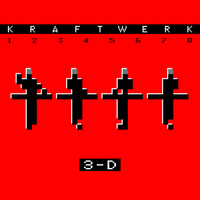 3‐D The Catalogue2017
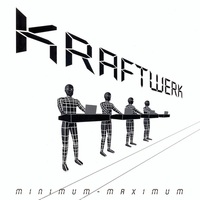 Minimum‐Maximum2005
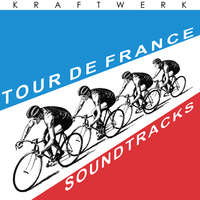 Tour de France Soundtracks2003
 The Man-Machine Recreated1999
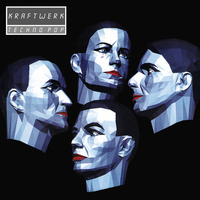 Electric Cafe1986
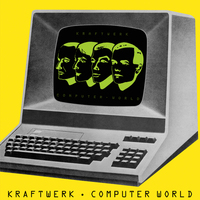 Computerwelt1981
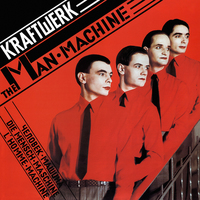 Die Mensch·Maschine1978
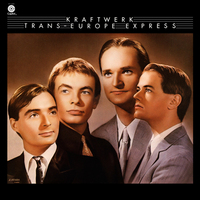 Trans Europa Express1977
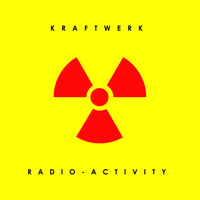 Radio‐Aktivität1975
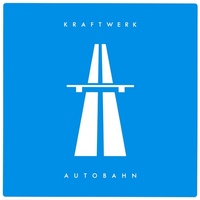 Autobahn1974
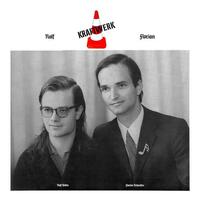 Ralf & Florian1973
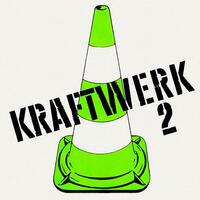 Kraftwerk 21972
 Kraftwerk1970
 The Continental Drift2024Transmission Impossible2022The Fairfield Four (UK Broadcast 1975)2022Soest Live2020Klingklang Archaeology 1970–19732020Kraftwerk Collection2020King Biscuit Radio 19752020Oscillator2017Energie2017Radio Bremen 197120172014-03-21: Walt Disney Concert Hall, Los Angeles, CA2014Ultra Rare Tracks201425 Best Songs2014Kraftwerk: Man-Nature-Technology2013Live in Paris 1976 / Live in Utrecht 19812012Die Klassik Werks, Volume 32010The Best 5.120081974–20042005Deutsche Wertarbeit2005At the Cirkus2004Aerodynamik / Expo 2000 Remix2004Aktivität‐In‐Rom2004Ultra Rare Traxx 22004Ultra Rare Traxx 320042004-05-01: Coachella Music & Arts Festival, Indio, CA, USA2004Ultra Rare Trax, Volume 22003An Atelier2002Re-Werked Remix1999Der Robotmix1999The Warfield Theater Soundboard1999Neue Version1999Concert Classics1998Vor uns Metropolis1998Computersinfonien1998Tribal Gathering1997Ultra Rare Trax1997Die Rückkehr der Mensch‐Maschine (Return of the Man‐Machine)1997Brain to Midi1997Robotronik Übermensch1997Kling und Klang: Live a Milano 19911997The Model / Showroom Dummies1996Toccata Electronica1995Kraftwerk: The Very Best1995Virtu Ex Machina1992European Tour 1991–921992The Remix1992Rebuilt in Ninetytwo, Part Two1992The Model: Retrospective 1975–19781992Numbers1992Arbeiten・Works・Œuvres1991Computers in Love1991Düsseldorf Philipshalle 31 10 19911991Heute Abend1991Nippon Numbers: Live at Nakano Sun Plaza1981Exceller 81975Hyper Cerebral Machine2008-09-19: Sacrum Profanum Festival, Nowa Huta, Arcelor Mittal Steel Factory, Kraków, PolandZKM Live October, 18th 1997 Multimediale 52008-04-26: Coachella Festival, Empire Polo Field, Indio, CA, USA1991-10-31: Düsseldorf, GermanyThe First DJ Edition1998-06-11: Live in Detroit 1998: State Theater, Detroit, MI, USA1981-09-07: Virtu Ex Machina: Nakano Sun Plaza, Tokyo, Japan2002-09-25: Cité de la Musique, Paris, FranceSchöne neue Welt ...: Re-Mix, Re-ModelFrühwerke1981-09-13: Oriental Computer: Koseinenkin Kaikan Hall, Nagoya, Japan
Singles
 Heimcomputer2021
 Aerodynamik + La Forme (Remixes)2007
 Aerodynamik2004
 Expo20001999
 Tour de France1983Autobahn (Jim Rider remixes)2024Radioactivity ( 1 7 8 8 - L / R E M I X )2018Tour de France Etape 2 – 3‐D (edit)201745RPM2012In the Kraftwerk Tonight2009Tour de France (Etape 2) (edit)2003Trans Europe Express1999Tour de France / Computer Games1996German Kraft / Servant and Master Mix1987The Telephone Call1987Musique Non Stop1986Computerwelt1981Numbers1981Pocket Calculator1981Die Roboter1978Showroom Dummies1977Trans Europa Express1977Radioaktivität1975Autobahn1974Kometenmelodie 21974Kohoutek-Kometenmelodie1973
EPs
Others
2004‐02‐25: Japan Osaka Namba Hatch2004K4: Bremen Radio 1971Kraftwerk and the Electronic Revolution: A Documentary FilmUnknown Blue VinylTrans Europe Express / Numbers / Musique Non Stop / HomecomputerEndless3-D 12345678Kraftwerk vs. Yello: Electronic LandscapesIn No Time: Live 1974Live in Dallas, 1 May 1975The Continental DriftDas Model