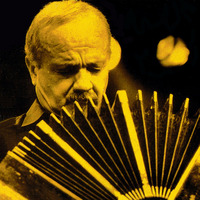
Astor Piazzolla
Astor Piazzolla (March 11, 1921 – July 4, 1992) was an Argentine tango composer and bandoneón player. His oeuvre revolutionized the traditional tango into a new style termed nuevo tango, incorporating elements from jazz and classical music. An excellent bandoneonist, he regularly performed his own compositions with different ensembles. He is known in his native land as "El Gran Astor" ("The Great Astor"). Ástor Pantaleón Piazzolla was born in Mar del Plata, Argentina in 1921 to immigrant Italian parents, Piazzolla spent most of his childhood with his family in New York City. While there, he acquired fluency in four languages: Spanish, English, French, and Italian. He also started playing the bandoneon, quickly rising to the status of child prodigy. While still quite young, he met Carlos Gardel, another great figure of Argentine tango. He returned to Argentina in 1937, where strictly traditional tango still reigned, and played in night clubs with a series of groups. The pianist Arthur Rubinstein (then living in Buenos Aires) advised him to study with the Argentine composer Alberto Ginastera. Delving into scores of Stravinsky, Bartók, Ravel, and others, he gave up tango temporarily and worked as a modernist classical composer. At Ginastera's urging, in 1953 Piazzolla entered his "Buenos Aires" Symphony in a composition contest, and won a grant from the French government to study in Paris with the French composer and conductor Nadia Boulanger. The insightful Boulanger turned his life around in a day, as Piazzolla tells beautifully in his own words: "When I met her, I showed her my kilos of symphonies and sonatas. She started to read them and suddenly came out with a horrible sentence: ‘It's very well written.’ And stopped, with a big period, round like a soccer ball. After a long while, she said: “Here you are like Stravinsky, like Bartók, like Ravel, but you know what happens? I can't find Piazzolla in this.” And she began to investigate my private life: what I did, what I did and did not play, if I was single, married, or living with someone, she was like an FBI agent! And I was very ashamed to tell her that I was a tango musician. Finally I said, “I play in a ‘night club.’” I didn't want to say “cabaret.” And she answered, “Night club, mais oui, but that is a cabaret, isn't it?” “Yes,” I answered, and thought, “I'll hit this woman in the head with a radio....” It wasn't easy to lie to her. She kept asking: “You say that you are not pianist. What instrument do you play, then?” And I didn't want to tell her that I was a bandoneon player, because I thought, “Then she will throw me from the fourth floor.” Finally, I confessed and she asked me to play some bars of a tango of my own. She suddenly opened her eyes, took my hand and told me: “You idiot, that's Piazzolla!” And I took all the music I composed, ten years of my life, and sent it to hell in two seconds." Piazzolla returned to Argentina in 1955, formed the Octeto Buenos Aires to play tangos, and never looked back. Upon introducing his new approach to the tango (nuevo tango), he became a controversial figure among Argentines both musically and politically. The Argentine saying "in Argentina everything may change — except the tango" suggests some of the resistance he found in his native land. However, his music gained acceptance in Europe and North America, and his reworking of the tango was embraced by some liberal segments of Argentine society, who were pushing for political changes in parallel to his musical revolution. During the period of Argentine military dictatorship from 1976 to 1983, Piazzolla lived in France, but returned many times to Argentina, recorded there, and on at least one occasion had lunch with the dictator Jorge Rafael Videla. However, his relationship with the dictator might have been less than friendly, as recounted in Astor Piazzolla, A manera de Memorias (a comprehensive collection of interviews, constituting a memoir): In 1990 he suffered a thrombosis in Paris and he passed away two years later in Buenos Aires. Piazzolla's nuevo tango was distinct from the traditional tango in its incorporation of elements of jazz, its use of extended harmonies and dissonance, its use of counterpoint, and its ventures into extended compositional forms. Piazzolla also introduced new instruments that were not used in the traditional tango, including the flute, saxophone, electric guitar, electronic instruments, and a full jazz/rock drum kit. Piazzolla played with numerous ensembles beginning with the 1946 Orchestra, the 1955 "Octeto Buenos Aires", the 1960 "First Quintet", the 1971 "Noneto", the 1978 "Second Quintet" and the 1989 "Sextet". As well as providing original compositions and arrangements, he was the director and Bandoneon player in all of them. He also recorded an album with jazz sax player Gerry Mulligan. His numerous compositions include orchestral work such as the "Concierto para Bandoneón, Orquesta, Cuerdas y Percusión", "Doble-Concierto para Bandoneón y Guitarra", "Tres Tangos Sinfónicos" and "Concierto de Nácar para 9 Tanguistas y Orquesta", as well as song-form compositions that still today are well known by the general public in his country, like "Balada para un loco" (Ballad for a madman) and "Adiós Nonino" (dedicated to his father) which he recorded many times with different musicians and ensembles. Biographers estimate that Piazzolla wrote around 3,000 pieces and recorded around 500. He suffered a cerebral haemorrhage in Paris on 4 August 1990, which left him in a coma, and died in Buenos Aires, just under two years later on 4 July 1992, without regaining consciousness. other albums not listed here ~ The Birth of Tango Nuevo, Vol. 1 - Sinfonia de Tango ~ Mis 30 Mejores Tangos ~ Piazzolla Interpreta A. Piazzolla (Original Album - Remastered) ~ Ensayos ~ Tiempo Nuevo ~ Se Armó ~ El Milrago - The Early Recordings, Vol. 2 (Astor Piazzolla With His First Own Orchestra, So Called 1946 Band.) ~ Tango Moderno
Biography from Last.fm, available under CC BY-SA.
Country: AR
Deathdate: 1992-07-04
Disambiguation: composer and bandoneón player
Gender: Male
Is Living: No
Groups
 Astor Piazzolla y su QuintetoFormer (1973–1973)Astor Piazzolla y su Nuevo OctetoAstor Piazzolla y su Quinteto Tango NuevoFormer (1978–1988)Astor Piazzolla y su sexteto tango nuevoFormer (1989–1989)Orquesta Astor PiazzollaQuinteto Astor PiazzollaAstor Piazzolla y su Conjunto 9Octeto Buenos AiresAstor Piazzolla y su OrquestaAstor Piazzolla and His Tango Quintet
Albums
 CELLISTA2023
 Astor Piazzolla2004
 The Soul of Tango: Greatest Hits2000
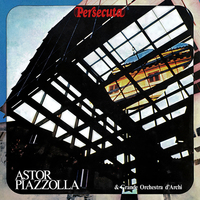 Persecuta1999
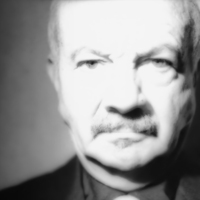 La Camorra: La soledad de la provocación apasionada1989
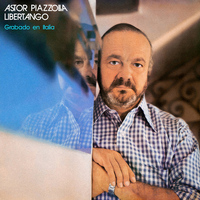 Libertango1974
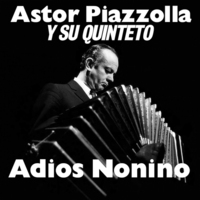 Adiós Nonino
 Classical for Sleep2025Music for Guitar2024María de Buenos Aires2024Se4sons2024Seasons Interrupted2024Arrangements for Violin & String Orchestra2024Beethoven vs Piazzolla2023Escualo2023Album for Astor2022Intervalles: Music for Flute & Harp2022Sixteen Seasons2022A French Connection: Chausson, Debussy, Franck2022The Mandolin Seasons2022Astor Piazzolla2021Elogio de la Guitarra2021Extasis2021Nuevo Tango Concertos2021Latin American Dances: Works for Saxophone and Piano2021A Piazzolla Trilogy2021Double Echo2021Aconcagua, Las Cuatro Estaciones Porteñas2021Piazzolla Stories2021Piazzolla Reflections2020Four Seasons2020My Double Bass2019Quejas de bandoneón2019Tango Seasons2019Tango2019Couleurs d'Amerique2018Ángeles y Diablos2018Misterio2018Transcripts Pour Deux Clavecins2018Piazzolla: María De Buenos Aires2017Piazzolla2017Las 4 estaciones porteñas2017Duettango2017La Musique de Buenos Aires2017Guitarra mía: Tangos by Gardel and Piazzolla2017Tango Nuevo2016Four Seasons20168 Jahreszeiten2016The 12 Seasons2016Dance!2015Piano Seasons2015Time of Life20158 Seasons2015Adiós Nonino (Remastered)2014The Argentinian Album2014Schumann Shostakovitch Piazzolla2014Completo En Philips Y Polydor · Volumen IV 1975 - 19852014Basso Bailando2013Octeto Buenos Aires2013Tango!2013Una utopía argentina2012Histoire du Tango2012Guitar Recital20128cho estaciónes2012Completo En Philips Y Polydor · Volumen III 1967 - 19692012Completo En Philips Y Polydor · Volumen I 1964 - 19652012Piazzolla plays Piazzolla2012Tanguísimo2012Changing Colors20124 estaciones porteñas2012Sensations2011The Four Seasons of Buenos Aires2011The Eight Seasons2010Sinfonía Buenos Aires / Bandoneón Concerto "Aconcagua" / Las cuatro estaciones porteñas2010Piazzolla for Violin, Brass and Percussion2010Les Quatre Saisons2010BD World: Astor Piazzolla2009Live & Studio2009The Beginning of Tango Nuevo2009Vivaldi / Piazolla: Seasons2009Maestro & Revolutionary: An Introduction20091956-1957 Completo2009The Piazzolla Project2009The Four Seasons / The Four Seasons of Buenos Aires2009Tango nuevo2008Astor Piazzolla with Amelita Baltar2008Edición crítica: Piazzolla · Goyeneche en vivo (mayo 1982)2008Best Of2007Pasión argentina2007Le Grand Tango2007Oblivion2007Essential Tango2007Non Stop Music2007María de Buenos Aires Suite / Verano porteño / Milonga del ángel (Versus Ensemble)2006Tutto Piazzolla: Il Re Del Tango2006Tangos d'Argentine, Tangos du Brésil2006The History of Tango2006Grandes del tango 182006Supreme Stereo Sound Nº1: Red Sleeves2006In the beginning2006
Singles
EPs
Others
Piazzolla - Great RecordingsMaster Of The BandoneonDancing with PiazzollaPrimavera porteñaPreferencesPiazzolla - GoyenecheAstor Piazzola/Roberto GoyenechePiazolla/StalmanGrandes éxitosSiglo del tango argentinoPiazzolla & Amelita BaltarTango!Maestro del TangoTangoAconcaguaArrangements for GuitarEscale a Buenos Aires / Port of Call: Buenos Aires