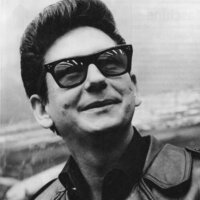
Roy Orbison
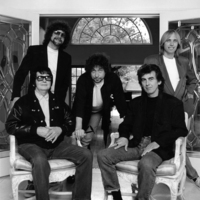
Roy Kelton Orbison (April 23, 1936 – December 6, 1988), nicknamed "The Big O", was an influential American singer-songwriter and a pioneer of rock and roll, whose recording career spanned more than four decades. By the mid-1960s Orbison was internationally recognized for his ballads of lost love, rhythmically advanced melodies, three-octave vocal range, characteristic dark sunglasses, and sometimes distinctive usage of falsetto, typified in songs such as "Only the Lonely, "Oh, Pretty Woman", and "Crying". In 1989, he was inducted posthumously into the National Academy of Popular Music/Songwriters Hall of Fame. Two common misconceptions about his appearance stubbornly continue to surface about Orbison: one, that he was an albino, and two, that he wore his trademark dark glasses because he was blind or nearly so. Neither is correct, although his poor vision required him to wear thick corrective lenses (He suffered from childhood from a combination of hyperopia, severe astigmatism, presbyopia, anisometropia, and strabismus). Orbison's trademark sunglasses were a fashion statement arising from an accident early in his career. Due to go onstage in a few minutes, Orbison left his regular glasses in an airplane. Unable to see without corrective lenses, the only other pair of glasses he had available were darkly tinted prescription sunglasses. "I had to see to get onstage," so he wore the glasses throughout his tour with the Beatles, and he carried on with it for the rest of his professional career. "I'll just do this and look cool." Early life and career Orbison was born in Vernon, Texas, the second son of Nadine and Orbie Lee. After moving to Fort Worth around 1943 to find work in the munitions and aircraft factories expanded as a result of the Second World War, the family moved to the tiny oil town of Wink in late 1946. Music was an important part of his family life. In 1949, at age 13, he organized his first band, "The Wink Westerners", and when not singing with the band he spent his time playing guitar and writing songs. The band appeared weekly on KERB radio in Kermit, Texas. Orbison graduated from Wink High School in 1954. He attended North Texas State College in Denton, Texas for a year, and enrolled at Odessa Junior College in 1955 to study history and English. The Wink Westerners had some success on local television, being given 30 minute weekly shows on KMID and then KOSA. One of the guests on their show was Johnny Cash, who advised them to seek a contract with his record producer, Sam Phillips, of Sun Records. Having renamed The Wink Westerners as "The Teen Kings", Orbison left college in March 1956, determined to give music a serious try, and headed for Sun Records in Memphis, Tennessee. Many of the earliest songs he recorded were produced by Sam Phillips, who also produced Jerry Lee Lewis, Carl Perkins, Johnny Cash, and Elvis Presley. Orbison achieved his first commercial success in June 1956 with "Ooby Dooby", a song written by friends of Orbison from college. His song "Claudette", named after his first wife, was recorded by The Everly Brothers as the B-side to their Number 1 hit "All I Have To Do Is Dream". However, the rockabilly and blues sounds of Sun's artists did not bring Orbison much success and his career seemed over, although fans of rockabilly music count his records among the best that this kind of music has to offer. For a time, he worked at Acuff-Rose Music in Nashville, Tennessee as a songwriter, and then was given a contract by RCA, but eventually Chet Atkins referred him to Fred Foster, the owner of Monument Records, where he moved after his contract with RCA ended in 1959. Breakthrough and sudden decline At Monument, Foster encouraged him to break from his established style. Under Foster's guidance, he began writing his own songs alone or in collaboration with Joe Melson and later Bill Dees, developing his signature operatic voice, and creating a sound unheard of in rock and roll at the time. His first record, "Uptown" was moderately successful. With the release of "Only the Lonely" and its immediate rise to the top of the charts (#2 in the US, #1 in the UK), he went on to become an international rock and roll star. His follow-up single, "Running Scared" became a US #1. Throughout his stay at Monument Records, his backup band was a group of outstanding studio musicians led by Bob Moore. The play of Orbison's voice against the dynamic yet uncluttered sound of the band gave Orbison's records a unique, identifiable sound. A powerful influence on his contemporaries such as The Rolling Stones, in 1963, Roy Orbison headlined a European tour with The Beatles, becoming lifelong friends with the band, in particular with John Lennon and George Harrison. Orbison would later record with Harrison as part of The Traveling Wilburys. During their tour of Europe, an impressed Roy Orbison encouraged The Beatles to come to the United States. When they finally decided to try America, they asked Orbison to manage their first tour but his own schedule forced him to turn down what was to become an astounding success. Unlike many artists, Orbison maintained his success as the British Invasion swept America in 1964. His single "Oh, Pretty Woman" broke the Beatles' stranglehold on the Top 10, soaring to No. 1 on the Billboard charts. The record sold more copies in its first ten days of release than any 45rpm up to that time and would go on to sell more than seven million copies. The song later became the signature tune for the film Pretty Woman, named for his song, which brought fame to actress Julia Roberts. He toured with The Beach Boys in 1964, and with The Rolling Stones in Australia in 1965. He was very successful in England, logging three No.1 hit singles and was several times voted top male vocalist of the year. Orbison signed a contract with MGM Records in 1966, and starred in MGM Studios' western-musical motion picture The Fastest Guitar Alive in which he would perform several songs from an album of the same name. However, due to changes in musical taste, he suddenly ceased to have hits in the United States after 1967, and although he would remain popular elsewhere, his American popularity did not recover until the 1980s. He also suffered problems in his personal life, with the death of his first wife, Claudette (Frady), in a motorcycle accident in 1966 after 11 years of marriage. Two years later, the family home at Old Hickory Lake in Hendersonville, Tennessee burned to the ground while Orbison was touring in England, and two of his three young sons, Anthony and Roy Jr., died in the fire. The youngest boy, Wesley, at the time only three, was saved by Orbison's parents. He met his second wife, Barbara, in August 1968, in Leeds, England, and they were married in Nashville on May 25, 1969. His contract with MGM ended in 1973, and he signed for Mercury Records. Songs that had only reasonable success in North America, such as "Penny Arcade" and "Working for the Man", would go to Number 1 on the Australian charts, and "Too Soon to Know" was Number 3 in England. His popularity extended to Germany, and he recorded his hit song "Mama" in German. His records were in great demand on the "black market" behind the Iron Curtain. In France, he was viewed as the master of the ballad of lost love in the vein of that country's most popular singer Édith Piaf, and a cover version of Orbison's "Blue Bayou" sung in French by Mireille Mathieu went to the top of France's record charts. Fans in the Netherlands founded his largest world-wide fan club. He continued to perform in Ireland, despite the constant terrorist activities in Northern Ireland. A rendition of the popular ballad "Danny Boy" on the 1972 Memphis album is considered one of the best recordings ever made of this much-recorded song. He re-signed with Monument in 1976, but his career remained in the doldrums until the late 1980s. Resurgence in the 1980s In 1980, Orbison teamed up with Emmylou Harris to win the 1981 Grammy Award for Best Country Performance by a Duo or Group with Vocal for their song, "That Lovin' You Feelin' Again". In 1985, Orbison recorded "Wild Hearts" for the Nic Roeg film Insignificance, released on the ZTT Records label, produced by David Briggs and Will Jennings. The inclusion of "In Dreams" in the 1986 David Lynch film Blue Velvet also aided Orbison's popular resurrection. He was inducted into the Rock and Roll Hall of Fame in 1987, the induction speech made by Bruce Springsteen (who had famously referenced Orbison and "Only the Lonely" in his 1975 song "Thunder Road"). His pioneering contribution was also recognized by the Rockabilly Hall of Fame. Having signed a recording contract for the first time in 10 years, with Virgin Records, he re-recorded his 1961 hit song, "Crying," as a duet with k.d. lang in 1987 for the soundtrack of the motion picture, Hiding Out. The song would earn the Grammy Award for Best Country Collaboration with Vocals. Roy Orbison and Friends: A Black and White Night, a black and white Cinemax television special recorded at the Coconut Grove in the Ambassador Hotel in Los Angeles in 1988, brought Orbison to the attention of a younger generation. Orbison was accompanied by a who's-who supporting cast, organized by musical director T-Bone Burnett, all fans and all volunteers who lobbied to participate: on piano was Glen Hardin, who had played for Buddy Holly as well as working with Elvis Presley for a number of years; lead guitarist James Burton had also played with Presley; male background vocals, with some also playing the guitar, came from Bruce Springsteen, Tom Waits, Elvis Costello, Jackson Browne, J.D. Souther, and Steven Soles; and k.d. lang, Jennifer Warnes, and Bonnie Raitt provided female background vocals. Shortly after this critically acclaimed performance, whilst working with Jeff Lynne of Electric Light Orchestra on tracks for a new album, Orbison joined Bob Dylan, George Harrison, Jeff Lynne and Tom Petty to form The Traveling Wilburys, achieving substantial commercial and critical success. He subsequently recorded a new solo album, Mystery Girl, produced by Orbison, Mike Campbell (of Tom Petty's Heartbreakers), and Jeff Lynne. It included one track by U2's Bono (who also wears trademark dark glasses and co-wrote the track "She's a Mystery to Me" with The Edge specifically for Orbison). At an awards ceremony in Antwerp, a few days before his death, Roy Orbison gave his only public rendition of the hit "You Got It" to the applause of a huge crowd. Death Orbison had triple heart bypass surgery on January 18, 1978 and enjoyed smoking most of his life. On December 6, 1988, at the age of 52, he suffered a fatal heart attack while visiting his mother in the Nashville, Tennessee suburb of Hendersonville. At the direction of his second wife, Barbara, Roy Orbison was interred on December 15, 1988, in the Westwood Village Memorial Park Cemetery in Westwood, California. His two sons and their mother, Claudette, who predeceased him, had been laid to rest at his request in the Woodlawn Memorial Park Cemetery in Nashville, Tennessee. His new album, Mystery Girl, and the single from it, "You Got It", were posthumous hits, and are generally regarded as Orbison's best work since his success of the 1960s. He was the posthumous winner of the 1991 Grammy Award for Best Male Pop Vocal Performance and in 1992, the popular "I Drove All Night" and "Heartbreak Radio" appeared on the posthumous album, King of Hearts, produced by Jeff Lynne. Legacy Orbison is most remembered for his ballads of lost love, and within the music community he is revered for his song-writing abilities. Record producer and Orbison fan Don Was, commenting on Orbison's writing skills, said: "He defied the rules of modern composition." Songwriter Bernie Taupin, composer of many lyrics for Elton John, and others referred to Orbison as far ahead of the times, creating lyrics and music in a manner that broke with all traditions. Roy Orbison's vocal range was impressive (three octaves) and his songs were melodically and rhythmically advanced and lyrically sophisticated. Three songs written and recorded by Orbison, "Only the Lonely," "Oh, Pretty Woman," and "Crying," are in the Grammy Hall of Fame. In 2004, Rolling Stone named those three songs plus "In Dreams" on its list of the "500 Greatest Songs of All Time." In 1989, he was inducted posthumously into the National Academy of Popular Music/Songwriters Hall of Fame. From the stage in Las Vegas in 1976, Elvis Presley called Orbison "the greatest singer in the world", and Barry Gibb of the Bee Gees referred to him as the "Voice of God." Multiple Academy Award–winning songwriter Will Jennings ("My Heart Will Go On," from the Titanic soundtrack) called him a "poet, a songwriter, a vision," after working with him and co-writing "Wild Hearts." Bob Dylan, later a bandmate of Orbison's in the Traveling Wilburys, wrote "Orbison … transcended all the genres. … With Roy, you didn't know if you were listening to mariachi or opera. He kept you on your toes. … [He sang] his compositions in three or four octaves that made you want to drive your car over a cliff. He sang like a professional criminal. … His voice could jar a corpse, always leave you muttering to yourself something like, 'Man, I don't believe it.' His songs had songs within songs. Orbison was deadly serious–no pollywog and no fledgling juvenile. There wasn't anything else on the radio like him." www.royorbison.com
Biography from Last.fm, available under CC BY-SA.
Country: US
Deathdate: 1988-12-06
Gender: Male
Is Living: No

Albums
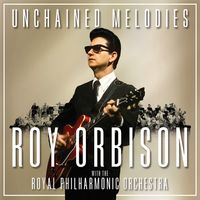 Unchained Melodies2018
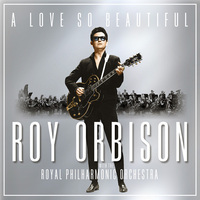 A Love So Beautiful2017
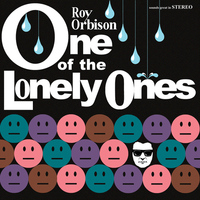 One of the Lonely Ones2015
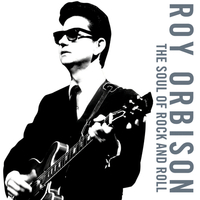 The Soul of Rock and Roll2008
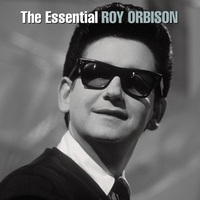 The Essential Roy Orbison2006
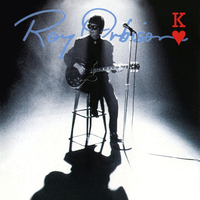 King of Hearts1992
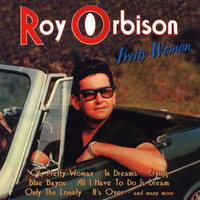 Pretty Woman1990
 Blue Bayou1989
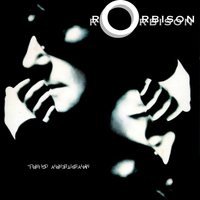 Mystery Girl1988
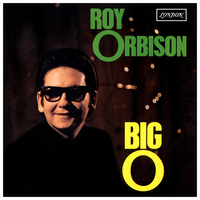 Big 'O'1987
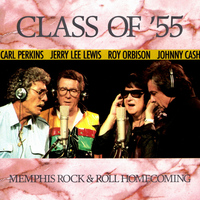 Class of ’55: Memphis Rock & Roll Homecoming1986
 Milestones1973
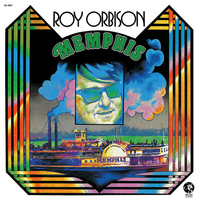 Memphis1972
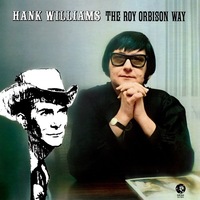 Hank Williams the Roy Orbison Way1970
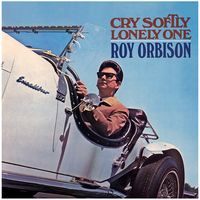 Cry Softly Lonely One1967
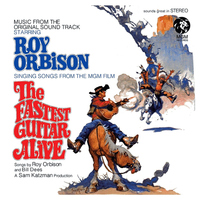 The Fastest Guitar Alive1967
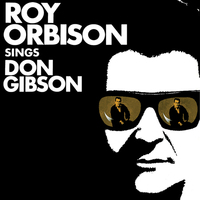 Sings Don Gibson1967
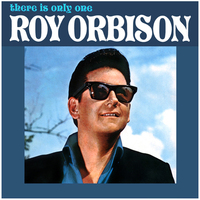 There Is Only One Roy Orbison1965
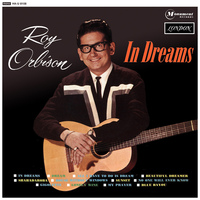 In Dreams1963
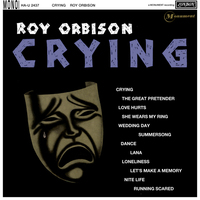 Crying1962
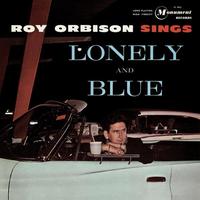 Lonely and Blue1961
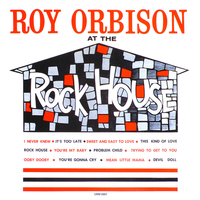 At the Rock House1961
 A Cat Called Domino: Rare Cuts from Roy2024Only the Lonely - 25 Unheard Demo Recordings2024Blue Angel - 31 More Rare Demo Recordings2024Come Back to Me - 25 More Rare Demo Recordings2024Roy Orbison At Sun Studios, Memphis (Remastered)2021Original Mono Singles As Bs2020The Big O2019Roy Orbison: The MGM Years 1965 - 19732015In a Blue Mood: Unreleased Recordings2014The Indispensable 1959-19622014The Sun Years 1956-19582014The Roy Orbison Story-Shahadaroba2013A True Love Goodbye: Essential Collection2012Crying: The Magic of Roy Orbison2012Lonely & Blue / At the Rock House2012Opus Collection2011Greatest Hits2009Ooby Dooby2009Sing Elvis Presley and Others!2009Purely... Roy Orbison2008Playlist: The Very Best of Roy Orbison2008The Best of the Soul of Rock and Roll2008Only the Lonely2007Roy Orbison2007Roy Orbison: The Collection2007Bits & Pieces About ... Roy Orbison2006Roy Rocks2006Ultimate Male, Volume 22005Devil Doll2005...Sings, Volume 3: The MGM Albums2004Roy Orbison's Many Moods / The Big O2004Solo lo mejor de Roy Orbison2004Most Famous Hits: The Album2004The Hits Collection2003Pretty Woman Dream: Greatest Hits2003Love Songs2003The Essential Sun Years2003Monumental Hits2002Sings the Tearjerkers2002Love Songs2002The MGM Singles - 1965-19732002Roy Orbison2001The Complete Sun Sessions2001Orbison 1955–19652001The Very Best of Roy Orbison2000Roy Orbison2000… at His Best2000Live at Austin City Limits August 5, 19822000Live From Batley Variety Club1999The Sun Collection1999Sweets for Sweden - The Very Best Of1999The Glory Years1999Black & White Night1999The Big O: The Original Singles Collection1998Live at the BBC1998Interview CD With Q & A1997Roy Orbison1997The Very Best of Roy Orbison1996The Concert Collection - In Dreams1996The Essential Collection1995Live & Alive1995The Hit Collection1995Shades of Roy Orbison1994Legends1994The Heart of Roy Orbison1993The Great Roy Orbison in Concert1993In Dreams / Orbisongs1993Ride Away1992His Greatest Hits1992Rare Recordings1992Dream Baby - Best1992Love Songs1992Best of His Rare Solo Classics1991The Hits (3 CD Box Set)1990Legends in Music1990Swingin' Rockin' "O"1990Collection Gold1990The Legendary Roy Orbison1990
Singles
Devil Doll2019Heartbreak Radio1992Windsurfer1990She's a Mystery to Me1989Oh Pretty Woman1989Class of ’55 / We Remember the King1986Sixteen Candles / Rock and Roll (Fais-Do-Do)1986Wild Hearts (…time)1985That Lovin' You Feelin' Again / Lola1980Penny Arcade / Tennessee Owns My Soul1969My Friend / Southbound Jericho Park1969(Say) You're My Girl / Sleepy Hollow1965Goodnight / Only With You1965Pretty Woman / Yo te amo Maria1964It’s Over / Indian Wedding1964Borne on the Wind / What’d I Say1964The Crowd / Mama1962Only the Lonely (Know How I Feel) / Here Comes That Song Again1960You’re My Baby / Rockhouse1956Ooby Dooby / Go! Go! Go!1956