
Pete Seeger
Pete Seeger (May 3, 1919 - January 27, 2014) was an American folk singer, political activist and author, and a key figure in the mid-20th century American folk music revival. He is particularly loved as the author (or co-author) of the songs Where Have All the Flowers Gone, If I Had a Hammer, and Turn, Turn, Turn. One of his brothers is Mike Seeger; Peggy Seeger is his half-sister. As a member of The Weavers, Seeger had a string of hits, including a 1949 recording of Leadbelly's "Goodnight Irene" that topped the charts for 13 weeks in 1950. He was formerly a member of the Communist Party of the United States of America and was a major contributor to folk and protest music in the 1950s and the 1960s. Perhaps best known today as the author or co-author of the songs Where Have All the Flowers Gone, If I Had a Hammer, and Turn, Turn, Turn, songs that have been recorded by many artists both in and outside the folk revival movement and which are still sung all over the world. Flowers was a hit recording for The Kingston Trio (1962), Marlene Dietrich, who recorded it in English, German and French (1962), and Johnny Rivers (1965). "If I Had a Hammer" was a hit for Peter, Paul & Mary (1962) and Trini Lopez (1963), while The Byrds popularized "Turn, Turn, Turn" in the mid-1960s. Early work Seeger dropped out of Harvard (where he studied journalism) in 1939, and he took a job in Washington, D.C. at the Archive of American Folk Song in the Library of Congress. In that capacity, he met and was influenced by many important musicians such as Woody Guthrie and Leadbelly. He met Woody at a "Grapes of Wrath" migrant workers concert on March 3, 1940 and the two began a musical collaboration after that. In 1948, Seeger wrote the first version of his now-classic How to Play the Five-String Banjo, a book that many banjo players credit with starting them off on the instrument. He went on to invent the Long Neck or Seeger banjo. This instrument is three frets longer than a typical banjo, slightly longer than a bass guitar at 25 Frets, and is tuned a minor third lower than the normal 5-string banjo. As a self-described "split tenor" (between an alto and a tenor), he was a founding member of the folk groups the Almanac Singers with Woody Guthrie and the Weavers with Lee Hays, Ronnie Gilbert, and Fred Hellerman. The Weavers had major hits in the early 1950s before being blacklisted in the McCarthy Era. On August 18, 1955, Pete was subpoenaed to testify before the House Un-American Activities Committee (HUAC) where he refused to name personal and political associations stating it would violate his First Amendment rights... "I am not going to answer any questions as to my association, my philosophical or religious beliefs or my political beliefs, or how I voted in any election, or any of these private affairs. I think these are very improper questions for any American to be asked, especially under such compulsion as this." Seeger's refusal to testify led to a March 26, 1957 indictment for contempt of Congress; for some years, he had to keep the federal government apprised of where he was going any time he left the Southern District of New York. He was convicted in a jury trial in March 1961, and sentenced to a year in jail, but in May 1962 an appeals court ruled the indictment to be flawed and overturned his conviction. Seeger started a solo career in 1958 and is known for songs such as "Where Have All the Flowers Gone?," "If I Had a Hammer" (co-written with Lee Hays), "Turn, Turn, Turn," adapted from the Book of Ecclesiastes, and "We Shall Overcome" (based on a spiritual and later became the unofficial anthem for the civil rights movement). Seeger became influential in the 1960s folk revival centered in Greenwich Village. He helped found Broadside Magazine and Sing Out! He was strongly associated with Moses Asch and Folkways Records. To describe the new crop of folk singers, many of whom were politically minded in their songs, he coined the phrase "Woody's children", alluding to his former bandmate Woody Guthrie, who had become a legendary figure. He has often sung and is associated with the song "Joe Hill". In the mid-sixties, he hosted a regional folk music TV show called Rainbow Quest which featured folk musicians playing traditional folk music. Among his guests were Johnny Cash, June Carter, Mississippi John Hurt, Buffy Sainte-Marie, Roscoe Holcomb, The Stanley Brothers, Doc Watson, Tom Paxton, Judy Collins, Richard Fariña and Mimi Fariña, and many others. Thirty-eight hour-long programs were recorded at new UHF station WNJU's Newark studios in 1965 and 1966, produced by Seeger and his wife Toshi with Sholom Rubinstein. An early advocate of Bob Dylan, Seeger was supposedly incensed over the distorted electric sound Dylan brought into the 1965 Newport Folk Festival, especially with the inability to hear the lyrics. There are many conflicting versions of exactly what ensued, some claiming that he tried to disconnect the equipment. He is often cited as one of the main opponents to Dylan at Newport 1965, but claimed in 2005: "There are reports of me being anti-him going electric at the '65 Newport Folk Festival, but that's wrong. I was the MC that night. He was singing 'Maggie's Farm' and you couldn't understand a word because the mic was distorting his voice. I ran to the mixing desk and said, 'Fix the sound, it's terrible!' The guy said 'No, that's how they want it.' And I did say that if I had an axe I'd cut the cable! But I wanted to hear the words. I didn't mind him going electric. Later work Seeger achieved some notoriety in 1967 and 1968 for his song "Waist Deep in the Big Muddy", about a captain—a "big fool"—who drowned while leading a platoon on maneuvers in Louisiana during World War II. Seeger performed the song on the Smothers Brothers Comedy Hour after some arguments with CBS about whether the song's lyrics were objectionable. Although the song was cut from the Smothers Brothers show in September 1967, Seeger returned in January 1968 and sang the entire song. It was an allegory about the U.S. under the leadership of Lyndon Johnson which was in over its head in the Vietnam War. Another slight against Lyndon Johnson can be heard in his singing of Len Chandler's seemingly juvenile song, "Beans in My Ears" from his 1966 album Dangerous Songs!? in which he accuses "Mrs. Jay's little son Alby" (Alby Jay is meant to sound like LBJ) of having beans in his ears, or of not listening to the people. In 1998 a double-CD tribute album was released - "Where Have All the Flowers Gone: the Songs of Pete Seeger". It contained contributions from Bonnie Raitt, Jackson Browne, Ani DiFranco, Billy Bragg, Eliza Carthy, Bruce Springsteen, Roger McGuinn, Judy Collins, Indigo Girls, Dick Gaughan, Martin Simpson, Odetta and others. Pete Seeger continued to perform occasionally in public until his death, and for several years appeared at the National Storytelling Festival in Jonesborough Tennessee to tell stories, mostly children's stories such as Abiyoyo. He performed at MerleFest April 27-30, 2006 in Wilkesboro, NC. On March 16, 2007, the 88-year-old Pete Seeger performed with his siblings Mike Seeger and Peggy Seeger, and other Seeger family members at the Library of Congress in Washington, D.C., where he had been employed as a folk song archivist 67 years earlier. In April 2006, Bruce Springsteen released a collection of songs associated with Seeger or in Seeger's folk tradition, We Shall Overcome: The Seeger Sessions. Bruce Springsteen performed a series of concerts based on those sessions, to sell out crowds. Springsteen had previously recorded one Seeger favorite, "We Shall Overcome," on the 1998 "Where Have All the Flowers Gone" tribute album. Seeger lived in the hamlet of Dutchess Junction in the Town of Fishkill, NY, and remained very politically active in the Hudson Valley Region of New York, especially in the nearby City of Beacon, NY. He and Toshi purchased their land in 1949, and lived there first in a trailer, then in a log cabin they built themselves, and eventually in a larger house. Seeger joined the Community Church (a church practicing Unitarian Universalism), is considered a famous Unitarian Universalist, and often performed at functions for the Unitarian Universalist Association. Seeger died in 2014 of natural causes. Awards Seeger has been the recipient of many awards and recognitions throughout his career, including: A Grammy Lifetime Achievement Award (1993) The National Medal of Arts from the National Endowment for the Arts (1994) Kennedy Center Lifetime Achievement Honor (1994) The Harvard Arts Medal (1996) Induction into the Rock and Roll Hall of Fame (1996) Grammy Award for Best Traditional Folk Album of 1996 for his record "Pete" (1997)
Biography from Last.fm, available under CC BY-SA.
Country: US
Deathdate: 2014-01-27
Gender: Male
Is Living: No

Albums
 Pete Remembers Woody2012
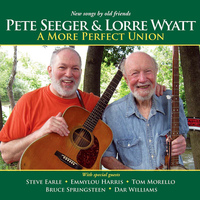 A More Perfect Union2012
 American Folk Anthology2008
 American Industrial Ballads… and More2007
 Folk Music of the World2006
 Pete1996
 Precious Friend1982
 God Bless the Grass1966
 American Favorite Ballads, Vol. 11957
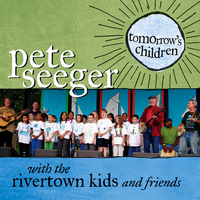 Tomorrow's Children
 The Smithsonian Folkways Collection2019PETE SEEGER The Songs That Inspired A Dream2018Live at Cahn Auditorium, Northwestern University, Evanston, Chicago on 25th October 19562016Gentle On My Mind 19702016In Their Own Words - Live at the Bottom Line2015We Shall Not Be Moved2015Sing Out America! The Best of Pete Seeger2014If I Had a Hammer: The Definitive Collection2013The Essential Pete Seeger2013Live at Mandell Hall 19572012Buffalo Girls2011Kisses Sweeter Than Wine2011The Complete Bowdoin College Concert 19602011Live in '652009At 892008Music From Pete Seeger: The Power Of Song Vol. 12007American Favorite Ballads, Volume 22007Talking Union2007The Legend2006The First Rays of Protest in the Twentieth Century2006Canciones de las Brigadas Internacionales2006Folk Songs, Ballads and Banjo2006Brothers & Sisters2006The Collection2004Which Side Are You On?2003Seeds: The Songs of Pete Seeger, Volume 32003In Prague 19642001The Folk Singer2000Stories and Songs for Little Children2000Headlines & Footnotes: A Collection of Topical Songs1999If I Had a Hammer: Songs of Hope & Struggle1998The 'American Folk Song' Collection1996Sing Out1996A Link in the Chain1996Concert: Folk Songs & Ballads1995More Together Again in Concert1994More Together Again: In Concert, Volume 21994Live at Newport1993American Favorite Ballads1992Singalong1991Concierto en vivo 2: Teatro Opera, agosto 19891990Concierto en vivo: Teatro Opera, agosto 19891990We Shall Overcome: The Complete Carnegie Hall Concert1989Traditional Christmas Carols1989Folkways: A Vision Revisited1988Carry It On: Songs of America's Working People1987The Essential Pete Seeger1986HARP: A Time to Sing!1985Ao vivo em Lisboa1983Circles & Seasons1979Fifty Sail on Newburgh Bay19761975-07-25: Wollman Rink, Central Park, New York, NY, USA1975Together in Concert1975Pete Seeger & Arlo Guthrie Together In Concert1975Visit Sesame Street1974Banks of Marble and Other Songs1974America's Balladeer1973The World Of Pete Seeger1972Rainbow Race1971Pete Seeger Sings Leadbelly1968Children's Concert At The Town Hall1968Now1968Abiyoyo and Other Story Songs for Children1967Waist Deep in the Big Muddy & Other Love Songs1967Dangerous Songs!?1966Little Boxes and Other Broadsides1965Songs of the USA1965On Campus1965Strangers And Cousins (Songs From His World Tour)1965Big Bill Broonzy and Pete Seeger in Concert1965I Can See a New Day1964Broadsides: Songs and Ballads1964We Shall Overcome1963The 12-String Guitar As Played By Leadbelly1963Broadside Ballads, Volume 21963Pete Seeger at the Village Gate, Vol. 21962A Song For You And Me1962The Bitter and the Sweet1962American Favorite Ballads: Songs And Tunes, Vol. 51962American Favorite Ballads, Vol. 41961Songs of the Spanish Civil War, Vol. 1: Songs of the Lincoln Brigade, Six Songs for Democracy1961Gazette, Vol. 21961Story Songs1961Champlain Valley Songs1960Birds, Beasts, Bugs and Fishes (Little and Big): Animal Folk Songs1960Rainbow Quest / Where Have All the Flowers Gone?1960Pete Seeger at the Village Gate1960American Favorite Ballads, Vol. 31959Folk Songs for Young People1959Nonesuch and Other Folk Tunes1959