
Bernard Herrmann
Bernard Herrmann (born Max Herman; June 29, 1911 – December 24, 1975) was an American composer best known for his work in composing for motion pictures. As a conductor, he championed the music of lesser-known composers. An Academy Award-winner (for The Devil and Daniel Webster, 1941; later renamed All That Money Can Buy), Herrmann is particularly known for his collaborations with director Alfred Hitchcock, most famously Psycho, North by Northwest, The Man Who Knew Too Much, and Vertigo. He also composed scores for many other movies, including Citizen Kane, The Day the Earth Stood Still, The Ghost and Mrs. Muir, Cape Fear, and Taxi Driver. He worked extensively in radio drama (composing for Orson Welles), composed the scores for several fantasy films by Ray Harryhausen, and many TV programs, including Rod Serling's The Twilight Zone and Have Gun–Will Travel. Herrmann, the son of a Jewish middle-class family of Russian origin, was born in New York City as Max Herman. His father, Abram Dardik, was from Ukraine and had changed the family name. Herrmann attended high school at DeWitt Clinton High School, an all-boys public school at that time on 10th Avenue and 59th Street in New York City. His father encouraged music activity, taking him to the opera, and encouraging him to learn the violin. After winning a composition prize at the age of thirteen, he decided to concentrate on music, and went to New York University where he studied with Percy Grainger and Philip James. He also studied at the Juilliard School and, at the age of twenty, formed his own orchestra, the New Chamber Orchestra of New York. In 1934, he joined the Columbia Broadcasting System (CBS) as a staff conductor. Within two years he was appointed music director of the Columbia Workshop, an experimental radio drama series for which Herrmann composed or arranged music (one notable program was The Fall of the City). Within nine years, he had become Chief Conductor to the CBS Symphony Orchestra. He was responsible for introducing more new works to US audience than any other conductor — he was a particular champion of Charles Ives' music, which was virtually unknown at that time. Herrmann's radio programs of concert music, which were broadcast under such titles as Invitation to Music and Exploring Music, were planned in an unconventional way and featured rarely heard music, old and new, which was not heard in public concert halls. Examples include broadcasts devoted to music of famous amateurs or of notable royal personages, such as the music of Frederick the Great of Prussia, Henry VIII, Charles I, Louis XIII and so on. Herrmann's many US broadcast premieres during the 1940s included Myaskovsky's 22nd Symphony, Gian Francesco Malipiero's 3rd Symphony, Richard Arnell's 1st Symphony, Edmund Rubbra's 3rd Symphony and Ives' 3rd Symphony. He performed the works of Hermann Goetz, Alexander Gretchaninov, Niels Gade and Franz Liszt, and received many outstanding American musical awards and grants for his unusual programming and championship of little-known composers. In Dictators of the Baton, David Ewen wrote that Herrmann was "one of the most invigorating influences in the radio music of the past decade". Also during the 1940s, Herrmann's own concert music was taken up and played by such celebrated maestri as Leopold Stokowski, Sir John Barbirolli, Sir Thomas Beecham and Eugene Ormandy. Between two movies made by Orson Welles (see below), he wrote the score for William Dieterle's The Devil and Daniel Webster (1941), for which he won his only Oscar. In 1947, Herrmann scored the atmospheric music for The Ghost and Mrs. Muir. In 1951 his score for The Day the Earth Stood Still featured the Theremin. In 1934, Herrmann met a young CBS secretary and aspiring writer, Lucille Fletcher. Fletcher was impressed with Herrmann's work, and the two began a five-year courtship. Marriage was delayed by the objections of Fletcher's parents, who disliked the fact that Herrmann was a Jew and were put off by what they viewed as his abrasive personality. The couple finally married on October 2, 1939. They had two daughters: Dorothy (b. 1941) and Wendy (b. 1945). Fletcher was to become a noted radio scriptwriter, and she and Herrmann collaborated on several projects throughout their career. He contributed the score to the famed 1941 radio presentation of Fletcher's original story, The Hitch-Hiker, on the Orson Welles Show; and Fletcher helped to write the libretto for his operatic adaptation of Wuthering Heights. The couple divorced in 1948. The next year he married Lucille's cousin, Lucy (Kathy Lucille) Anderson. That marriage lasted 16 years, until 1964. Herrmann's music is typified by frequent use of ostinati (short repeating patterns), novel orchestration and, in his film scores, an ability to portray character traits not altogether obvious from other elements of the film. Early in his life, Herrmann committed himself to a creed of personal integrity at the price of unpopularity: the quintessential artist. His philosophy is summarized by a favorite Tolstoy quote: ‘Eagles fly alone and sparrows fly in flocks.' Thus, Herrmann would only compose music for films when he was allowed the artistic liberty to compose what he wished without the director getting in the way: the cause of the split with Hitchcock after over a decade of composing scores for the director's films. His philosophy of orchestrating film was based on the assumption that the musicians were selected and hired for the recording session — that this music was not constrained to the musical forces of the concert hall. For example, his use of nine harps in Beneath the 12 Mile Reef created an extraordinary underwater-like sonic landscape; his use of four alto flutes in Citizen Kane contributed to the creepy opening, only matched by the use of 12 flutes in his unused Torn Curtain score; and his use of the serpent in White Witch Doctor is possibly the first use of that instrument in a film score. Herrmann said: "To orchestrate is like a thumbprint. I can't understand having someone else do it. It would be like someone putting color to your paintings." Herrmann subscribed to the belief that the best film music should be able to stand on its own legs when detached from the film for which it was originally written. To this end, he made several well-known recordings for Decca of arrangements of his own film music as well as music of other prominent composers. Herrmann is still a prominent figure in the world of film music today, despite his death in 1975. As such, his career has been studied extensively by biographers and documentarians. His string-only score for Psycho, for example, set the standard when it became a new way to write music for thrillers (rather than big fully orchestrated pieces). In 1992 a documentary, Music for the Movies: Bernard Herrmann, was made about him. Also in 1992 a 2½-hour-long National Public Radio documentary was produced on his life — Bernard Herrmann: a Celebration of his Life and Music (Bruce A. Crawford). In 1991, Steven C. Smith wrote a Herrmann biography titled A Heart at Fire's Center, a quotation from a favorite Stephen Spender poem of Herrmann's. His music continues to be used in films and recordings after his death. "Georgie's Theme" from Herrmann's score for the 1968 film Twisted Nerve is whistled by one-eyed nurse Elle Driver in the hospital corridor scene in Quentin Tarantino's Kill Bill: Volume 1 (2003). The opening theme from Vertigo was used in the prologue to Lady Gaga's "Born This Way" video, and during a flashback sequence in the pilot episode of FX's American Horror Story, which also featured "Georgie's Theme" in later episodes as a recurring musical motif for the character of Tate. Vertigo's opening sequence was also copied for the opening sequence of the 1993 miniseries, "Tales Of The City", an adaptation of a series of books by Armistead Maupin. Fellow film composer Danny Elfman adapted Herrmann's music for Psycho for use in director Gus Van Sant's 1998 remake and borrowed from Herrmann's "Mountaintop/Sunrise" theme, from Journey to the Center of the Earth, for his main Batman theme. On its 1977 album Ra, American progressive rock group Utopia also adapted "Mountaintop/Sunrise," in a rock arrangement, as the introduction to the album's opening song, "Communion With The Sun." And most recently, Ludovic Bource used the love theme from Vertigo literally in the last reels of 2011's The Artist. Herrmann's film music is well represented on disc. His friend, John Steven Lasher, has produced several albums featuring Urtext recordings, including Battle of Neretva, Citizen Kane, The Kentuckian, The Magnificent Ambersons, The Night Digger and Sisters, under various labels owned by Fifth Continent Australia Pty Ltd. Herrmann was an early and enthusiastic proponent of the music of Charles Ives. He met Ives in the early 1930s, performed many of his works while conductor of the CBS Symphony Orchestra, and conducted Ives' Second Symphony with the London Symphony Orchestra on his first visit to London in 1956. Herrmann later made a recording of the work in 1972 and this reunion with the LSO, after more than a decade, was significant to him for several reasons - he had long hoped to record his own interpretation of the symphony, feeling that Leonard Bernstein's 1951 version was "overblown and inaccurate"; on a personal level, it also served to assuage Herrmann's long-held feeling that he had been snubbed by the orchestra after his first visit in 1956. The notoriously prickly composer had also been enraged by the recent appointment of the LSO's new chief conductor André Previn, who Herrmann detested, and deprecatingly referred to as "that jazz boy".[19] Herrmann was also an ardent champion of the romantic-era composer Joachim Raff, whose music had fallen into near-oblivion by the 1960s. During the 1940s, Herrmann had played Raff's 3rd and 5th Symphonies in his CBS radio broadcasts. In May 1970, Herrmann conducted the world premiere recording of Raff's Fifth Symphony Lenore for the Unicorn label, which he mainly financed himself.[20] The recording did not attract much notice in its time, despite receiving excellent reviews, but is now considered a major turning-point in the rehabilitation of Raff as a composer. In 1996, Sony Classical released a recording of Herrmann's music, The Film Scores, performed by the Los Angeles Philharmonic under the baton of Esa-Pekka Salonen. This disc received the 1998 Cannes Classical Music Award for "Best 20th-Century Orchestral Recording." It was also nominated for the 1998 Grammy Award for "Best Engineered Album, Classical." In 2004 Sony Classical re-released this superb recording at a budget price in its "Great Performances" series (SNYC 92767SK). Decca reissued on CD a series of Phase 4 Stereo recordings with Herrmann conducting the London Philharmonic Orchestra, mostly in excerpts from his various film scores, including one devoted to music from several of the Hitchcock films (including Psycho, Marnie and Vertigo). In the liner notes of the Hitchcock Phase 4 album, Herrmann said that the suite from The Trouble with Harry was a "portrait of Hitch". Another album was devoted to his fantasy film scores — a few of them being the films of the special effects animator Ray Harryhausen, including music from The Seventh Voyage of Sinbad and The Three Worlds of Gulliver. His other Phase 4 Stereo LPs of the 1970s included Music from the Great Film Classics (suites and excerpts from Jane Eyre, The Snows of Kilimanjaro, Citizen Kane and The Devil and Daniel Webster); and "The Fantasy World of Bernard Herrmann" (Journey to the Center of the Earth, The Day the Earth Stood Still, and Fahrenheit 451.) Fellow composers Richard Band, Graeme Revell, Christopher Young, Danny Elfman and Brian Tyler consider Herrmann to be a major inspiration. In 1985, Richard Band's opening theme to Re-Animator borrows heavily from Herrmann's opening score to Psycho. In 1990, Graeme Revell had adapted Herrmann's music from Psycho for its television sequel-prequel Psycho IV: The Beginning. Revell's early orchestral music during the early nineties, such as Child's Play 2 (which its music score being a reminiscent of Herrmann's scores to the 1973 film Sisters, due to the synthesizers incorporated in the chilling parts of the orchestral score) as well as the 1963 The Twilight Zone episode "Living Doll" (which inspired the Child's Play franchise), were very similar to Herrmann's work. Also, Revell's score for the video game Call of Duty 2 was very much a reminiscent of Herrmann's very rare WWII music scores such as The Naked and the Dead and Battle of Neretva. Young, who was a jazz drummer at first, listened to Herrmann's works which convinced him to be a film composer. Elfman has said he first became interested in film music upon seeing The Day the Earth Stood Still, and he paid homage to that score in his music for Mars Attacks! Tyler's score for Bill Paxton's film Frailty was greatly influenced by Herrmann's film music. Sir George Martin, best known for producing and often adding orchestration to The Beatles music, cites Herrmann as an influence in his own work, particularly in Martin's scoring of the Beatles' song "Eleanor Rigby". Martin later expanded on this as an extended suite for McCartney's 1984 film Give My Regards to Broad Street, which features a very recognizable hommage to Herrmann's score for Psycho. Avant-garde composer/saxophonist/producer John Zorn, in the biographical film A Bookshelf on Top of the Sky, cited Bernard Herrmann as one of his favorite composers and a major influence. Elmer Bernstein adapted and arranged Herrmann's original score from J. Lee Thompson's Cape Fear (1962), and used it for the 1991 Martin Scorsese remake. After Bernstein realized there was not enough music in the score from the original film, he added sections from Herrmann's unused score for Hitchcock's Torn Curtain, including the music composed for the murder of the character "Gromek". The score for Cape Fear evokes both the gathering clouds of the destructive hurricane and the murderous intent of killer Max Cady. Bernstein also recorded Herrmann's score for The Ghost and Mrs. Muir, which was released in 1975 on the Varese Sarabande label later reissued on CD in the 1990s. Charles Gerhardt conducted a 1974 RCA recording entitled "The Classic Film Scores of Bernard Herrmann" with the National Philharmonic Orchestra. It featured Suites from Citizen Kane (with Kiri Te Kanawa singing Salammbo's Aria) and White Witch Doctor, along with music from On Dangerous Ground, Beneath the 12-Mile Reef, and the Hangover Square Piano Concerto. During his last years in England, between 1966 and 1975, Herrmann made several LPs of other composers' music for assorted record labels. These included Phase 4 Stereo recordings of Gustav Holst's The Planets and Charles Ives's 2nd Symphony, as well as an album entitled "The Impressionists" (music by Satie, Debussy, Ravel, Fauré and Honegger) and another entitled "The Four Faces of Jazz" (works by Weill, Gershwin, Stravinsky and Milhaud). As well as recording his own film music in Phase 4 Stereo he made LPs of movie scores by others, such as "Great Shakespearean Films" (music by Shostakovich for Hamlet, Walton for Richard III and Rózsa for Julius Caesar), and "Great British Film Music" (movie scores by Lambert, Bax, Benjamin, Walton, Vaughan Williams, and Bliss). For Unicorn Records, he recorded several of his own concert-hall works, including the cantata Moby Dick, his opera Wuthering Heights, his Symphony, and the suites Welles Raises Kane and The Devil and Daniel Webster. Pristine Audio has released two CDs of Herrmann's radio broadcasts. One is devoted to a CBS programme from 1945 that features music by Handel, Vaughan Williams and Elgar; the other is devoted to works by Charles Ives, Robert Russell Bennett and Herrmann himself.
Biography from Last.fm, available under CC BY-SA.
Country: US
Deathdate: 1975-12-24
Disambiguation: composer
Gender: Male
Is Living: No
Groups
Albums
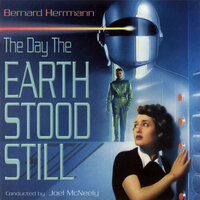 The Day the Earth Stood Still1993
 Obsession1989
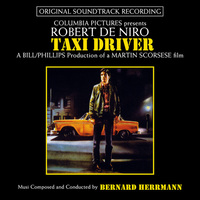 Taxi Driver1976
 Psycho1975
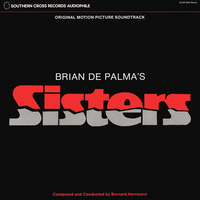 Sisters1975
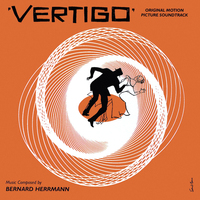 Vertigo1958
 Cinema Spectacular2024Torn Curtain (Expanded/ Remastered Limited Edition)2024Psycho Suite: The Intended Full Original Score2023Suite from Wuthering Heights / Echoes for Strings2023The Man Who Knew Too Much / On Dangerous Ground (Re-recording)2023The Film Scores On Phase 42021Endless Night2020Whitman (Radio Drama by Norman Corwin) / Souvenirs de voyage / Psycho: A Narrative for String Orchestra2020L'orgue mystique (Aux grandes orgues de la cathédrale d'Orléans)2020The Bride Wore Black2018Cape Fear (Original Motion Picture Soundtrack)2017Herrmann: Souvenirs de Voyage / Del Tredici: Magyar Madness2016Psycho / Vertigo (Original Motion Picture Soundtrack)2016The Snows of Kilimanjaro: Original Motion Picture Soundtrack2016Hangover Square / 5 Fingers2015Herrmann / Gershwin / Waxman / Copland2015It's Alive2012Jane Eyre2012At 20th Century Fox2011Moby Dick / Sinfonietta2011Highlights From Reconstructed & Newly Recorded Film Scores2011The Alfred Hitchcock Hour: Volume 22011Les Hauts de Hurlevent (Wuthering Heights)2011The Alfred Hitchcock Hour: Volume 12011Psycho Suite for String Quartet / Souvenirs de voyage / Echoes2011Battle Of Neretva/The Naked And The Dead2011Bernard Herrmann: Film Classics2010The Film Music of Bernard Hermann: Hangover Square & Citizen Kane2010Twisted Nerve / The Bride Wore Black2009A Christmas Carol / A Child Is Born2008The Kentuckian / Williamsburg: The Story Of A Patriot2008Four American Quartets2008North by Northwest2007Mysterious Island2007Fahrenheit 451 / The Twilight Zone: Walking Distance2007Piano Concertos 1 & 2 / Early One Morning2007The Essential Film Music Collection2006Citizen Kane2004On Dangerous Ground2003The CBS Years, Volume 2: American Gothic2003The Day the Earth Stood Still2003Joy in the Morning2002The View from Pompey's Head / Blue Denim2001The British Music Collection: Arthur Bliss2001The 3 Worlds of Gulliver2001Beneath the 12-Mile Reef2001Marnie2000Citizen Kane / The Magnificent Ambersons2000Elokuva Soi2000Bernard Herrmann at Fox, Volume 3: Anna and the King of Siam2000Citizen Kane1999The Twilight Zone1999Bernard Herrmann at Fox, Volume 2: Garden of Evil / Prince of Players / King of the Khyber Rifles1999Jason and the Argonauts1999Bernard Herrmann at Fox, Volume 1: Tender Is the Night / The Man in the Gray Flannel Suit / A Hatful of Rain1999The Wrong Man1999The Twilight Zone: 40th Anniversary Collection1999Citizen Kane: The Essential Bernard Herrmann Film Music Collection1999The Trouble With Harry1998Torn Curtain (The Unused Score)1998Psycho1998The 7th Voyage Of Sinbad1998The Ghost and Mrs. Muir1997Journey to the Center of the Earth1997Psycho: Complete Original Motion Picture Score1997Music From Great Film Classics1997The Mysterious Film World of Bernard Herrmann (National Philharmonic Orchestra feat. conductor: Bernard Herrmann)1996The Film Scores1996Gymnopédies, Mercure, La belle excentrique, Jack-in-the-Box, Saudades do Brasil1996Garden of Evil / Prince of Players1996Bernard Hermann conducts Great British Film Music1996Music From Great Film Classics1996The Four Faces of Jazz1996Cape Fear1996Concerto Macabre1996At the Movies1996Classic Jazz1996Music from: The Great Hitchcock Movie Thrillers1996Great Film Music1996Vertigo1996The Marvellous Film World of Bernard Herrmann1995The Marvellous Film World of Bernard Herrmann, Volume 21995Fahrenheit 4511995Fahrenheit 4511995Marnie: Original Motion Picture Soundtrack1994Souvenirs de Voyage / Echoes1994Night Digger1994Classic Fantasty Film Scores1994The Devil And Daniel Webster / Currier And Ives / Silent Noon / For The Fallen1994Welles Raises Kane / The Devil & Daniel Webster / Obsession1994Citizen Kane1994Bernard Herrmann Film Scores: From Citizen Kane to Taxi Driver1993Laura / Jane Eyre1993The 3 Worlds of Gulliver1993
Singles
Others
Publicis Direct. 19931993A Child Is BornTwisted Nerve (Original Motion Picture Soundtrack)Moby Dick - Cantata / For the FallenHitchcock: The Great Movie ThrillersThe Inquirer: The Film Music of Bernard Herrmann"Film Music" - Classic Movie ThemesBernard Herrmann at the MoviesHermann/Hitchcock: A Partnership In Terror