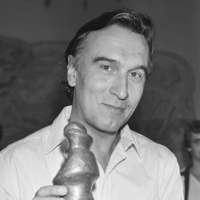
Claudio Abbado
Claudio Abbado, Cavaliere di Gran Croce OMRI (Italian: [ˈklaudjo abˈbaːdo]; 26 June 1933 – 20 January 2014) was an Italian conductor. He served as music director of the La Scala opera house in Milan, principal conductor of the London Symphony Orchestra, principal guest conductor of the Chicago Symphony Orchestra, music director of the Vienna State Opera, and principal conductor of the Berlin Philharmonic Orchestra from 1989 to 2002. He was made a Senator for life in the Senate of Italy in 2013. Born in Milan, Italy, Abbado was the son of the violinist and composer Michelangelo Abbado, who was his first piano teacher, and the brother of the musician Marcello Abbado. After studying piano, composition, and conducting at the Milan Conservatory, at age 16, in 1955 he studied conducting with Hans Swarowsky at the Vienna Academy of Music. He also spent time at the Chigiana Academy at Siena. In 1958 he won the international Serge Koussevitsky Competition for conductors, at the Tanglewood Music Festival, which resulted in a number of operatic conducting engagements in Italy, and in 1963 he won the Dimitri Mitropoulos Prize for conductors, allowing him to work for five months with the New York Philharmonic. Career: Abbado made his debut at La Scala in his hometown of Milan in 1960 and served as its music director from 1968 to 1986, conducting not only the traditional Italian repertoire but also presenting a contemporary opera each year, as well as a concert series devoted to the works of Alban Berg and Modest Petrovich Mussorgsky. He was instrumental in increasing accessibility to the working-class. He also founded the Filarmonica della Scala in 1982, for the performance of orchestral repertoire in concert. Abbado conducted the Vienna Philharmonic for the first time in 1965 in a concert at the Salzburg Festival, and became the principal conductor in 1971. He served as music director and conductor for the Vienna State Opera from 1986 to 1991, with notable productions such as Mussorgsky's original Boris Godunov and his seldom-heard Khovanshchina, Franz Schubert's Fierrabras, and Gioacchino Rossini's Il viaggio a Reims. In 1965, Abbado made his British debut at the Hallé Orchestra, followed, in 1966, by his London Symphony Orchestra debut. He continued to conduct on a regular basis with the London orchestra, until 1979. From 1979 to 1988 he became the principal conductor of the London Symphony Orchestra, and from 1982 to 1986 he was principal guest conductor of the Chicago Symphony Orchestra. With both orchestras, Abbado made recordings for Deutsche Grammophon, Decca and Sony. Berlin Philharmonic: In 1989, the Berlin Philharmonic elected Abbado as their chief conductor, to succeed Herbert von Karajan. In 1998, he announced that he would be leaving the Berlin Philharmonic after the expiry of his contract in 2002.. Aside from the major institutions he directed, Abbado was often happiest with orchestras of his own creation - the European Union Youth Orchestra, Gustav Mahler Youth Orchestra and the Orchestra Mozart. Abbado was diagnosed with stomach cancer in 2000 and the treatment led to the removal of a portion of his digestive system. In 2004 he returned to conduct the Berlin Philharmonic and performed Gustav Mahler's Symphony No. 6 in a series of recorded live concerts. The resulting CD won Best Orchestral Recording and Record of the Year in Gramophone Magazine's 2006 awards. The Orchestra Academy of the Berlin Philharmonic established the Claudio Abbado Composition Prize in 2006 in his honour. Post-Berlin work: After recovering from cancer, Abbado formed the Lucerne Festival Orchestra in 2003, whose concerts were highly acclaimed. He also served as music director of the Orchestra Mozart of Bologna, Italy. In September 2007, Abbado announced that he was cancelling all of his forthcoming conducting engagements for the "near future" on the advice of his physicians but two months later he resumed conducting with an engagement in Bologna. In July 2011, aged 78, he declared himself to be in good health. Musical style Abbado performed and recorded a wide range of Romantic works, in particular Gustav Mahler, whose symphonies he recorded several times. He was also noted for his interpretations of modern works by composers such as Arnold Schönberg, Karlheinz Stockhausen, Giacomo Manzoni, Luigi Nono, Bruno Maderna, Thomas Adler, Giovanni Sollima, Roberto Carnevale, Franco Donatoni and George Benjamin. Abbado desired to become a conductor for the first time as a child, when he heard a performance of Claude Debussy's Nocturnes. He had the opportunity to attend many orchestral rehearsals in Milan led by such conductors as Arturo Toscanini and Wilhelm Furtwängler and told interviewers that Toscanini's tyrannical and sometimes abusive manner towards musicians in rehearsal repelled him, and that he resolved to behave in the gentler manner of Bruno Walter. Abbado was known to exhibit a friendly, understated, and non-confrontational manner in rehearsal. In 1988, Abbado founded the music festival Wien Modern, which has since expanded to include all aspects of contemporary art. This interdisciplinary festival took place each year under his direction. Abbado was also well known for his work with young musicians. He was founder and music director of the European Union Youth Orchestra (1978) and the Gustav Mahler Jugendorchester (1986). He was also a frequent guest conductor with the Chamber Orchestra of Europe with whom he recorded a cycle of Franz Schubert symphonies to considerable acclaim. More recently, he worked with the Orquesta Sinfónica Simón Bolívar of Venezuela. He was also known for his Germanic orchestral repertory as well as his interest in the music of Gioacchino Rossini and Giuseppe Verdi. Awards Abbado received many awards and recognitions including the Grand cross of the Légion d'honneur, Bundesverdienstkreuz, Imperial Prize of Japan, Mahler Medal, Khytera Prize, and honorary doctorates from the universities of Ferrara, Cambridge, Aberdeen, and Havana. In 1973, Abbado won the Mozart Medal awarded by Mozartgemeinde Wien, and the Ernst von Siemens Music Prize in 1994. Abbado received the 1997 Grammy Award in the Best Small Ensemble Performance (with or without conductor) category for "Hindemith: Kammermusik No. 1 With Finale 1921, Op. 24 No. 1" and the 2005 Grammy Award in the Best Instrumental Soloist(s) Performance (with Orchestra) category for "Beethoven: Piano Concertos Nos. 2 & 3" performed by Martha Argerich. In April 2012, Abbado was voted into the Gramophone Hall of Fame, and in May of the same year, he was awarded the conductor prize at the Royal Philharmonic Society Music Awards. On 30 August 2013, Abbado was appointed to the Italian Senate as a Senator for life by President Giorgio Napolitano for his "outstanding cultural achievements". Personal life Abbado's son is the opera director Daniele Abbado. From his relationship with the violinist Viktoria Mullova, he was the father of her oldest child, Misha. His nephew, Roberto Abbado (the son of his brother Marcello, born 1926, who is a composer and pianist), is also a conductor. Abbado died in Bologna on 20 January 2014.
Biography from Last.fm, available under CC BY-SA.
Country: IT
Deathdate: 2014-01-20
Disambiguation: conductor
Gender: Male
Is Living: No
Albums
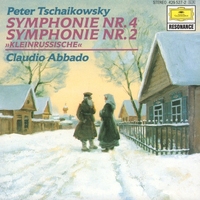 Symphonie Nr. 4 / Symphonie Nr. 2 »Kleinrussische«1990
 Bruckner - Debussy2023The Complete Recordings on Deutsche Grammophon & Decca2023Symphonies Nos. 3 & 12022Symphony No. 102021Symphonien 1–102021Claudio Abbado & Wiener Philharmoniker: The Complete Deutsche Grammophon Recordings2020Symphonies nos. 1 & 92019Abbado Rediscovered: Symphonies nos. 5 & 82018The Complete Deutsche Grammophon Recordings2018Mendelssohn, Tchaikovsky: Violin Concertos, Violin Recital2018Claudio Abbado Conducts Mozart2018Messa da Requiem2017The Opera Edition2017Murray Perahia Plays Schumann2017Abbado Chicago Symphony Orchestra2017Claudio Abbado & London Symphony Orchestra: Complete Deutsche Grammophon and Decca Recordings2017Symphony No.96 "The Miracle" / Symphony No.100 "Military" / Symphony No.101 "The Clock"2016Magier des Mediterranen2016Violinkonzerte2016Lazar Berman: The Complete Sony Recordings2016The Last Concert2016The Complete Deutsche Grammophon Recordings2015The “Great” C major Symphony2015Sinfonia Concertante / Oboe Concerto2014Abbado Brahms2014Brahms, Schoenberg, Beethoven2014Pétrouchka / Pulcinella2014audite Lucerne Festival Historic Performances2014Concerti brandeburghesi2014The Complete RCA And Sony Album Collection2014Tartini: Violin Concertos2014Piano Concertos K 503 & K 4662014Nocturnes / Prélude à l’après-midi d’un faune / Images2013Scenes from Goethe's "Faust"2013Symphony no. 2 / Overtures2013The Decca Years2013Le Sacre du printemps / Jeu de cartes2012Best of Romantik2012Requiem2012Symphony no. 7 / Symphony no. 8 / Die Geschöpfe des Prometheus2012Piano Concertos nos. 1 & 32012Overtures2012Violin Concertos2012Flute & Harp Concerto / Sinfonia Concertante for Winds2011Symphonies no. 39 & 402011Horn Concertos nos. 1-42011Fidelio2011Mahler Symphony No. 72011Mahler Symphony No. 5, Lucerne Festival Orchestra, Claudio Abbado2011Brandenburg Concertos 1-62011Paganini Rhapsody / Piano Concerto no. 22011Gustav Mahler Symphony No. 92011Symphony No. 4 / Rückert-Lieder2010Pergolesi Collection2010Mussorgsky: Pictures at an Exhibition / A Night on bald Mountain2010Symphony No. 2 "Resurrection"2010Symphony No. 62010Dixit Dominus / Confitebor tibi, Domine / Chi non ode e chi non vede / Salve Regina in A minor2010Missa S. Emidio / Salve Regina in F minor / Manca la guida al piè / Laudate pueri Dominum2010Mahler: Symphony No. 1 / Prokofiev: Piano Concerto No. 32010Lucerne Festival Orchestra, Claudio Abbado, Mahler – Symphony No. 32009Mozart / Schubert / Beethoven / Wagner2009Stabat Mater / Violin Concerto / Salve Regina in C minor2009Best of Mozart20097 "London" Symphonies2009Marce & Danze2008Berliner Philharmoniker, Claudio Abbado – Edition Vol. 32008Symphonies2008The Symphonies2008The Violin Concertos / Sinfonia Concertante2008Symphony no. 42007Robert Schumann: Cello Concerto, op. 129 / Johannes Brahms: Serenade No. 12007Kammermusik 1-7 / Der Schwanendreher2007Mozart: Die Zauberflöte, K. 620 - Highlights2007Verdi: Arias2006Prokofiev: Alexandr Nevski / Suite escita / El teniente Kijé / Shostakovich: Suite de jazz n.º 2 / Concierto n.º 1 para piano2006Berliner Philharmoniker >> Im Takt der Zeit 1996, CD 102006Die Zauberflöte2006Mahler: Symphony No. 4 / Berg: Sieben Frühe Lieder2005L’Arlésienne / Symphonie en ut / Jeux d’enfants2005Symphony no. 62005Sempre libera2004La Mer / Symphony no. 2 in C minor "Resurrection"2004Auf Mozarts Spuren2004Mussorgsky: Songs and Dances of Death / Tchaikovsky: Symphony No.5 in E minor2003Violin Concertos2003Orchestral Music2003Piano Sonatas D. 958, 959, 9602003Lieder with Orchestra2003The Berlioz Experience2003Pelléas et Mélisande-Suite / Prélude à l'après-midi d'un faune / 3 Nocturnes2003Debussy: Prélude à l'aprés-midi d'un faune; Trois Nocturnes; Pelléas et Mélisande Suite2002The Six Symphonies2002Janáček: Sinfonietta / Hindemith: Symphonic Metamorphoses / Prokofiev: Chout2002Welcome Sir Simon! Die Berliner Philharmoniker in Aufnahmen mit ihren Chefdirigenten2002Symphony no. 72002Symphony no. 92002Violin Concerto / Double Concerto2002Symphony no. 32002