
The Count Basie Orchestra
The Count Basie Orchestra is a 16 to 18 piece big band, one of the most prominent jazz performing groups of the swing era, founded by Count Basie. The band survived the late-forties decline in big band popularity and went on to produce notable collaborations with singers such as Frank Sinatra and Ella Fitzgerald in the fifties and sixties. The group continues to perform and record even after Basie's death in 1984. Early years Count Basie arrived in Kansas City, Missouri, in 1927 playing on the Theater Owners Bookers Association (TOBA) circuit.[1] After playing with the Blue Devils, he joined rival band leader Bennie Moten's band. Upon Moten's death, Basie left the group to start his own band, taking many of his colleagues from the Moten band with him. This nine-piece group consisted of Joe Keyes and Oran 'Hot Lips' Page on trumpet, Buster Smith and Jack Washington on alto saxophone, Lester Young on tenor saxophone, Dan Minor on trombone, and a rhythm section made up of Jo Jones on drums, Walter Page on bass and Basie himself on piano. With this band, then named 'The Barons of Rhythm', Basie brought the sound of the infamous and highly competitive Kansas City 'jam session' to club audiences, coupling extended improvised solos with riff-based accompaniments from the band. The group's first venue was the Reno Club in Kansas City, later moving to the Grand Terrace in Chicago. When music critic and record producer John Hammond heard the band on a 1936 radio broadcast, he sought them out and offered Basie the chance to expand the group to the standard 13-piece big band line up. He also presented the opportunity to move the group to New York in order to play at venues such as the Roseland Ballroom. Basie agreed, hoping that with this new band he could retain the freedom and spirit inherent in the Kansas City style of his nine-piece. The band, which now included Buck Clayton on trumpet and famous blues 'shouter' Jimmy Rushing, demonstrate this style in their first recordings with the Decca label in January 1937: in pieces such as 'Roseland Shuffle' we can hear that the soloists are at the foreground with the ensemble effects and riffs playing a strictly functional backing role. This was a fresh big band sound for New York, contrasting the complex jazz writing of Duke Ellington and Sy Oliver and highlighting the difference in styles that had emerged between the east and west coasts. In New York Following the first recording session the band's line up was reshuffled, with some of players being replaced on the request of Hammond as part of a 'strengthening' of the band. Trumpeters Ed Lewis and Bobby Moore replaced Keyes and Smith, and alto saxophonist Coughey Roberts was replaced by Earl Warren. Significantly, March 1937 saw the arrival of guitarist Freddie Green, who replaced Claude Williams to complete one of the most respected rhythm sections in big band history. Billie Holiday also sang with the band during this period, although never recorded with them. Hits such as "One O'clock Jump" and "Jumpin' at the Woodside" (from 1937 and 1938 respectively) helped to gain the band, now known as the 'Count Basie Orchestra', national and international fame. These tunes were what was known as 'head-arrangements'; not scored in individual parts but made up of riffs memorised by the band's members. Although some of the band's players, such as trombonist Eddie Durham, did contribute their own written arrangements at this time, it was these 'head-arrangements' that captured the imagination of the audience in New York and communicated the spirit of the band's members. In 1938, Helen Humes joined the group, replacing Billie Holiday as the female singer. She sang mostly pop ballads, including "My Heart Belongs to Daddy" and "Blame it on my Last Affair", acting as a gentle contrast to the blues style of Jimmy Rushing. The Forties As time went on, the band became increasingly dependent on arrangers to provide its music. These varied from players within the band, such as Eddie Durham and Buck Clayton, to professional arrangers from outside the group, who could bring their own character to band with each new piece. External arranger Andy Gibson brought the band's harmonic style closer to the forward looking music of Duke Ellington, with arrangements from 1940 such as "I Never Knew" and "Louisiana" introducing increased chromaticism to the band's music. Tab Smith also contributed important arrangements at this time such as "Harvard Blues", and others including Buster Harding and veteran arranger Jimmy Mundy also expanded the group's repertoire at this time. However, this influx of new arrangements led to a gradual change in the band's sound, distancing the group musically from its West Coast roots. Rather than structuring the music around the soloists with memorised 'head arrangements' and riffs, the group's sound at this time became more focused on ensemble playing; closer to the traditional East Coast big band sound. This can be attributed to the increasing reliance on arrangers to assert their own character on to the band with their music; an indicator perhaps that Basie's ideal of a big band sized group with the flexibility and spirit of his original Kansas City 8-piece was not to last.[9] The World War II years saw some of the key members of the band leave: drummer Jo Jones and tenor saxophone player Lester Young were both conscripted in 1944, leading to the hiring of drummers such as Buddy Rich and extra tenor saxophonists including Illinois Jacquet, Paul Gonzalves and Lucky Thompson. Some, such as musicologist Gunther Schuller, have claimed that when Jo Jones left he took some of the smooth and relaxed style of the band with him, due to his replacements, such as Sonny Payne, drumming a lot louder and therefore raising the whole dynamic of the band to a 'harder, more clamorous brass sound'.[10] The ban on instrumental recordings of 1942 to 44 had a financial impact on the Count Basie Orchestra, as it did on all big bands in America, and despite taking on new soloists such as Wardell Gray, Basie was forced to temporarily disband the group for a short period in 1948, before dispersing again for two years in 1950. For these two years Basie led a reduced band of between 6 and 9 people, featuring players such as Buddy Rich, Serge Chaloff and Buddy DeFranco. The 'Second Testament' Basie reformed the jazz orchestra in 1952 for a series of tours, not only in America but also in Europe in 1954 and Japan in 1963. The band also released new recordings; some featuring guest singers such as Joe Williams, Frank Sinatra and Ella Fitzgerald, and all reliant on music provided by arrangers, some of whom are now synonymous with the Basie band: Neal Hefti, Quincy Jones and Sammy Nestico to name a few. This new band became known as 'The Second Testament'., and achieved a new surge of popularity with albums such as 1958's 'The Atomic Mr. Basie' With this album and others of the late fifties, such as April in Paris and Basie Plays Hefti, we can hear the epitome of the new Count Basie Orchestra sound, thanks largely to the work of the aforementioned arrangers. The sound of the band was now that of a tight ensemble: heavier and full bodied, and a contrast to the riff based band of the late thirties and early forties. Whereas previously the emphasis had been on providing space for exemplary soloists such as Lester Young and Buck Clayton, now the focus had shifted to the arrangements themselves, despite the presence of notable soloists such as trumpeter Thad Jones and saxophonist Frank Foster. This orchestral style was to remain the typical sound of the band, even up to the present day; a fact that has attracted criticism from some musicologists, notably Gunther Schuller who, in his book 'The Swing Era', described the group as 'perfected neo-classicism...a most glorious dead end'. The Continuing Band After Basie's death in 1984, the band has continued to play under the direction of some of the players he had hired, including Eric Dixon, Thad Jones, Frank Foster, Grover Mitchell, Bill Hughes, and now drummer and arranger Dennis Mackrel. It continues to release new recordings, for example Basie is Back from 2006 which features new recordings of classic tunes from the Basie Orchestra's back catalogue, including "April in Paris" and even the band's early hit "One O'clock Jump". The group also continues to produce notable collaborations, such as with singer Ray Charles in Ray Sings, Basie Swings of 2006, and with arranger Allyn Ferguson on the 1999 album Swing Shift. www.basieband.com
Biography from Last.fm, available under CC BY-SA.
Country: US
Members
Eric DixonQuentin JacksonFormer (1961–1962)Willie CookHarry “Sweets” EdisonEddie “Lockjaw” Davis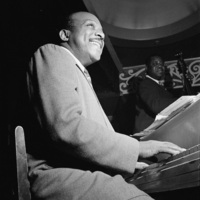 Count BasieCleveland EatonJoe WilliamsFormer (1954–?)Phillip GuilbeauFreddie GreenCharlie Fowlkes
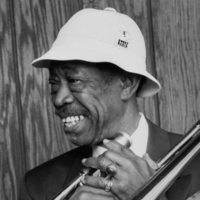 Al GreyMarshall RoyalButch MilesFormer (1997–2007)Ray 'Quasi' NelsonFormer (2016-09–?)Al AaronsHenderson ChambersSonny CohnWallace DavenportJohn DukeFrank HooksBill HughesBill JohnsonGrover MitchellBob OjedaSonny PayneBobby PlaterMike Williams
Albums
 All About That Basie2018
 A Very Swingin' Basie Christmas!2015
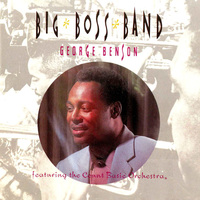 Big Boss Band1990
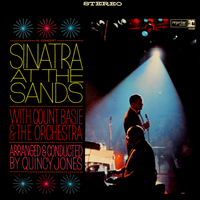 Sinatra at the Sands1966
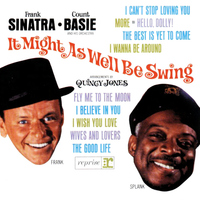 It Might as Well Be Swing1964
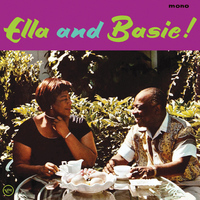 Ella and Basie!1963
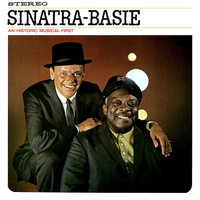 Sinatra–Basie: An Historic Musical First1962
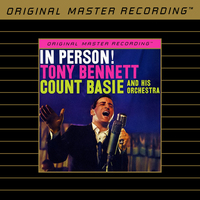 In Person!1959
 Basie Swings the Blues2023Jumpin' at the Woodside2017High Voltage2016Complete Live at The Crescendo 19582016Count Basie & His Orchestra Play Neal Hefti Complete Studio Sessions 1951-19622013On My Way and Shoutin' Again! / Not Now, I'll Tell You When2013A Beautiful Friendship2012The Complete Recordings (In Person - Basie / Bennett)2012Count Basie on the Beatles2011Complete Live at the Americana Hotel 1959 (1)2011Dance Along With Basie2010Swinging, Singing, Playing2009Broadway and Hollywood… Basie’s Way2009Basie Swings Standards2009Mustermesse Basel 1956 Part 12008Mustermesse Basel 1956 Part 22008Ray Sings, Basie Swings2006Basie is Back2006Jumpin' At The Woodside2006On the Sunny Side of the Street2006The Chronological Classics: Count Basie and His Orchestra 1952-19532005Basie Land2005Basie's Beat2004Anything Goes2004The Jubilee Shows Vol. 8, No. 26 & No. 322004The Jubilee Shows Vol. 9, No. 194 & No. 1952004Anything Goes2003The Chronological Classics: Count Basie and His Orchestra 19522003Bon Basie de Paris2002The Chronological Classics: Count Basie and His Orchestra 1950-19512002One O'Clock Jump2002Basie Meets Bond2002Shoutin' Blues2001Swingin' at the Chatterbox 19372001The Chronological Classics: Count Basie and His Orchestra 1947-19492000Fancy Pants2000Swing Shift1999Definitive Columbia Best Recordings1999Basie Big Band1999Atomic Swing1999Send in the Clowns1998Warm Breeze1998Count Plays Duke1998The Chronological Classics: Count Basie and His Orchestra 1946-19471998The Chronological Classics: Count Basie and His Orchestra 19471998At Long Last1998One o'Clock Jump and Other Hits1998Jimmy Rushing with Count Basie 1938-19451997The Chronological Classics: Count Basie and His Orchestra 1945-19461997At the Royal Roost 19481997The Early Years1997Jazzin'1996Live in Stockholm 19541996The Jubilee Alternatives1996Count Basie, Lester Young and the Stars of Birdland on Tour1996The Swingin' Machine, Live!1996The Golden Years 1936-401996Live at Manchester Craftsmen’s Guild1996En Concert, 1960/621995Basie's Golden '581995The Chronological Classics: Count Basie and His Orchestra 1943-19451995Live From Tilburg, Holland 1971 / Live From La Cabaret Casino, Paradise Island, Nassau 19691994Basie's Best1994Duke Ellington / Count Basie199488 Basie Street1994This Time by Basie1993The Complete Roulette Studio Recordings of Count Basie and His Orchestra199320 Golden Pieces of Count Basie and His Orchestra1993Frankly Basie: Count Basie Plays the Hits of Frank Sinatra1993The Chronological Classics: Count Basie and His Orchestra 19421993Shoutin’ Blues1993Corner Pocket1992A Night at Count Basie's19921 O'Clock Jump1992The Chronological Classics: Count Basie and His Orchestra 19411992Live at El Morocco1992Ain't Misbehavin'1992The Jazz Collector Edition1991Rock-A-Bye Basie: Live in '38 & '391991The Chronological Classics: Count Basie and His Orchestra 1940-19411991The Chronological Classics: Count Basie and His Orchestra 1939-19401991The Complete Roulette Live Recordings of Count Basie and His Orchestra (1959-1962)1991Basie In Sweden1991Beaver Junction1991The Chronological Classics: Count Basie and His Orchestra 1939, Volume 21990The Chronological Classics: Count Basie and His Orchestra 1938–19391990The Chronological Classics: Count Basie and His Orchestra 19391990The Best of Count Basie1990Anthology1990Tony Bennett with Count Basie1990The V-Discs Volume 21990Flip, Flop & Fly1989
Singles
Untouchable / Alexander's Ragtime Band1962Brand New Wagon / Futile Frustration1947Free Eats / Bill's Mill1947Open the Door, Richard! / Me and the Blues1947Fla-Ga-La-Pa / Mutton Leg1946Old Manuscript / Frantic Fantasy1946Lover Man / Gee, Baby Ain’t I Good to You1945Harlem Airshaft / High Tide (I Ain’t Mad at You)1945Apple Honey / Harvard Blues1945Beaver Junction / Kansas City Stride1944One O’Clock Jump / Minnie the Moocher19429:20 Special / Goin’ to Chicago Blues1941Tuesday at Ten / Undecided Blues1941Evil Blues / Jive at Five1939My Heart Belongs to Daddy / Sing for Your Supper1939Cherokee1939Oh Lady Be Good / You Can Depend on Me1939Rock‐a‐Bye Basie / Baby Don’t Tell on Me1939Jump for Me / 12th Street Rag1939What Goes Up Must Come Down / Don’t Worry ’bout Me1939If I Could Be With You / Taxi War Dance1939Jumpin’ at the Woodside / Dark Rapture1938Blue and Sentimental / Doggin’ Around1938Every Tub / Now Will You Be Good1938Don’t You Miss Your Baby? / Topsy1938Georgianna / Blues in the Dark1938Stop Beatin’ ’round the Mulberry Bush / London Bridge Is Falling Down1938Texas Shuffle / Mama Don’t Want No Peas an’ Rice an’ Cocoanut Oil1938Blame It on My Last Affair / The Blues I Like to Hear1938Thursday / Shorty George1938Do You Wanna Jump, Children? / Panassie Stomp1938Topsy / Jumpin' At The Woodside1938Sent for You Yesterday and Here You Come Today / Swinging the Blues1938One O’Clock Jump / John’s Idea1937Honeysuckle Rose / Roseland Shuffle1937Boogie Woogie / Exactly Like You1937Listen My Children and You Shall Hear / Smarty1937Boo‐Hoo / The Glory of Love1937Good Morning Blues / Our Love Was Meant to Be1937Honeysuckle Rose / Goodmorning Blues1937I Keep Remembering / Out the Window1937Let Me Dream / Time Out1937Queer Street / Stay CoolRoseland Shuffle / Gin Mill BluesEPs
Swingin' Through The Holidays2024Basie's Back In Town1957Sweet Lorraine / I Believe / Just You, Just Me1947San Jose / B Flat Blues / Stompin’ at the Savoy1947Tippin’ on the Q.T. / Liza / China Boy1946Diminuendo in Blue / Crescendo in Blue / Sent for You Yesterday / Jimmy’s Boogie Woogie1945Cross Your Heart / When the Quail Come Back to San Quentin / On the Upbeat1945Ol’ Man River / Jimmy’s Blues / Take Me Back Baby1945Playhouse no. 2 Stomp / Sweet Sally / Zip, Zip, Zipper1945My Silent Love / The Mole / Taps Miller1945Pretty Eyes / Lunceford Special / Circus in Rhythm1944Outskirts of Town / I’ve Found a New Baby / Yeah Man / Rhythm Man1944I’ve Got Rhythm / G. I. Stomp / Dance of the Gremlins1943