
Robert Fripp
Robert Fripp (born 16 May 1946 in Wimborne Minster, Dorset, England, United Kingdom) is a guitarist, composer and a record producer, perhaps best known for being the guitarist for, and only constant member of, the progressive rock band King Crimson. His work, spanning five decades, encompasses a variety of musical styles. Fripp began playing guitar at the age of eleven. He says he was tone-deaf with no sense of rhythm when he started. His comment on dealing with the obstacle is "Music so wishes to be heard that it sometimes calls on unlikely characters to give it voice". Being taught guitar basics by his teacher Don Strike, it was the time when he developed the technique of crosspicking, which would later become a significant technique taught in Guitar Craft. In 1984, Fripp began using the New Standard Tuning, which would also become the official tuning of Guitar Craft. Fripp is left-handed, but plays a right-handed guitar. Fripp's earliest professional work began in 1967, when he responded to an ad looking for a singing organist for a band being formed by bassist Peter Giles and drummer Michael Giles, despite being neither a singer nor an organist. Though unsuccessful as a live act, Giles, Giles and Fripp did manage to release two singles, as well as an album, The Cheerful Insanity of Giles, Giles and Fripp. Following the band's breakup, Fripp, along with drummer Michael Giles, made plans for the formation of King Crimson in 1968, with Greg Lake, Peter Sinfield and Ian McDonald. Their first album, In the Court of the Crimson King, was released in late 1969, to mixed critical reviews. Due to musical differences with Giles and McDonald, King Crimson broke up shortly after the release of the first album, to be re-formed again several times over the years. Initially, Fripp had offered to leave the group; however Giles and McDonald felt that King Crimson was his. To date, Robert Fripp has remained the only consistent member of the band. Crimson went through a number of line-ups before Fripp disbanded the group for the first time in 1974. During King Crimson's less active periods, Fripp has pursued a number of side-projects. He worked with Keith Tippett (and others who appeared on King Crimson records) on projects far from rock music, producing Septober Energy in 1971 and Ovary Lodge in 1973. During this period he also worked with Van der Graaf Generator, playing on the 1970 album H to He, Who Am the Only One, and in 1971, on Pawn Hearts. Collaborating with Brian Eno, he recorded No Pussyfooting in 1972 and Evening Star in 1974. These two albums featured experimentation with several novel musical techniques, including a tape delay system utilizing dual reel to reel Revox tape machines that would come to play a central role in Fripp's later work. This system came to be known as "Frippertronics". Fripp and Eno also played several live shows in Europe in 1975. Fripp spent some time away from the music industry in the later 1970s, during which he cultivated an interest in the teachings of Gurdjieff via J.G. Bennett (studies which would later be influential in his work with Guitar Craft). He returned to musical work as a studio guitarist on Peter Gabriel's first self-titled album in 1976, released the following year. Fripp toured with Gabriel to support the album, but remained in the wings and used the pseudonym "Dusty Rhodes". [1] In 1977, Fripp received a phone call from Eno, who was working on David Bowie's album "Heroes". Fripp agreed to play guitar for the album, a move which initiated a series of collaborations with other musicians. Fripp soon contributed his musical and production talents to Peter Gabriel's second album, and collaborated with Daryl Hall on Sacred Songs. During this period, Fripp began working on solo material, with contributions from poet/lyricist Joanna Walton and several other musicians, including Eno, Gabriel, and Hall, as well as Peter Hammill, Jerry Marotta, Phil Collins, Tony Levin and Terre Roche. This material eventually became his first solo album, Exposure, released in 1979, followed by the Frippertronics tour in the same year. While living in New York, Fripp contributed to albums and live performances by Blondie and Talking Heads (Fear of Music), and produced The Roches' first album, which featured several of Fripp's characteristic guitar solos. A second set of creative sessions with David Bowie produced distinctive guitar parts on Scary Monsters (and Super Creeps) (1980). Fripp's collaboration with bassist Busta Jones, drummer Paul Duskin, and vocals by David Byrne (Byrne credited as Absalm el Habib) produced God Save the Queen/Under Heavy Manners in the following year. He simultaneously assembled what he called a "second-division touring new wave instrumental dance band" under the name League of Gentlemen, with bassist Sara Lee, keyboardist Barry Andrews and drummer Johnny Toobad (later replaced by Kevin Wilkinson) . The LOG toured for the duration of 1980. In the early 1990s Fripp contributed guitar/soundscapes to Lifeforms (1994) by The Future Sound of London and Cydonia (released 2001) by The Orb, as well as FFWD, a collaborative effort with the latter's members. In addition, Fripp worked with Brian Eno co-writing and supplying guitar to two tracks for a CD-ROM project released in 1994 entitled Headcandy created by Chris Juul and Doug Jipson. Eno thought the visual aspects of the disc (video feedback effects) were very disappointing upon completion, and regretted participation. During this period, Fripp also contributed to albums by No-Man (a band featuring Porcupine Tree's Steven Wilson) and The Beloved (1994's Flowermouth and 1996's X, respectively). 1981 saw the formation of King Crimson's fourth incarnation, along with Adrian Belew, Bill Bruford, and Tony Levin. The group was conceptualized under the name "Discipline," but it came to Fripp's attention that the members thought the name King Crimson was more appropriate. For Fripp, King Crimson had always been a way of doing things, rather than a particular group of musicians, and the group felt that their music captured that methodology. After releasing three albums, this new King Crimson broke up in 1984. During this period Fripp made two records with his old friend Andy Summers of the Police. On I Advance Masked, Fripp and Summers played all the instruments. Bewitched was more dominated by Summers, who produced the record and collaborated with other musicians in addition to Fripp. In 1982 Fripp produced and played guitar on the Keep On Doing album by The Roches. Similar to his previous guesting on David Bowie's Scary Monsters (which also boasted Pete Townshend and Chuck Hammer on infinite sustain guitar), the "skysaw" guitar style which characterized this period of Fripp's pedagogy is featured alongside the sisters' songs and harmony. Fripp was offered a teaching position at the American Society for Continuous Education (ASCE) in Claymont Court, West Virginia in 1984. He had been involved with the ASCE since 1978, eventually serving on its board of directors, and had long been considering the idea of teaching guitar. His course, Guitar Craft, was begun in 1985, one of the results of which was a performance group, "The League of Crafty Guitarists," which has released several albums. In 1986, he released the first of two collaborations with his wife, Toyah Willcox. The members of the California Guitar Trio are former members of The League of Crafty Guitarists, and Gitbox Rebellion includes several former Guitar Craft students. The California Guitar Trio has also toured with King Crimson. Fripp returned to recording solo in 1994, using an updated version of the Frippertronics technique that employed digital technology instead of tapes to create loops. Fripp released a number of records that he called "Soundscapes," including 1999, Radiophonics, A Blessing of Tears, That Which Passes, November Suite, and The Gates of Paradise. (Pie Jesu consists of material compiled from A Blessing of Tears and The Gates of Paradise.) On the Soundscapes recordings, the inner workings of the music are not as clearly laid bare as they are on Let the Power Fall, perhaps due to the greater possibilities offered by the new technology. Fripp's collaborations with David Sylvian feature some of his most exuberant guitar playing. Fripp contributed to Sylvian's twenty minute track "Steel Cathedrals" from his Alchemy - An Index Of Possibilities album of 1985. Then Fripp performed on several tracks from Sylvian's 1986 release, Gone To Earth. At some point in late 1991, Fripp had asked Sylvian to become the vocalist for the reforming King Crimson. Sylvian declined the invitation, but proposed a possible collaboration between the two that would eventually become a tour of Japan and Italy in the spring of 1992. In July of 1993, Sylvian and Fripp released the collaborative effort The First Day. Other contributors were soon-to-be King Crimson member Trey Gunn on stick and nearly-was King Crimson member Jerry Marotta on drums. When the group toured to promote the CD, future King Crimson member Pat Mastelotto took over the drumming spot. The live document Damage was released in 1994, as was the joint venture, Redemption - Approaching Silence, which featured Sylvian's ambient sound sculptures (Approaching Silence) accompanying Fripp reading his own text (Redemption). In late 1994, Fripp re-formed the 1981 lineup of King Crimson for its fifth incarnation, adding Trey Gunn and drummer Pat Mastelotto in a configuration known as the "double trio". This lineup released Thrak in 1995. From 1997 to 1999, and again in 2006, the band King Crimson "fraKctalised" into five sub-groups known as ProjeKcts. 2000 saw the release of a studio album, The ConstruKction of Light, from a sixth lineup of King Crimson (Fripp, Adrian Belew, Trey Gunn, Pat Mastelotto) with The Power to Believe following in 2003. In March of 2004, a seventh lineup had been formulated and practiced with Tony Levin returning to replace Trey Gunn. This permutation of King Crimson has yet to release an album or perform live. A likely "fortieth anniversary lineup" has been discussed as well. Members of this lineup and more precise formation dates have yet to be officially announced. During 2004, Fripp toured with Joe Satriani and Steve Vai as the guitar trio G3. Robert Fripp worked at Microsoft's studios to record new sounds and atmospheres for Windows Vista.[2][3] In late 2005 and early 2006, Fripp joined Bill Rieflin's improvisational Slow Music project, along with guitarist Peter Buck, Fred Chalenor (acoustic bass), Matt Chamberlain (drum kit) and Hector Zazou (electronics). This collective of musicians toured the west coast in May of 2006. In October 2006, ProjeKct Six (Robert Fripp, Adrian Belew) played at select venues on the east coast of the U.S.[2], opening for Porcupine Tree. Fripp has contributed soundscapes to two songs for Porcupine Tree's Fear of a Blank Planet. He is featured on the tracks "Way Out Of Here" and "Nil Recurring", the second of which was released in September 2007 as part of the "Nil Recurring" EP. Robert Fripp of King Crimson is presently at odds with Last.FM, and has undertaken a prolonged series of actions against the company, and this website. Currently, he has: - disallowed any of his music from being streamed - disallowed any images from being posted (especially album art) - disallowed this page to show up in search. He has pursued similar restrictions against many other websites and companies violation of copyright, with many new restrictions still pending. These events and how people feel about them (including Fripp himself) are well-documented on this and other sites, and so this summary of recent events is a legitimate, relevant, and current dimension of the history of this musician (and thus a dispassionate, noteworthy portion of Fripp’s bio). Fripp keeps an online diary at DGMLive
Biography from Last.fm, available under CC BY-SA.
Country: GB
Gender: Male
Groups
Albums
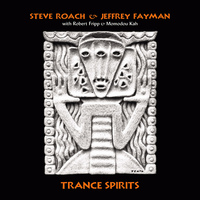 Trance Spirits2002
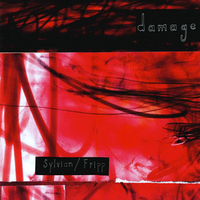 Damage1994
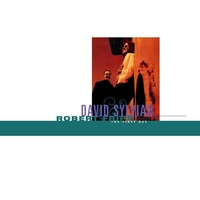 The First Day1993
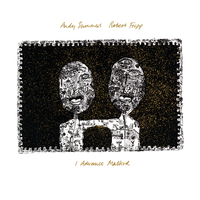 I Advance Masked1982
 The Complete Recordings 1981-19842025The Last of the Great New York Heartthrobs2022Washington Square Church2022Exposures2022Music for Quiet Moments2021Leviathan2021Between the Silence2018Starless Starlight2015Follow2012Discretion2012Live IV – Argentina 20072012The Wine of Silence2012A Scarcity of Miracles2011Live at Coventry Cathedral2010Thread2008At the End of Time: Churchscapes: Live in England & Estonia, 20062007Glass and Breath20072006-08-26: Jaani kirik, Tartu, Estonia20072006-06-13: St. Paul's Cathedral, London, UK20062006-03-04: Blueberry Hill, St. Louis, MO, USA20062006-03-01: Belcourt Theatre, Nashville, TN, USA20062006-02-25: Variety Playhouse, Atlanta, GA, USA2006Love Cannot Bear: Soundscapes: Live in the USA2005A Temple in the Clouds2000Robert Fripp... Unplugged! Intimate Conversations with Robert2000The Repercussions of Angelic Behavior1999January 12, 1998, Park West, Chicago, IL, USA1998The Gates of Paradise1997November Suite1997Jun 21, 1997 - Holmdel - PAC Art Centre1997That Which Passes: 1995 Soundscapes, Volume 31996Radiophonics: 1995 Soundscapes, Volume 1: Live in Argentina1996Intergalactic Boogie Express: Live in Europe 19911995A Blessing of Tears: 1995 Soundscapes, Volume 2: Live in California1995Unreleased Tracks From the Sidi Mansour Album19951999: Soundscapes: Live in Argentina1994Kings - Second Chapter1994A New Dream1994Live II1991Show of Hands1991The Lady or the Tiger1986Live!1986God Save the King1985Bewitched1984Let the Power Fall1981The League of Gentlemen1981God Save the Queen / Under Heavy Manners1980Exposure1979KingsKingsSound Sculpture Buenos Aires, Argentina 6-10-20071993-09-02: Live at Red Door Cafe, Allentown, PA, USAMay 26, 1979 - Paris - Theatre Le Palace
Singles
Music For Quiet Moments 502021Music For Quiet Moments 492021Music For Quiet Moments 482021Music For Quiet Moments 472021Music For Quiet Moments 462021Music For Quiet Moments 452021Music For Quiet Moments 52020Music For Quiet Moments 42020Music For Quiet Moments 22020Music For Quiet Moments 32020Music For Quiet Moments 12020Pie Jesu1997Darshan1993Jean the Birdman1993