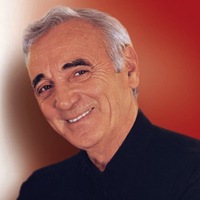
Charles Aznavour
Charles Aznavour (Shahnour Vaghenag Aznavourian, Armenian: Շահնուր Վաղինակ Ազնավուրյան, Paris, France, 22 May 1924 - 1 October 2018) was a French-Armenian singer, lyricist, actor, public activist and diplomat. Aznavour was known for his unique tenor voice: clear and ringing in its upper reaches, with gravelly and profound low notes. In a career spanning over 70 years, he recorded more than 1,200 songs interpreted in eight languages. For himself and others, he has written or co-written more than 1,000 songs. He was one of France's most popular and enduring singers. He has sold 180 million records and has been dubbed France's Frank Sinatra, while music critic Stephen Holden has described Aznavour as "French pop deity." He was also arguably the most famous Armenian of his time. In 1998, Aznavour was named Entertainer of the Century by CNN and users of Time Online from around the globe. He was recognized as the century's outstanding performer, with nearly 18% of the total vote, edging out Elvis Presley and Bob Dylan. Aznavour has sung for presidents, popes and royalty, as well as at humanitarian events. In response to the 1988 Armenian earthquake, he founded the charitable organization Aznavour for Armenia along with his long-time friend impresario Levon Sayan. In 2009, he was appointed ambassador of Armenia to Switzerland, as well as Armenia's permanent delegate to the United Nations at Geneva. On 24 August 2017, Aznavour was awarded the 2,618th star on the Hollywood Walk of Fame. On 17 September 2018, his last concert took place in NHK Hall, Tokyo. Charles Aznavour died on 1 October 2018. Charles Aznavour was perhaps the best-known French music hall entertainer in the world -- renowned the world over for the bittersweet love songs he has written and sung, which seem to embody the essence of French popular song, and also for his appearances on screen in such wildly divergent fare as Shoot the Piano Player, Candy, and The Tin Drum. His status as the quintessential French popular culture icon is something of an irony for a man who identifies himself most closely with his Armenian heritage. His father was a singer and sometime-restaurateur, while his mother was an actress and part-time seamstress. His father's singing, done in a notably impassioned style, heavily influenced Aznavour's approach to singing as a boy. Although he had a voracious appetite for music, he also had a serious impediment growing up, in the form of a paralyzed vocal cord that gave his voice a raspy quality. He channeled some of his energy into theater, making both his stage and screen debuts at age nine, in 1933, in the theater piece Un bon petit diable and in the film La guerre des gosses. As an adolescent, he danced in nightclubs and sold newspapers, as well as touring with theatrical companies, and he wrote a nightclub act in partnership with Pierre Roche -- Aznavour wrote the lyrics to their songs and it was through that material that he began his singing career. Early on, he learned to overcome his fears about his vocal limitations, in part with help from singing legend Édith Piaf, for whom he worked as a chauffeur, among other capacities; with her help, he developed a style that suited his capabilities and played to his strengths and also continued writing songs in earnest, some of which were performed by Piaf. His success came very slowly, however. Aznavour at first found some difficulty being accepted as a composer in France or anywhere else. His compositions, although considered tame by any modern standard, were regarded as too risqué for French radio and were banned from the airwaves for a decade or more, from the late '40s through the end of the 1950s; American publishers seemed equally reticent about them, as he discovered on a visit to New York in 1948. That trip did yield his first performing engagement in the city, however, at the Cafe Society Downtown in Greenwich Village. For the next decade, Aznavour made his living as a performer in second-tier clubs and middle- or bottom-of-the-bill berths on three continents. His mix of daringly original and frank love songs, coupled with a limited but very expressive singing style, left audiences somewhat bewildered at first. His breakthrough came in 1956, during a vaudeville engagement in Casablanca, where the audience reaction was so positive that Aznavour was moved to headliner status. After this, it became easier for the singer to find better engagements in France; by 1958 he even had a recording contract. He made his screen debut that same year in a dramatic role, playing an epileptic in George Franju's La tête contre les murs. He also composed music for Alex Joff's Du rififi chez les femmes in 1958; From there, he moved on to bigger roles in better movies, including Jean Cocteau's Testament of Orpheus and Francois Truffaut's Shoot the Piano Player. The latter movie turned Aznavour into a screen star in France and opened the way for his breakthrough in America. He sang at Carnegie Hall in the early '60s and followed this up in 1965 with a one-man show, The World of Charles Aznavour, at the Ambassador Hotel in New York, which drew rave notices from audiences and critics alike. By that time, the once-struggling singer had secured his first American LP release with the similarly titled album The World of Charles Aznavour on Reprise Records, the label founded and run by Frank Sinatra. Aznavour would be the last to compare himself with those whom he regards as truly gifted vocalists, such as Sinatra and Mel Tormé, preferring to think of himself as a composer who also happens to sing. His style of performing has been compared variously to Maurice Chevalier and Sinatra and has remained enduringly popular for four decades. Almost all of Aznavour's songs deal with love and its permutations, running the gamut from upbeat, joyous pieces such as Après l'amour and J'ai perdu la tête to the dark-hued J'en déduis que je t'aime and Bon anniversaire. A teetotaler and a racing car enthusiast, Aznavour has been married three times and has four children.
Biography from Last.fm, available under CC BY-SA.
Country: FR
Deathdate: 2018-10-01
Gender: Male
Is Living: No

Albums
 Bicyclette2020
 Olympia Février 1976 (Live)2017
 Collected2016
 Aznavour Live – Palais des Sports 20152015
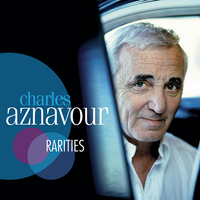 Rarities2015
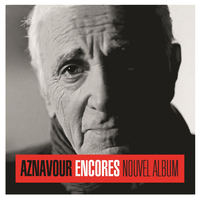 Encores2015
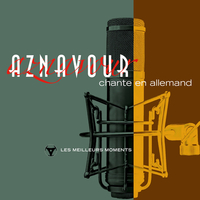 Charles Aznavour chante en allemand - Les Meilleurs Moments2014
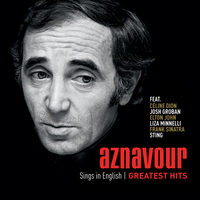 Sings in English - Greatest Hits2014
 Les 100 plus belles chansons2013
 Le Coffret2013
 Toujours2011
 Charles Aznavour & The Clayton-Hamilton Jazz Orchestra2009
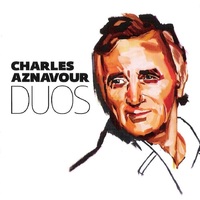 Duos2008
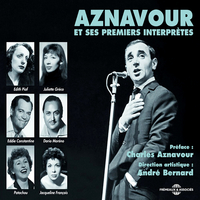 Aznavour et ses premiers interprètes2008
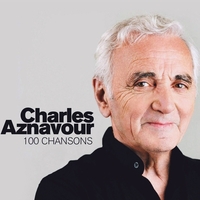 100 chansons2007
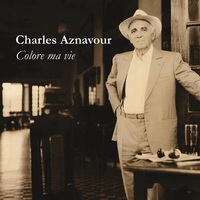 Colore ma vie2007
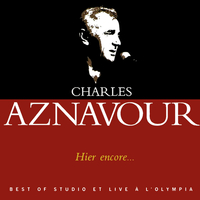 Hier encore…2006
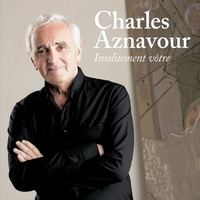 Insolitement vôtre2005
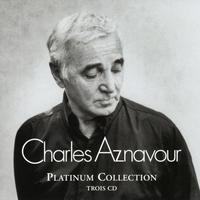 Platinum Collection2004
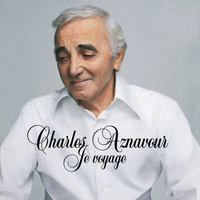 Je voyage2003
 Aznavour 20002000
 Palais des Congrès 97/981999
 Jazznavour1998
 Aznavour Live - Olympia 19801998
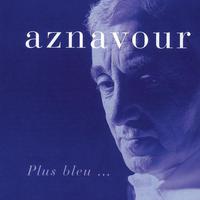 Plus bleu1997
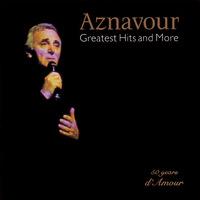 Greatest Hits and More1996
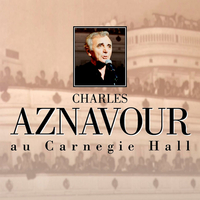 Charles Aznavour au Carnegie Hall1996
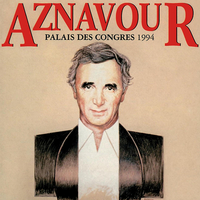 Palais des Congrès 19941995
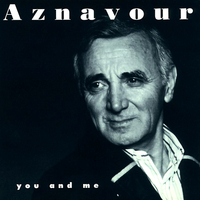 You and Me1995
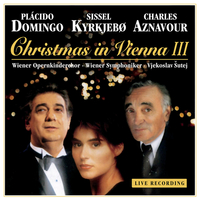 Christmas in Vienna III1995
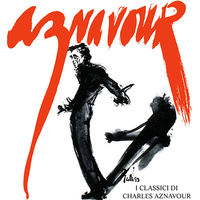 I classici di Charles Aznavour1995
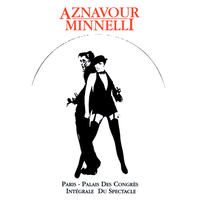 Paris - Palais des Congrès1995
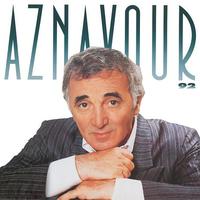 Aznavour 921991
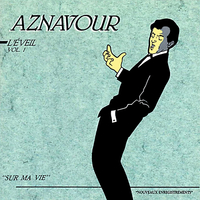 L’Éveil, Vol. 11989
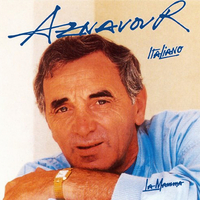 Aznavour italiano: La mamma1988
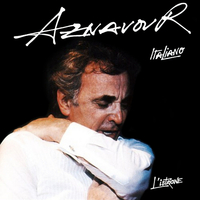 Italiano – L’istrione1988
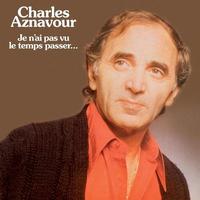 Je n'ai pas vu le temps passer...1978
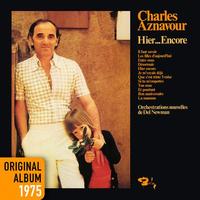 Hier... Encore1975
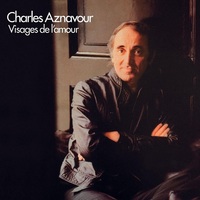 Visages de l’amour1974
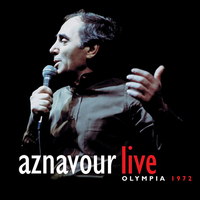 Aznavour chez lui, à Paris1972
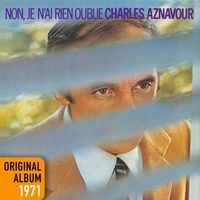 Non, je n’ai rien oublié1971
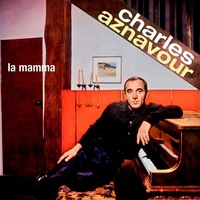 La Mamma1963
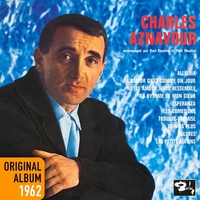 Charles Aznavour1962
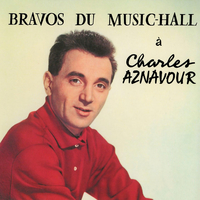 Bravos du music‐hall à Charles Aznavour1957
 Les versions méconnues en stéréo2024Les Introuvables2024There’s No Business Like Show Business with Charles Aznavour, Vol. 22024There’s No Business Like Show Business with Charles Aznavour, Vol. 12024Récital - Intégrale du spectacle (Live au Palais des Congrès / 1987)2024Charles Aznavour Sings in German – Best of2024Duos Duets Best Of2024Unfinished Album In English - L’album inachevé en anglais2024Aznavouriana2024100 ans, 100 chansons2024Les années Ducretet‐Thomson2024The Amazing Charles Aznavour2021Music & Wine with Charles Aznavour, Vol. 22021L’Album de sa vie : 100 titres2019Charles Aznavour chante: Jézébel, Vol. 220193 Légendes: Aznavour / Trenet / Piaf2018Palais des Congrès de Paris 19872018Les Années Barclay 1960–19832018Simply Charles Aznavour (3CDs From France’s Greatest Entertainer)2015Charles Aznavour chante en italien- Les meilleurs moments (Remastered 2014)2014Formidable: Das Beste2014Charles Aznavour chante en anglais – Les Meilleurs Moments2014Charles Aznavour The Best Of2013Après l’amour2012Tu pintas mi vida2008Charles Aznavour et ses amis au Palais Garnier2008Golden Hits2008Grandes Éxitos2007Lo mejor de... 40 grandes éxitos en español2006Bon anniversaire Charles !2004Chansons de film2001D’un siècle à l’autre2001Grand Collection2001Être1996Roche et Aznavour : Collection Les Refrains d’abord1996Entretien avec Charles Aznavour1996Yesterday When I Was Young1995Grandes éxitos de Charles Aznavour1995Du und ich1995Greatest Golden Hits199540 Chansons d'or1994Toi et moi1994Forever1994Récital1993J’aime Paris au mois de mai1992Liberté1992Aznavour (She)1990Aznavour1990Sus canciones1990L'Élan, Vol. 21989L’Envol, Vol. 31989Aznavour1987Le Temps des loups1986Aznavour1986Charles chante Aznavour et Dimey1983Amour… Toujours…1983
Singles
Je t'attends2025À chacun sa bohème2024My Own Child For Christmas From You2022Toi et moi2018She1999Plus bleu que tes yeux1997You Make Me Feel So Young1993La Belle et la Bête1992Pour toi Arménie1989Une vie d'amour / Téhéran 43 Ouverture1981Une vie d'amour1980Être1979Camarade1977Ils sont tombés1975She / La Barraka1974Yesterday When I Was Young1970Du läßt dich geh'n / Spiel' Zigeuner