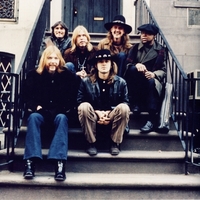
The Allman Brothers Band
The Allman Brothers Band was an American rock band formed in Jacksonville, Florida, in 1969 and blended different strains of Southern Rock related music— Blues, Country, Gospel, Jazz, and more— into a flexible, jam-oriented Rock and Roll style. Reflecting the emergence of the "New South" and setting the style for Lynyrd Skynyrd, the Marshall Tucker Band, and many other bands, the Allman Brothers Band also oddly— or eerily, some would say— had an unusual string of untimely deaths, a pattern similar to other Southern rockers. Through personal tragedy and turmoil, the group endured for decades. Reaching the peak of their commercial clout in the early 70s, they were highly respected and well received by legions of fans. Lead guitarist and band leader Duane Allman has been recognized as one of the greatest blues and rock guitarists in history, according to numerous polls. Brothers Gregg Allman and Duane Allman were living in Daytona Beach, Florida, in 1960, and played in various bands until 1964, when they formed the Escorts, which became the Allman Joys in 1965. After their version of Willie Dixon’s “Spoonful” failed as a single, the two brothers and three other band members went to L.A., where they signed with Liberty Records as the Hourglass. They recorded two albums of outside material (Hourglass, 1967, and Power of Love, 1968) before heading to Muscle Shoals, Alabama, to record at Fame Studios. Liberty rejected the resulting tapes, and Duane and Gregg returned to Florida. Soon after, the brothers joined the 31st of February, whose drummer was Butch Trucks. After recording an album, Gregg went back to L.A. to make good on the Liberty contract. (A 1973 Bold album called Duane and Gregg consisted of tapes made by the 31st of February.) Duane stayed in Jacksonville, where he began playing with the Second Coming, which included Dickey Betts and Berry Oakley, veterans of Tommy Roe and the Romans. But before Duane became an established member of the Second Coming, Fame Studios owner Rick Hall asked him to return to Muscle Shoals to play lead guitar for a Wilson Pickett session. At Duane’s suggestion, Pickett recorded Lennon and McCartney’s “Hey Jude.” Duane became Fame’s primary session guitarist, recording over the next year with Aretha Franklin, King Curtis, Percy Sledge, Clarence Carter, and Arthur Conley, and signing with Fame Productions as a solo artist. He also collaborated with Eric Clapton on the Derek and the Dominos album which produced the classic “Layla.” At the urging of Atlantic Records vice president Jerry Wexler, Phil Walden bought the Fame contract, with the notion to build a band around Duane for his upstart Capricorn Records. Allman hired "Jaimoe" Jai Johanny Johanson, a Muscle Shoals drummer who had worked with Otis Redding, Percy Sledge, Joe Tex, and Clifton Chenier. He went back to Florida and reconvened Trucks, Oakley, Betts, and Gregg. Once assembled, the Allman Brothers Band moved to Macon, Georgia, where Walden was launching Capricorn. (In 1991 Trucks said of the group’s long tenure with the label: “We had grossed $40 million and woke up one day to realize our own manager [Phil Walden] had cheated us out of every cent.”) The Allman Brothers Band, the group’s debut, was well received only in the South. After its release, Duane continued to play on sessions with Boz Scaggs, Laura Nyro, Otis Rush, Delaney and Bonnie, Ronnie Hawkins, and John Hammond. He appears with Eric Clapton on Derek and the Dominos’ Layla. (His session work is collected on the two Anthology volumes.) On the strength of the Allman Brothers’ growing reputation as a live band, its second album sold well. In March 1971, four shows at New York’s Fillmore East were recorded for release as a live double LP set in July. By the time the album reached the Top 10, the Allman Brothers Band was being hailed in print as “America’s best rock & roll group.” But on October 29, 1971, less than three months after At Fillmore East’s release, Duane was killed in a motorcycle accident in Macon. The group played at his funeral and decided to continue without a new guitarist. Three songs on their next LP, Eat a Peach, had been recorded before Duane’s death, and with live material from the Fillmore East concerts, the double LP was released in February, entered the chart in the Top 10, and rose to #4. In 1972, Oakley was killed in a motorcycle crash three blocks from the site of Duane’s accident a year earlier. Dickey Betts, by then the band’s unofficial leader, wrote and sang “Ramblin’ Man,” the band’s first and biggest hit single (#2, 1973); Brothers and Sisters went to #1, with Lamar Williams, a childhood friend of Jaimoe’s, taking Oakley’s place, and Chuck Leavell on keyboards. The first two albums, when reissued as Beginnings, more than doubled their original sales. The group returned to the road after two years. In Watkins Glen, New York, 600,000 people gathered in July 1973 for an all-day concert by the Allman Brothers Band, the Grateful Dead, and the Band. There was growing dissension in the group, however, as Gregg and Betts began to disagree over schedules and musical direction. In 1974 they each released a Top 20 solo album (Allman’s Laid Back and Betts’ Highway Call), and Allman formed the Gregg Allman Band with Johanson, Leavell, Williams, and others to tour and record The Gregg Allman Tour. The subsequent Allman Brothers Band album, Win, Lose or Draw (#5, 1975), sold well, but it was four years before the next album of new material; The Road Goes On Forever, a compilation, and Wipe the Windows, a live collection, were released in 1976. By 1975, Allman was involved in a tumultuous marriage to Cher (they divorced in 1979). They had a son, Elijah Blue, in 1977. Their 1977 LP, Allman and Woman: Two the Hard Way, was universally panned. But the greatest blow to the group occurred in 1976, when Allman testified against Scooter Herring, his personal road manager, charged with dealing narcotics. Herring was subsequently sentenced to 75 years in prison (later reduced to two years on appeal). Allman’s action, the others said, betrayed the fraternal loyalty that had sustained them: They vowed never to work with him again. The members pursued separate but at times intertwining paths. Betts formed Great Southern, duplicating the original Allman Brothers lineup with two guitars, two drums, bass, keyboards, and vocals. Only the group’s first album charted in the Top 100. After Allman’s disastrous duet LP with Cher, he regrouped the Gregg Allman Band, with no help from any former Brothers, and put out Playin’ Up a Storm in 1977. The other members also remained active: Trucks studied music at Florida State University for two years and formed an experimental group, Trucks. Leavell, Williams, and Johanson, with guitarist Jimmy Nails, formed the fusion-oriented Sea Level. Later, Leavell returned to session work, notably with the Rolling Stones, with whom he has toured since 1989. In 1978, the Allman Brothers Band regrouped for the first time. After Allman, Trucks, and Jaimoe joined Betts and Great Southern onstage in New York in 1978, Great Southern guitarist Dan Toler and bassist Rook Goldflies also joined the new Allman Brothers Band. Enlightened Rogues (#9, 1979) was certified gold within two weeks of its release. Two years later Brothers of the Road gave the group a minor hit single, “Straight From the Heart.” The group broke up again in 1980. In 1983 Lamar Williams died of Agent Orange–related cancer. Betts recorded an album with the Dickey Betts Band, and Allman released I’m No Angel (#30, 1987) with its #49 title track. Regrouping yet again in 1989 with core members Allman, Betts, Jaimoe, and Trucks, the Allman Brothers Band took to the road. Dreams, a box set, compiles songs from 1966 to 1988. The group’s recent albums and performances have attracted a new generation of fans who have come to appreciate the Allman Brothers as the root of much latter-day collegiate jam rock. There was renewed critical respect, as well, especially for Allman’s singing and writing. Allman, who finally won his struggles with heroin and alcohol, has also acted, appearing in the film Rush and the syndicated TV series Superboy. In 1995 the group was inducted into the Rock and Roll Hall of Fame and released 2nd Set. It received its first Grammy Award (for Best Rock Instrumental Performance) the next year, for “Jessica.” Gregg Allman released his first solo recording in a decade with 1997’s Searching for Simplicity, which opens with a remake of the Allman Brothers’ classic blues “Whipping Post.” Allman’s solo anthology, One More Try, includes only eight previously released songs. A series of personnel changes, and the occasional intramural ruckus, have kept the band in flux. In 1996, Warren Haynes and Allen Woody left to work full-time with their own project, the blues-rock trio Gov’t Mule. Guitarist Jack Pearson, who cowrote Gregg Allman’s epic “Sailin’ ’Cross the Devil’s Sea,” and bassist Oteil Burbridge (Aquarium Rescue Unit) replaced them. Pearson’s departure in 1999 made way for 20-year-old guitarist Derek Trucks, Butch’s nephew, to join a band he had been sitting in with for years. In June 2000, Betts was ousted via fax from the band on the eve of a summer tour. Soon thereafter, he put together a new eight-piece band, touring as the Dickey Betts Band. Not long after that, Warren Haynes rejoined the Allman Brothers. Upon inducting the Allman Brothers Band into the Rock & Roll Hall of Fame, Willie Nelson said: "The Allman Brothers Band took what moved them and merged it into something unique that audiences love: a sound that redefined the direction of rock and roll, and opened the doors to a spirit of experimentation that continues in today's music. "The Allman Brothers Band were and still are one of the most exciting live bands ever to hit the stage. They became road warriors with a vengeance and left devoted fans wherever they went. The ABB is a band that reflects so many of my sentiments about music: originality, a determination not be confined musically or stylistically but instead to forge your own way and make music that moves you, a devotion to the road, and understanding that beyond pleasing yourself as an artist, the only other consideration should be the people, the fans who come to hear you. "And so with pleasure, I give you rock and roll's greatest jammin' blues band, the Allman Brothers Band!" In 2014, the Allman Brothers Band announced they were breaking up, for good this time, after 45 years. After they played their final show, countless fans across the globe played tribute. Gregg Allman has since toured as a solo artist. Lineups (Past & Present) 1969 - 1976 (Original to First Disbandment) Gregg Allman - organ, piano, guitar, vocals (1969-1976, 1978-1982, 1986, 1989-present) Duane Allman - guitar, slide guitar (1969 - 1971; died 1971) Dickey Betts - guitar, slide guitar, vocals (1969-1976, 1978-1982, 1986, 1989-2000) Berry Oakley - bass, vocals (1969-1972; died 1972) Butch Trucks - drums, tympani (1969-1976, 1978-1982, 1986, 1989-present) Jai Johanny 'Jaimoe' Johanson - drums, percussion (1969-1976, 1978-1980, 1986, 1989-present) Chuck Leavell - piano, synthesiser, background vocals (1972-1976, 1986) Lamar Williams - bass, vocals (1972-1976; died 1983) 1978 - 1982 (First Reformation to Second Disbandment) Gregg Allman - organ, piano, guitar, vocals (1969-1976, 1978-1982, 1986, 1989-present) Dickey Betts - guitar, slide guitar, vocals (1969-1976, 1978-1982, 1986, 1989-2000) Butch Trucks - drums, tympani (1969-1976, 1978-1982, 1986, 1989-present) Jai Johanny 'Jaimoe' Johanson - drums, percussion (1969-1976, 1978-1980, 1986, 1989-present) Dan Toler - guitar (1978-1982, 1986; died 2013) David Goldflies - bass (1978-1982) David 'Frankie' Toler - drums (1980-1982; died 2011) Mike Lawler - keyboards (1980-1982) 1986 - 1986 (Second Reformation to Third Disbandment) Gregg Allman - organ, piano, guitar, vocals (1969-1976, 1978-1982, 1986, 1989-present) Dickey Betts - guitar, slide guitar, vocals (1969-1976, 1978-1982, 1986, 1989-2000) Butch Trucks - drums, tympani (1969-1976, 1978-1982, 1986, 1989-present) Jai Johanny 'Jaimoe' Johanson - drums, percussion (1969-1976, 1978-1980, 1986, 1989-present) Dan Toler - guitar (1978-1982, 1986; died 2013) Chuck Leavell - piano, synthesiser, background vocals (1972-1976, 1986) 1989 - Present Gregg Allman - organ, piano, guitar, vocals (1969-1976, 1978-1982, 1986, 1989-present) Dickey Betts - guitar, slide guitar, vocals (1969-1976, 1978-1982, 1986, 1989-2000) Butch Trucks - drums, tympani (1969-1976, 1978-1982, 1986, 1989-present) Jai Johanny "Jaimoe" Johanson - drums, percussion (1969-1976, 1978-1980, 1986, 1989-present) Warren Haynes - guitar, slide guitar, vocals (1989-1997, 2000–present) Allen Woody - bass, background vocals (1989-1997; died 2000) Johnny Neel - keyboards, harmonica (1989-1990) Marc Quiñones - drums, percussion, background vocals (1991–present) Oteil Burbridge - bass, vocals (1997–present) Jack Pearson - guitar, vocals (1997-1999) Derek Trucks - guitar, slide guitar (1999–present) Jimmy Herring - guitar (2000) Current members Gregg Allman - organ, piano, guitar, vocals (1969-1976, 1978-1982, 1986, 1989-present) Butch Trucks - drums, tympani (1969-1976, 1978-1982, 1986, 1989-present) Jai Johanny 'Jaimoe' Johanson - drums, percussion (1969-1976, 1978-1980, 1986, 1989-present) Warren Haynes - guitar, slide guitar, vocals (1989-1997, 2000–present) Marc Quiñones - drums, percussion, background vocals (1991–present) Oteil Burbridge - bass, vocals (1997–present) Derek Trucks - guitar, slide guitar (1999–present)
Biography from Last.fm, available under CC BY-SA.
Country: US
Deathdate: 2014-10-28
Is Living: No
Members
 Duane AllmanFormer (1969-03-26–1971-10-29)Berry OakleyFormer (1969-03-26–1972-11-11)Jai Johanny JohansonFormer (1989–2014-10-28)Dickey BettsFormer (1969-03-26–2000)Gregg AllmanFormer (1969-03-26–2014-10-28)Butch TrucksFormer (1969-03-26–2014-10-28)Chuck LeavellFormer (1972-11–1976-05)Lamar WilliamsFormer (1972–1976)David GoldfliesFormer (1978–1982)Dan TolerFormer (1978–1982)Mike LawlerFormer (1980–1982)David 'Frankie' TolerFormer (1980–1982)Johnny NeelFormer (1989–1990)
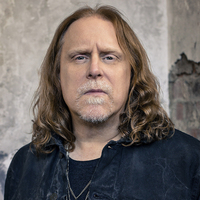 Warren HaynesFormer (2001–2014-10-28)Allen WoodyFormer (1989–1997)Marc QuiñonesFormer (1991–2014-10-28)Jack PearsonFormer (1997–1999)Oteil BurbridgeFormer (1997–2014-10-28)Derek TrucksFormer (1999–2014-10-28)Jimmy HerringFormer (2000–2000)
Albums
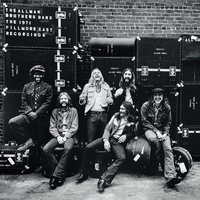 The 1971 Fillmore East Recordings2014
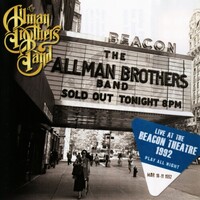 Play All Night: Live at the Beacon Theater 19922014
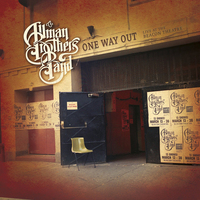 One Way Out: Live at the Beacon Theatre2004
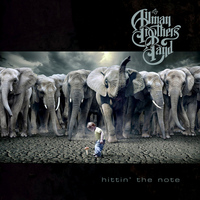 Hittin’ the Note2003
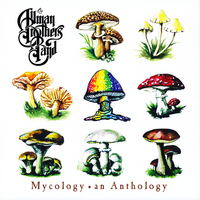 Mycology: An Anthology1998
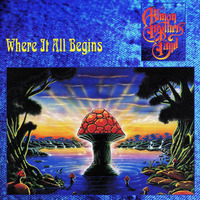 Where It All Begins1994
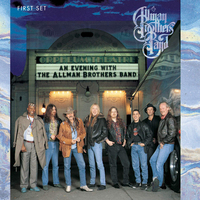 An Evening With the Allman Brothers Band: First Set1992
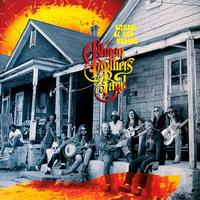 Shades of Two Worlds1991
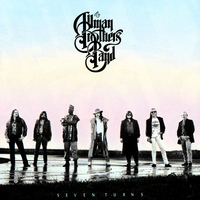 Seven Turns1990
 Dreams1989
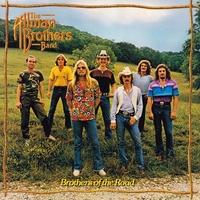 Brothers of the Road1981
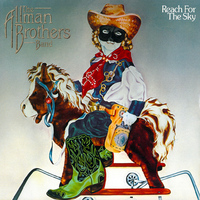 Reach for the Sky1980
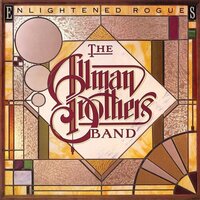 Enlightened Rogues1979
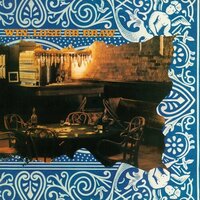 Win, Lose or Draw1975
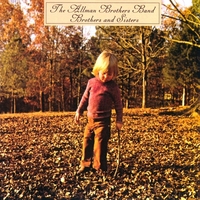 Brothers and Sisters1973
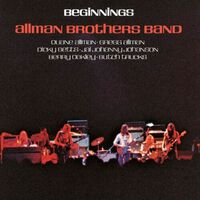 Beginnings1973
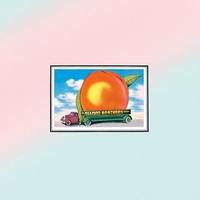 Eat a Peach1972
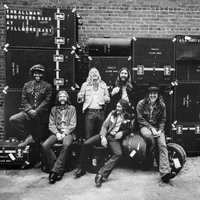 At Fillmore East1971
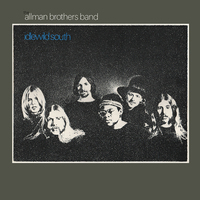 Idlewild South1970
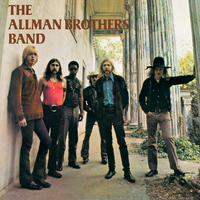 The Allman Brothers Band1969
 Final Concert 10‐28‐142024Manley Field House, Syracuse University, April 7 19722024Syria Mosque Pittsburgh, PA January 17, 19712022Down in Texas ’712021The Final Note (Painters Mill Music Fair Owings Mills, MD 10‐17‐71)20202005-07-19: Warner Theatre, Erie, PA, USA2020New Year’s Eve in California, 1973 (live KSAN Broadcast)2020Trouble No More: 50th Anniversary Collection2020Fillmore West ’712019End of the Line (live American radio broadcast)2019Nassau Coliseum, Uniondale, New York March 13th, 1976. WLIR‐FM Broadcast2019Fillmore East, February 1970 (deluxe edition)2018Cream of the Crop 20032018Road Trips: Volume One2017Live on Air…Volume One2016Live at Ludlow Garage 197020161973‐12‐31: Cow Palace, Daly City, CA, USA2015Austin City Limits 199520152014‐10‐24: Beacon Theatre, New York City, NY20142014‐10‐21: Beacon Theatre, New York, NY2014Beacon Theater New York City October 20142014Hollywood Bowl 19722014Live at Winterland20132013‐03‐06: Beacon Theatre, New York, NY20132012‐03‐16: Beacon Theatre, New York, NY2012A & R Studios: New York 26th August 19712012Collected20122011‐11‐30 Orpheum Theatre, Boston, MA20112011‐03‐12 Live at The Beacon Theater, New York City, NY2011The Gatlinburg Tapes2010Live at the 2010 New Orleans Jazz & Heritage Festival2010Live Camden New Jersey 8/21/20092009Beacon Box Set 200920092009‐03‐19: Beacon Theatre, New York, NY, USA20092009‐03‐09 Live at Beacon Theatre, New York, NY2009Live Camden, New Jersey 8/23/20082008Best of the Allman Brothers Band: Green Series2008Playlist Plus2008Boston Common 8‐17‐7120072007 Jazzfest Live2007The Capricorn Years 1969–19792007Plain Dealer Pavilion – Cleveland, Oh 6/21/062006Knoxville, TN, 09‐27‐200520052005‐08‐27 Live at New York State Fair20058/20/05 Tweeter Center, Mansfield, MA2005Rosemont, IL, 08‐13‐20052005Cleveland, OH, 07‐11‐20052005Instant Live, Verizon Wireless Amphitheater, San Antonio, TX 10/10/042004Knoxville Civic Auditorium, TN 10/04/042004Instant Live Nissan Pavillion Bristow, VA 9/30/042004Rosemont Theatre Rosemont, IL 9/01/042004Instant Live, Jones Beach, Wantagh NY. 8/24/042004Tweeter Center Mansfield, MA 8/21/042004Instant Live: The Fox Box2004On the Waterfront Festival: Rockford, IL 9/02/042004Fox Theatre Atlanta, GA 9/26/042004Southbound – The Best of The Allman Brothers Band2004Stand Back: The Anthology2004Live at the Atlanta International Pop Festival: July 3 & 5, 19702003Martin Scorsese Presents the Blues: The Allman Brothers Band20032003‐08‐02 Darien Center, Buffalo, NY20032003‐07‐26: Post‐Gazette Pavillion, Pittsburgh, PA, USA2003Murat Centre Indianapolis, IN 7/25/032003Alltel Pavilion at Walnut Creek Raleigh, NC 8/10/032003American University 12/13/702002Stormy Monday20011971-06-27: Last Serenade: Fillmore East, New York City, NY, USA1999The Best of The Allman Brothers Band (live)1998aLive Down South1997Ramblin’ Man: Best1996Fishin’ for a Good Time1996One More Ride – Idle Wild South Outtakes19951993‐08‐03: Merriwether Post Pavilion, Columbia, MD, USA1993Live USA1993Live at Great Woods1992Zakk Goes Wylde at Great Woods Amphitheatre1992Ramblin’ Man19921991‐10‐05 Live at Cal Expo1991Statesboro Blues1989The Road Goes On Forever1975