
Paul Whiteman and His Orchestra
Paul Whiteman (March 28, 1890 – December 29, 1967) was a popular white American orchestral leader. He was born in Denver, Colorado. After a start as a classical violinist and violist, Whiteman then led a jazz-influenced dance band, which became locally popular in San Francisco, California in 1918. In 1920 he moved his band to New York City where they started making recordings for Victor Records which propelled Whiteman and his band to national prominence. Whiteman became the most popular band leader of the decade. In the late 1920s he recorded for Columbia Records. In the 1920s and early 1930s Whiteman became widely known as The King of Jazz (see: Jazz royalty). Much of what his band played hasn't been considered "true" jazz by later generations. Others reject these notions, and regard Whiteman's music as an interesting development in jazz history. He recorded Hoagy Carmichael singing and playing Washboard Blues to the accompaniment of his orchestra in 1926.[1] While today most fans of jazz consider improvisation to be essential to the musical style, Whiteman thought the music could be improved by scoring the best of it. Modern revisionists might look back and say "that wasn't the True Jazz", but his notions were critically popular and commercially successful at the time. Whiteman's music was often the first jazz of any form that some people heard. Duke Ellington wrote in his autobiography: "Paul Whiteman was known as the King of Jazz, and no one as yet has come near carrying that title with more certainty and dignity." Whiteman commissioned George Gershwin's Rhapsody in Blue, which was premiered by Whiteman's Orchestra with Gershwin at the piano in 1924. Another familiar piece in Whiteman's repertoire: Grand Canyon Suite, by Ferde Grofé (much of which was used in the score of A Christmas Story). Whiteman appreciated jazz musicians and hired many of the best white jazz men for his band, including Bix Beiderbecke, Frankie Trumbauer, Joe Venuti, Eddie Lang, Steve Brown, Mike Pingitore, Gussie Mueller, Wilbur Hall, Jack Teagarden, and Bunny Berigan. Whiteman gave them constant chances to improvise, paid them top salaries and encouraged them to make small band jam recordings on the side. Paul Whiteman was primarily responsible for revolutionizing the dance orchestra and dance music after World War I. Prior to that time, dances were played by military bands, string ensembles, or small combinations. Working in 1918-19 with arranger Ferde Grofé and in parallel with fellow San Francisco bandleader Art Hickman, Whiteman introduced the saxophone section as a musical unit of equal weight with the brass. This set a standard for instrumentation that defined the dance orchestra, and remains in big bands to this day. Before Whiteman, musical arrangements were very cut-and-dried, with much repetition. Whiteman and Grofé introduced arrangements that instead of repeating, changed keys, textures and rhythms over their course, much like symphonic music. This innovation, combined with the jazz elements mentioned above, plus his insistence on using top notch, concert-calibre musicians, made Paul Whiteman's orchestra a vanguard force that changed the face of popular music in the 1920s. Whiteman was also one of the greatest of all talent scouts. For over 30 years, he sought out and encouraged musicians, vocalists, composers, arrangers and entertainers who looked promising. It is worth repeating that Whiteman not only premiered George Gershwin's "Rhapsody in Blue" in 1924, but commissioned him to write it, much to Gershwin's surprise at the time. Both Bing Crosby and Mildred Bailey got their start singing with the Whiteman Orchestra. In 1931, Whiteman married motion picture actress Margaret Livingston. After he disbanded his Orchestra, in the 1940s and 1950s Whiteman worked as a music director for the ABC Radio Network. He also hosted several television programs and continued to appear as guest conductor for many concerts. Paul Whiteman died at the age of 77 in Doylestown, Pennsylvania.
Biography from Last.fm, available under CC BY-SA.
Country: US
Deathdate: 1954
Is Living: No
Members
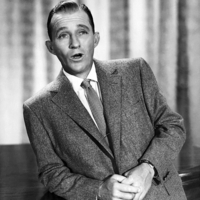 Bing CrosbyFormer (1927–1930)Eddie LangFormer (1928–1929)
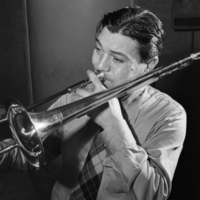 Jack TeagardenFormer (1934–1939)Mischa RussellFormer (1927–1937)Henry BusseFormer (1920–1928)Ferde GroféFormer (1920–1932)Paul WhitemanBix BeiderbeckeFormer (1927–1929)Buster JohnsonFormer (1920–1920)Ross GormanFormer (1920–1923)Harold McDonaldFormer (1920–1928)Mike PingitoreFormer (1920–1939)Jack FultonFormer (1925–1934)Charles GaylordFormer (1926–1928)Austin “Skin” YoungFormer (1926–1929)Roy BargyFormer (1926–1940)Nye MayhewFormer (1927–1928)Harry BarrisFormer (1927–1930)Al RinkerFormer (1927–1930)Frankie TrumbauerFormer (1927–1937)Matty MalneckFormer (1927–1938)Red MayerFormer (1928–1928)Jack MayhewFormer (1928–1929)Mike TrafficanteFormer (1928–1932)Frank SignorelliFormer (1928–1934)Peggy HealyFormer (1932–1935)Bob LawrenceFormer (1933–1937)George WhettlingFormer (1938–1940)Lou Paino
Albums
 If I Had a Talking Picture of You - Volume 12007Linger Awhile2004A Pops Concert2002Say It With Music2000Paul Whiteman And His Orchestra Say It With Music2000Paul Whiteman & His Dance Band Vol. 12000Original 1927 Recordings1999The Best of the Big Bands1997The Complete Capitol Recordings1995Paper Moon1992The Victor Masters1989Bix ’n’ Bing1986Из истории джаза1980Paul Whiteman, Vol. II1969Paul Whiteman and His Orchestra Featuring Bing Crosby1968Young Bing Crosby1955A Souvenir Program1941Shaking the Blues Away
Singles
San / Wang Wang Blues1954The General Jumped at Dawn / Trav'lin' Light1952Side by Side / Magnolia1950Sweet Sue, Just You / Because My Baby Don't Mean Maybe Now1950Trav’lin’ Light / The Old Music Master1948Cuban Overture1948Lovable / From Monday On1945Rhapsody in Blue1944Trav'lin' Light / You Were Never Lovelier1942Serenade in Blue / I've Got a Gal in Kalamazoo1942A Zoot Suit / Well-Digger's Breakdown1942I've Found a New Baby / The General Jumped at Dawn1942Ain't Misbehavin' / Nobody's Sweetheart1941Christmas Night in Harlem / Fare-Thee-Well to Harlem1940The Gaucho Serenade / The Creaking Old Mill by the Creek1940Darn That Dream / My Fantasy1940All the Things You Are / All in Fun1939The Shoemaker's Holiday / The June Bugs Dance1939I Go for That / Heart and Soul1939I’ll Be a Friend “With Pleasure” / Mary (What Are You Waiting For?)1939Moon Love / To You1939Dardanella / Sugar1939How Deep Is the Ocean / Russian Lullaby1939Heart and Soul / While a Cigarette Was Burning1938When I Go a Dreamin' / There's No Place Like Your Arms1938My Reverie / All Ashore1938Shall We Dance? / They All Laughed1938Shall We Dance? / For You1937Ramona / Under the Mellow Moon1936San / When1936Louisiana / You Took Advantage of Me1936Sugar / From Monday On1936On Your Toes / Afterglow1936My Romance / Little Girl Blue1936Changes / Deep Down South1936It's Got to Be Love / There's a Small Hotel1936Gloomy Sunday / A Waltz Was Born in Vienna1936Awake in a Dream / Everything Stops for Tea1936Wah-Hoo / What's the Name of That Song?1936Dardanella / Avalon1936I’m the Echo (You’re the Song That I Sing) / I Got Love1935I Dream Too Much / The Jockey on the Carrousel1935Thanks a Million / I’m Sittin’ High on a Hilltop1935I Feel a Song Coming On / I’m in the Mood for Love1935You're the Top / I Get a Kick Out of You1935When I Grow Too Old to Dream / The Night Is Young1935Why Shouldn't I / When Love Comes Your Way1935Darktown Strutters' Ball / Farewell Blues1935Love in Bloom / Straight From the Shoulder1935I You Love Again / Your Head on My Shoulder1935Won't You Get Off It, Please / Christmas Night in Harlem1934Villa / The Merry Widow Waltz1934Pardon My Southern Accent / Here Come the British1934Beach Boy / There's Nothing Else to Do in Na-La-Ka-Mo-Ka-Lu1934Anything Goes / All Through the Night1934Sun Spots / The Bouncing Ball1934True / The Moonlight Waltz1934The Breeze / Love in Bloom1934In Other Words We’re Through / True1934Christmas Night in Harlem / Carry Me Back to Green Pastures1934Sittin' on a Backyard Fence / Shanghai Lil1934My Little Grass Shack in Kealkekua Hawaii / It's an Old Fashioned World After All1934Wagon Wheels / If I Love Again1934Lover / When the Sun Bids the Moon Goodnight1933Night Owl / It's Only a Paper Moon1933(When Your Heart's on Fire) Smoke Gets in Your Eyes / Something Had to Happen1933Let's Begin / Touch of Your Hand1933Pink Elephants / We Just Couldn't Say Goodbye1933Look What I've Got / In the Park in Paree1933Farewell to Arms / A White House of Our Own1933Rise 'n' Shine / Turn Out the Light1933Eadie Was a Lady / You're an Old Smoothie1933Forbidden Love / Dear Old Mother Dixie1932San / Poor Butterfly1932Willow Weep for Me / So at Last It's Come to This1932Let's Put Out the Lights / You're Telling Me1932There's a Blue Note in My Love Song / Dance of the Little Dutch Dolls1932Gettin' Sentimental / 'Leven Pounds of Heaven1932I'll Never Be the Same / We Just Couldn't Say Good-Bye1932The Voice in the Old Village Choir / Lullaby of the Leaves1932I'll Follow You / How Deep-Is-The Ocean1932Chinese Lullaby / On the Road to Mandalay1932Nightfall / Something in the Night1932Daybreak / Toselli's Serenade1932A Rose and a Kiss / I Don't Suppose1932Lazy River / 'Leven Pounds of Heaven1932By the Sycamore Tree / All of Me1931Cuban Love Song / Tell Me With a Love Song1931George White's "Scandals" 19311931Choo-Choo / Sing Another Chorus, Please1931Old Playmate / A Faded Summer Love1931When It's Sleepy Time Down South / Can't You See1931Song of the Dawn / I Like to Do Things for You1930Livin' in the Sunlight / You Brought a New Kind of Love to Me1930Sitting' on a Rainbow / Old New England Moon1930Ragamuffin Romeo / I Like to Do Things for You1930Happy Feet / A Bench in the Park1930Ragamuffin Romeo / It Happened in Monterey1930You Took Advantage of Me / Moonlight on the Colorado1930Body and Soul / Something to Remember You By1930