
Chick Webb
William Henry Webb, usually known as Chick Webb (February 10, 1905 –June 16, 1939) was a jazz and swing music drummer as well as a band leader. Chick Webb represented the triumph of the human spirit in jazz and life. Hunchbacked, small in stature, almost a dwarf with a large face and broad shoulders, Webb fought off congenital tuberculosis of the spine in order to become one of the most competitive drummers and band leaders of the big band era. Perched high upon a platform, he used custom-made pedals, goose-neck cymbal holders, a 28-inch bass drum and a wide variety of other percussion instruments to create thundering solos of a complexity and energy that paved the way for Buddy Rich (who studied Webb intensely) and Louie Bellson. William Henry Webb bought his first set of drums with his earnings as a newsboy, and he began playing in bands on pleasure boats. After moving to New York in 1925, he led bands in various clubs before settling in for long regular runs at the Savoy beginning in 1931. Although Benny Carter and Johnny Hodges played with the band early on, the Webb band was oddly short on major soloists during its heyday from the mid-'30s onward; the young alto sax player Louis Jordan made the biggest impression after leaving the band. But the band made up for it with a crisp ensemble sound, Webb's disciplined, ferociously driving drum pyrotechnics, trumpeter Taft Jordan's impressions of Louis Armstrong, and most of all, a series of strong compositions and charts by Edgar Sampson ("Blue Lou" and "Stomping at the Savoy" among them). In 1935, Webb hired the teenaged Ella Fitzgerald after she won a talent contest at the Apollo Theatre, became her legal guardian, and rebuilt his show around the singer, who provided him with his biggest hit record, "A Tisket-A-Tasket," in 1938. The band's fame continued to grow, fueled by its reputation as a giant-killer in the Savoy battles and a continuous string of Decca 78s that featured such irresistible numbers as "T'aint What You Do (It's the Way That You Do It)" and the B-side of "Tasket," "Liza." But Webb's precarious health began to give way, and after a major operation in Johns Hopkins Hospital in Baltimore, he died (his last words reportedly were, "I'm sorry, I've got to go."). After Webb's death, Fitzgerald fronted the the band until it finally broke up in 1942.
Biography from Last.fm, available under CC BY-SA.
Country: US
Deathdate: 1939-06-16
Gender: Male
Is Living: No
Albums
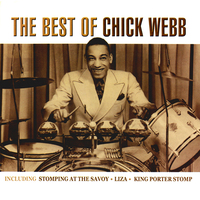 Rhythm Man1992
 The Complete Chick Webb & Ella Fitzgerald Decca Sessions (1934–1941)2013The Ultimate Collection2009Strictly Jive1999Spinnin’ the Webb1998Swingsation: Ella Fitzgerald With Chick Webb1998The Classic Tracks Chick Webb1996The Quintessence: New York City 1929–19391995Ella Fitzgerald With the Chick Webb Band (1935-1938)1995Spinnin' the Webb: The Original Decca Recordings1994A Legend - Volume One (1929-1936)1967Stompin’ at the Savoy1967Ella Sings, Chick Swings