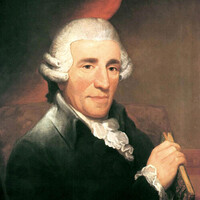
Joseph Haydn
Joseph Haydn (1732–1809) was a leading composer of the classical period, called the “Father of the symphony” and “Father of the string quartet”. (The name “Franz” was not used in the composer’s lifetime; scholars (and most music publishers and recording companies) use the historically more accurate form of his name, rendered in English as “Joseph Haydn”.) Haydn was born on 31st March or 12st April 1732 in Rohrau, Austria village near the Hungarian border. His father was Matthias Haydn, a wheelwright who also served as “Marktrichter”, an office akin to village mayor. Haydn’s mother, the former Maria Koller, had previously worked as a cook in the palace of Count Harrach, the presiding aristocrat of Rohrau. Neither parent could read music. However, Matthias was an enthusiastic folk musician, who during the journeyman period of his career had taught himself to play the harp. According to Haydn’s later reminiscences, his childhood family was extremely musical, and frequently sang together and with their neighbors. Haydn’s parents were perceptive enough to notice that their son was musically talented and knew that in Rohrau he would have no chance to obtain any serious musical training. It was for this reason that they accepted a proposal from their relative Johann Matthias Franck, the schoolmaster and choirmaster in Hainburg, that Haydn be apprenticed to Franck in his home to train as a musician. Haydn thus went off with Franck to Hainburg (ten miles away) and never again lived with his parents. At the time he was not quite six. Life in the Franck household was not easy for Haydn, who later remembered being frequently hungry as well as constantly humiliated by the filthy state of his clothing. However, he did begin his musical training there, and soon was able to play both harpsichord and violin. The people of Hainburg were soon hearing him sing soprano parts in the church choir. There is reason to think that Haydn’s singing impressed those who heard him, because two years later (1740), he was brought to the attention of Georg von Reutter, the director of music in St. Stephen’s Cathedral in Vienna, who was touring the provinces looking for talented choirboys. Haydn passed his audition with Reutter, and soon moved off to Vienna, where he worked for the next nine years as a chorister, the last four in the company of his younger brother Michael. Like Franck before him, Reutter didn’t always bother to make sure Haydn was properly fed. The young Haydn greatly looked forward to performances before aristocratic audiences, where the singers sometimes had the opportunity to satisfy their hunger by devouring the refreshments. Reutter also did little to further his choristers’ musical education. However, St. Stephen’s was at the time one of the leading, musical centers in Europe, where new music by leading composers was constantly being performed. Haydn was able to learn a great deal by osmosis simply by serving as a professional musician there. In 1749, Haydn had matured physically to the point that he was no longer able to sing high choral parts. On a weak pretext, he was summarily dismissed from his job. He evidently spent one night homeless on a park bench, but was taken in by friends and began to pursue a career as a freelance musician. During this arduous period, which lasted ten years, Haydn worked many different jobs, including valet–accompanist for the Italian composer Nicola Porpora, from whom he later said he learned “the true fundamentals of composition”. He laboured to fill the gaps in his training, and eventually wrote his first string quartets and his first opera. During this time Haydn’s professional reputation gradually increased. In 1759, or 1757 according to the New Grove Encyclopedia, Haydn received his first important position, that of Kapellmeister (music director) for Count Karl von Morzin. In this capacity, he directed the count’s small orchestra, and for this ensemble wrote his first symphonies. Count Morzin soon suffered financial reverses that forced him to dismiss his musical establishment, but Haydn was quickly offered a similar job (1761) as assistant Kapellmeister to the Eszterházy family, one of the wealthiest and most important in the Austrian Empire. When the old Kapellmeister, Gregor Werner, died in 1766, Haydn was elevated to full Kapellmeister. As a liveried servant of the Eszterházys, Haydn followed them as they moved among their three main residences: the family seat in Eisenstadt, their winter palace in Vienna, and Eszterháza, a grand new palace built in rural Hungary in the 1760s. Haydn had a huge range of responsibilities, including composition, running the orchestra, playing chamber music for and with his patrons, and eventually the mounting of operatic productions. Despite the backbreaking workload, Haydn considered himself fortunate to have his job. The Eszterházy princes (first Paul Anton, then most importantly Nikolaus I) were musical connoisseurs who appreciated his work and gave him the conditions needed for his artistic development, including daily access to his own small orchestra. In 1760, with the security of a Kapellmeister position, Haydn married. He and his wife, the former Maria Anna Keller, did not get along, and they produced no children. Haydn may have had one or more children with Luigia Polzelli, a singer in the Eszterházy establishment with whom he carried on a long-term love affair, and often wrote to on his travels. During the nearly thirty years that Haydn worked in the Eszterházy household, he produced a flood of compositions, and his musical style became ever more developed. His popularity in the outside world also increased. Gradually, Haydn came to write as much for publication as for his employer, and several important works of this period, such as the Paris symphonies (1785–6) and the original orchestral version of The Seven Last Words of Christ (1786), were commissions from abroad. Around 1781 Haydn established a friendship with Mozart, whose work he had already been influencing by example for many years. According to later testimony by Stephen Storace, the two composers occasionally played in string quartets together. Haydn was hugely impressed with Mozart’s work, and in various ways tried to help the younger composer. During the years 1782 to 1785, Mozart wrote a set of string quartets thought to be inspired by Haydn’s Opus 33 series. On completion he dedicated them to Haydn, a very unusual thing to do at a time when dedicatees were usually aristocrats. The extremely close ‘brotherly’ Mozart-Haydn connection may be an expression of Freemasonic sympathies as well: Mozart and Haydn were members of the same Masonic lodge. Mozart joined in 1784 in the middle of writing those string quartets subsequently dedicated to his Masonic brother Haydn. This lodge was a specifically Catholic rather than a deistic one. In 1789, Haydn developed another friendship with Maria Anna von Genzinger (1750–93), the wife of Prince Nicolaus’s personal physician in Vienna. Their relationship, documented in Haydn’s letters, was evidently intense but platonic. The letters express Haydn’s sense of loneliness and melancholy at his long isolation at Eszterháza. Genzinger’s premature death in 1793 was a blow to Haydn, and his F minor variations for piano, Hob. XVII:6, which are unusual in Haydn’s work for their tone of impassioned tragedy, may have been written as response to her death. The London journeys In 1790, Prince Nikolaus died and was succeeded by a thoroughly unmusical prince who dismissed the entire musical establishment and put Haydn on a pension. Thus freed of his obligations, Haydn was able to accept a lucrative offer from Johann Peter Salomon, a German impresario, to visit England and conduct new symphonies with a large orchestra. The visit (1791-2), along with a repeat visit (1794-5), was a huge success. Audiences flocked to Haydn’s concerts, and he quickly achieved wealth and fame: one review called him “incomparable.” Musically, the visits to England generated some of Haydn’s best-known work, including the Surprise, Military, Drumroll, and London symphonies, the Rider quartet, and the Gypsy Rondo piano trio. The only misstep in the venture was an opera, L’anima del filosofo, which Haydn was contracted to compose, and paid a substantial sum of money for. Only one aria was sung at the time, and 11 numbers were published; the entire opera was not performed until 1950. Final years in Vienna Haydn actually considered becoming an English citizen and settling permanently, as composers such as Handel had before him, but decided on a different course. He returned to Vienna, had a large house built for himself, and turned to the composition of large religious works for chorus and orchestra. These include his two great oratorios The Creation and The Seasons and six masses for the Eszterházy family, which by this time was once again headed by a musically-inclined prince. Haydn also composed the last nine in his long series of string quartets, including the Emperor, Sunrise, and Fifths quartets. Despite his increasing age, Haydn looked to the future, exclaiming once in a letter, “how much remains to be done in this glorious art!” In 1802, Haydn found that an illness from which he had been suffering for some time had increased greatly in severity to the point that he became physically unable to compose. This was doubtless very difficult for him because, as he acknowledged, the flow of fresh musical ideas waiting to be worked out as compositions did not cease. Haydn was well cared for by his servants, and he received many visitors and public honours during his last years, but they cannot have been very happy years for him. During his illness, Haydn often found solace by sitting at the piano and playing Gott erhalte Franz den Kaiser, which he had composed himself as a patriotic gesture in 1797. This melody later became used for the Austrian and German national anthems, and is the national anthem of the Federal Republic of Germany. Haydn died on 31st May 1809 following an attack on Vienna by the French army under Napoleon. Among his last words was his attempt to calm and reassure his servants as cannon shots fell on the neighbourhood. Haydn is often described as the “father” of the classical symphony and string quartet. In fact, the symphony was already a well-established form before Haydn began his compositional career, with distinguished examples by Carl Philip Emmanuel Bach among others, but Haydn’s symphonies are the earliest to remain in “standard” repertoire. His parenthood of the string quartet, however, is beyond doubt: he essentially invented this medium singlehandedly. He also wrote many piano sonatas, piano trios, divertimentos and masses, which became the foundation for the Classical style in these compositional types. He also wrote other types of chamber music, as well as operas and concerti, although such compositions are now less known. Although other composers were prominent in the earlier Classical period, notably C.P.E. Bach in the field of the keyboard sonata (the harpsichord and clavichord were equally popular with the piano in this era) and J.C. Bach and Leopold Mozart in the symphony, Haydn was undoubtedly the strongest overall influence on musical style in this era. The development of sonata form into a subtle and flexible mode of musical expression, which became the dominant force in Classical musical thought, owed most to Haydn and those who followed his ideas. His sense of formal inventiveness also lead him to integrate the fugue into the classical style and to enrich the rondo form with more cohesive tonal logic, (see sonata rondo form). Haydn was also the principal exponent of the double variation form, that is variations on two alternating themes, which are often major and minor mode versions of each other.
Biography from Last.fm, available under CC BY-SA.
Country: AT
Deathdate: 1809-05-31
Disambiguation: composer
Gender: Male
Is Living: No
Albums
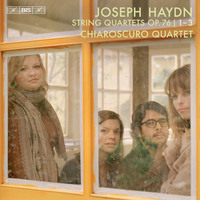 String Quartets, op. 76 1-32020
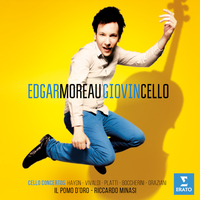 Giovincello2015
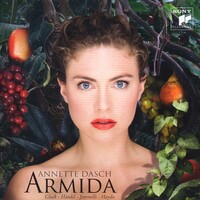 Armida2007
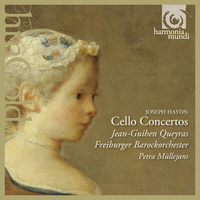 Cello Concertos2004
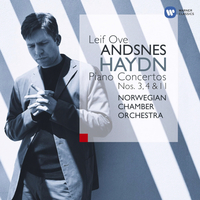 Piano Concertos nos. 3, 4, 112000
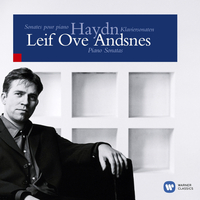 Piano Sonatas1999
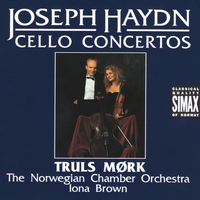 Cello Concertos1994
 Bach / Haydn / Schubert / Szymanowski2025Haydn 2032, no. 17: Per il Luigi2025String Quartets op. 33 4-62025Die Schöpfung2025The Complete Piano Trios, Volume 42025String Quartets op. 77 / Folk Music from Scotland2025Sein2025An Exhibition of Pictures, Nocturnes, Preludes and Sonatas2024London Symphonies nos. 94 & 99 / 95 & 982024Complete Symphonies2024Symphony No. 43 in E-Flat Major, Hob. I:43 "Mercury" & Symphony No. 49 in F Minor, Hob. I:49 "La passione"2024Haydn 2032, Vol. 16: The Surprise2024String Quartets, Vol. 182024Individuality – Fantasies for Piano2024Haydn: Late Symphonies • 4: Nos. 102, 103 “Drumroll” and 104 “London”2024Symphonies, Vol. 32-352024An Evening in Vienna 17842024For 2 Hands and 42024Franck, Haydn, Rachmaninoff2024The Seven Last Words of Christ2024Portraits of the Verbier Festival Chamber Orchestra, Vol. 12024Cello Concertos2024Late Symphonies • 3: Nos. 99, 100 ‘Military’, 101 ‘The Clock’2024The Complete Recorded Symphonies Conducted by Hermann Scherchen2024Complete Symphonies2024Symphonies 43 & 492024Symphonies, Vols. 28-312024Awaken2024The Seven Last Words of Christ2024The Complete Piano Trios, Volume 32024Haydn: Die Schopfung2024Haydn Symphonies Nos. 35 & 38 & 39 & 49 & 58 & 592024String Quartets, op.1, Vol. 172024Klemperer conducts Mozart & Haydn2024Baryton Trios: Treasures from the Esterháza Palace 22023Violinkonzerte, Doppelkonzert2023Late Symphonies • 2: Nos. 96 “The Miracle”, 97 and 982023Les sept dernières paroles du Christ en croix2023Haydn: Symphonies Nos. 95, 100 "Military" & 1022023Haydn - Paris Symphonies - Violin Concerto No. 1 (Live)2023Haydn: Symphonies Nos. 98, 101 "The Clock" & 104 "London"2023Haydn 2032, no. 14: L’impériale202348 Piano Sonatas2023Late Symphonies • 1: Nos. 93–952023BBC Music, Volume 31, Number 12: Symphony no. 49 “La Passione” Plus Works2023Three Piano Sonatas2023The Complete String Quartets Played on Period Instruments2023Symphony no. 57 / Symphony no. 67 / Symphony no. 682023Keyboard Sonatas2023Berühmte Streichquartette2023String Quartets, op. 20 no. 6, op. 64 no. 5 "The Lark", op. 76 no. 3 "Emperor"2023Prussian Quartets, op. 50 no. 3, no. 5 "The Dream", no. 6 "The Frog"2023The Seven Last Words of Our Saviour on the Cross op. 51b2023In nomine Domini2023Piano Trios2023String Quartets Op. 17/5, 33/2, 54/22023Piano Trios • 8: Nos. 5, 6, 7 and 13 / Divertimento, Hob. XIV:C12023String Quartets, op. 33 1-32023String Quartets, opp. 42 & 77 / Seven Last Words2023Stabat Mater2023String Quartets, op. 71 no. 1-3, Vol. 162023Mozart / Haydn / Schubert2023The Complete Piano Trios, Volume 22023Haydn 2032, no. 13: Hornsignal2023London Symphonies No. 101 & 1032022Symphonies 6, 7, 82022The Seven Last Words of Christ on the Cross (1840 version for flute & string quartet)2022Opus 542022Zauberoper2022London Symphony no. 103 / Theresienmesse2022The Seven Last Words of Christ2022String Quartets, op. 42, 77 & 1032022The Complete Piano Concertos2022String Quartets, Vol. 152022Missa in tempore belli2022Haydn: Cello Concertos in C & D / Hindemith: Trauermusik2022Piano Sonatas, Vol. 112022The Complete Piano Trios, Volume 12022Haydn 2032, no. 12: Les jeux et les plaisirs2022In Memoriam: Françoise Groben2022Six Divertimenti2022Haydn 27: Symphonies nos. 3, 33, 108, 142022Haydn: Sinfonie Nr. 93 D-Dur / Sinfonie Nr. 94 G-Dur (Mit Dem Paukenschlag) / Sinfonie Nr. 95 C-moll / Sinfonie Nr. 98 B-Dur / Sinfonia Concertante / Mozart: Sinfonie G-moll KV 1832022Great Recordings2022Piano Trios • 7: Nos. 16, 19, 35, 37 and 412022Piano Sonatas2022Trios avec piano2022Sturm und Drang: The Germanic Sonata in the 18th century2022Piano Trios • 6: Nos. 15, 32, 38, 39 and 402022Haydn, Strauss & Schumann: Orchestral Works (live)2022Haydn 26: Symphonies nos. 107, 11, 32, 152022Die Jahreszeiten2022Grigory Sokolov at Esterházy Palace (Live)2022
EPs
Others
String Quartet in D major, Op. 64 No. 5 "The Lark":2012Cello Concerto No. 1 in C major, Hob. VIIb:1 (Munich Chamber Orchestra feat. cello: Alexandre Bouzlov)2007String Quartets Op. 64 Nos. 1-3Sinfonien - Symphonies 88, 89, 92 'Oxford'Symphonies No. 48, No. 59, No. 92The Complete Haydn MassesSonatas Nos.54, 55, 59, 60, 62 / Dezso RankiHaydn - Symfonins faderLandscape Classics Series, No. 38Landscape Classics Series No. 37Landscape Classics Series No. 35Landscape Classics Series, No. 62Landscape Classics Series, No. 34Haydn: Symphonies Nos. 94, 101, & 103Haydn: La fedelta premiata, Symphonies 43, 44, 45Symphonies, Nos. 100, 102, & 104Landscape Classics Series No. 36PaukenmesseMass in B‐flat major Hob. XXII:12 “Theresienmesse”; Mass in G major Hob XXII:6 “Sancti Nicolai”Concerti for Flute and Oboe, disc 2L'imperiale & Surprise SymphonBeethoven - HaydnSix String Quartets Op. 76 (Erdödy Quartets) (disc 2)Trios Nos 32, 33, 34, 41Schöpfungsmesse / Sinfonia in B majorLerchenquartett / KaiserquartettSymphony No. 82 "L'ours" / Symphony No. 84Haydn: The 13 Part-Songs / Bach: Wachet auf, ruft uns die StimmeHaydn: Trios Nos 43-45 (Hob XV:27-29) pour pianoforte, violon & violoncelleSymphonies 78, 79, 80, 81Piano Trio in E-flat major, Hob.XV:29Piano Sonata no. 33, Hob. XVI:20The Seven Last Words Of Christ On The CrossQuartet in G major, Hob. III:75The "Clock" Symphony - The "Surprise" SymphonyGreat Haydn Symphonies - The Sturm and Drang EraHaydn Trios - Gamerith ConsortSymphonien / Symphonies No. 84, 85 & HOB 1/21String Quartets - Volume 1 Op.20 No.2, Op.50 No.1, Op.76 No.2Complete String QuartetsSymphony no. 90 in C major / Symphony no. 91 in E-flat major / Symphony no. 92 in G major (Oxford)London symphonies the SeasonsHarpsichord Concerto in D Major / Violin–Harpsichord Concerto / “Hornsignal” SymphonySymphony N° 104 "London" / Variations in F minorScots SongsSymphonies 94, 96, 103Haydn 2032, no. 15: La ReineHaydn-Hummel: Concerti per tromba e orchestraHaydn: Andante & Variations in F minor / Beethoven: Piano Sonata no. 14 "Moonlight", 32 Variations in C minor / Chopin: Scherzo no. 3 in C-sharp minor / Kodály: Dances of Marosszék / Mozart; Piano SoFavourite SymphoniesRecollection. Haydn SongsPiano RecitalHaydn: Mass in Time of War (Missa in tempore belli)TrompetenkonzertePiano Trios, Vol. 2Piano TriosKrommer‐Kramar, Haydn: Oboe Concertos / Mozart: Sinfonia ConcertanteSymphonies nos. 73 & 96London SymphoniesL’anima del filosofo, Hob. XXVIII:13String Quartets, Vol. 20The CreationDie Schöpfung / Die Jahreszeiten / Canzonettas & AriasHaydn Edition Volume 2 - Piano TriosHaydn Edition Volume 8 - ConcertosViolin Concertos • Symphony No. 22Huhn jagd königinSchubert: Quatuor no. 10 · Haydn: Quintette KV 515 · Mozart: Quatuor op. 20 no. 5Fearless6 "Erdődy" Quartets Op. 76Die Londoner Sinfonien