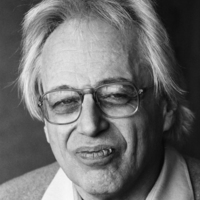
György Ligeti
György Sándor Ligeti; (May 28, 1923 – June 12, 2006) was a Jewish Hungarian composer born in Romania who later became an Austrian citizen. Ligeti received his initial musical training in the conservatory at Kolozsvár (Cluj, Transylvania, Romania). His education was interrupted in 1944 when, as a Jew, he was forced to labor by the Nazis. At the same time his parents, brother, and other relatives were deported to the Auschwitz concentration camp, his mother being the only survivor. Following the war, Ligeti returned to his studies in Budapest, graduating in 1949. He studied under Pál Kadosa, Ferenc Farkas, Zoltán Kodály, and Sándor Veress. He went on to do ethnomusicological work on Romanian folk music, but after a year returned to his old school in Budapest, this time as a teacher of harmony, counterpoint and musical analysis. However, communications between Hungary and the west had been cut off by the then communist government, and Ligeti had to secretly listen to radio broadcasts to keep abreast of musical developments. In December of 1956, two months after the Hungarian revolution was put down by the Soviet Army, he fled to Vienna and eventually took Austrian citizenship. Before Ligeti emigrated to the West, his work was limited by political repression and censorship, which restricted access to new musical ideas and discouraged public presentation of experimental music. His publications of those years included only folksong arrangements and music based on Romanian or Hungarian folk music. His arrival in Vienna late in 1956 therefore provided him with fresh opportunities. He was introduced to key figures in the avant-garde of western European music, notably Karlheinz Stockhausen, Gottfried Michael Koenig and Herbert Eimert. Eimert invited Ligeti to join the Electronic Music Studio of Westdeutscher Rundkfunk (West German Radio) in Cologne in 1957, and there Ligeti had the freedom to develop his style, consolidating musical ideas that had begun to emerge in his scores as early as the late 1940s. His electronic composition Artikulation (1958) and the orchestral Apparitions (1958-59), the first pieces in the mature style, attracted critical attention, and the premiere of Apparitions at the ISCM Festival in 1960 launched his international career. The success of Apparitions was confirmed by Atmosphères (1961) and the organ work Volumina (1961-62), making clear that Ligeti was forging for Western music a powerful alternative to post-Webern serialism. A key feature of his style was the use of extraordinarily dense polyphony, which he called “micropolyphony” -- complexes of musical color and texture so rich and intense that they virtually dissolved the distinctions of melody, harmony and rhythm. At the same time, Ligeti experimented with a coloristic language that was no less polyphonic but was built on the kaleidoscopic use of articulate speech sounds and inflections, as heard in Aventures (1962) and Nouvelles Aventures (1962-65). His music throughout the 1960s relied on one or both of these contrasting techniques. In the later 60s Ligeti injected a renewed contrapuntal complexity into his work, beginning with Requiem (1963-65) and Lux aeterna (1966). Requiem made a powerful impression at its Stockholm premiere in 1965, and it went on to win the Bonn Beethoven Prize in 1967. The Cello Concerto (1966) is closely related to Lux aeterna (itself a reflection of Requiem) in sound and design -- a combination of dazzling intricacy and the most lucid of musical images. Two years after its premiere, Lux aeterna -- along with Atmosphères and Requiem -- reached a mass audience when an excerpt from the score was used on the soundtrack and the best-selling soundtrack recording of the Stanley Kubrick film 2001: A Space Odyssey. In the 1970s, Ligeti’s writing became more transparent, even melodic, though in a highly personal, elusive manner. The flickering melodic shapes of Melodien (1971) seem to be a step ahead of the listener’s ear, and, in later works, he transforms the idea of melody and harmonic structure through the use of micro-intervals and deviations from the tempered scale. As early as Ramifications (1968-69), Ligeti wrote for two string ensembles that had been tuned a quarter-tone apart. Wit and satire color the composer’s later work as well, occassionally with scathing results. The work 0’00”, perhaps the shortest known composition, pokes fun at John Cage’s 4’33”. In a similar vein, The Future of Music (1961), for non-speaking lecturer and audience, ridicules the idea of performance art and, at the same time, questions the nature of musical communication. The opera Le Grand Macabre (S2K 62312), premiered in Stockholm in 1978, is suffused with dark comedy, though in general the opera relates an ominous tale. Ligeti’s ever-evolving style shifted again in the 1980s, when he left behind the static structures of his earlier works and began working with dynamic polyrhythmic techniques. The Piano Concerto (1985-88) is typical of this period -- the composer himself considers it his most complex and difficult score, but it immediately disarms the listener. After 1956 Ligeti lived in Germany and then Austria, where he became a citizen in 1967. For many years he was a visiting professor of composition at the Stockholm Academy of Music, and from 1973 until 1989 he served as professor of composition at the Hamburg Music Academy. In 1972 he spent a year as a visiting professor and composer-in-residence at Stanford University. Works: Opera _ Aventures (1962) _ Nouvelles Aventures (1962-65) _ Le Grand Macabre (1975-77, second version 1996) Orchestral _ Concert românesc (Romanian Concert) (1951) _ Apparitions (1958-59) _ Atmosphères (1961) _ Lontano (1967) _ Ramifications, for string orchestra or 12 solo strings (1968-69) _ Chamber Concerto, for 13 instrumentalists (1969-70) _ Melodien (1971) _ San Francisco Polyphony (1973-74) Concertante _ Cello Concerto (1966) _ Double Concerto for Flute, Oboe and Orchestra (1972) _ Piano Concerto (1985-88) _ Violin Concerto (1992) _ Hamburg Concerto, for Horn and Chamber Orchestra with 4 Obligato Natural Horns (1998-99, revised 2003) Vocal/Choral _ Requiem, for Soprano and Mezzo Soprano solo, mixed Chorus and Orchestra (1963-65) _ Lux Aeterna, for 16 solo voices (1966) _ Clocks and Clouds, for 12 female voices (1973) _ Nonsense madrigals, for 6 male voices (1988-1993) _ Síppal, dobbal, nádihegedüvel (With Pipes, Drums, Fiddles) (2000) Chamber/Instrumental _ Sonate, for solo cello (1948/1953) _ Andante and Allegro, for string quartet (1950) _ Balad_ _i joc (Ballad and Dance), for two violins (1950) _ Six Bagatelles for Wind Quintet (1953) _ String Quartet No. 1 Métamorphoses nocturnes (1953-54) _ String Quartet No. 2 (1968) _ Ten Pieces for Wind Quintet (1968) _ Trio for Violin, Horn and Piano (1982) _ Hommage à Hilding Rosenberg, for violin and cello (1982) _ Sonata for Solo Viola (1991-94) Keyboard Piano _ Induló (March), four-hands (1942) _ Polifón etüd (Polyphonic Étude), four-hands (1943) _ Capriccio nº 1 & nº 2 (1947) _ Invention (1948) _ Három lakodalmi tánc (Three Wedding Dances), four-hands (1950) _ Sonatina, four-hands (1950) _ Musica ricercata (1951-1953) _ Trois Bagatelles (1961) _ Three Pieces for Two Pianos (1976) _ Études pour piano, Book 1, six etudes (1985) _ Études pour piano, Book 2, eight etudes (1988-94) _ Études pour piano, Book 3, four etudes (1995-2001) Organ _ Ricercare - Ommagio a Girolamo Frescobaldi (1951) _ Volumina (1961-62, revised 1966) _ Two Studies for Organ (1967, 1969) Harpsichord _ Continuum (1968) _ Passacaglia ungherese (1978) _ Hungarian Rock (Chaconne) (1978) Electronic _ Glissandi, electronic music (1957) _ Artikulation, electronic music (1958) Miscellaneous _ Poème Symphonique for 100 metronomes (1962) Awards _ Grawemeyer Award for Music Composition (Etudes for Piano) (1986) _ Schock Prize for Musical Arts (1995) _ Wolf Prize, Israel (1996) _ Kyoto Award (2001) _ Kossuth Price, Hungary (2003) _ Polar Music Prize (2004) Due to a misspelling of his name, he has TWO different profiles on Last.FM. See http://www.last.fm/music/Gyorgi+Ligeti/
Biography from Last.fm, available under CC BY-SA.
Country: HU
Deathdate: 2006-06-12
Disambiguation: Austrian-Hungarian composer
Gender: Male
Is Living: No
Albums
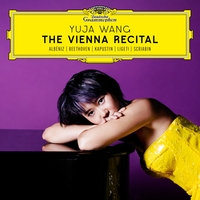 The Vienna Recital2024
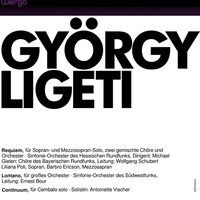 Requiem / Lontano / Continuum1969
 Violin, Piano & Romanesc Concertos2025Ferne Stimmen2025Barber: Adagio - Orchestral Favourites2025Ligeti: String Quarters nos. 1 & 2 / Bartók: String Quartet no. 42025Eastern Reflections2024Horn Trios2024Ligeti2024Responses to Ligeti2024Hungarian Songs2023Études / Capriccios2023Kodály & Ligeti: Sonatas for Solo Cello / Ligeti: Sonata for Viola Solo2023Modern Horn Trios2023Complete Works for a cappella Choir2023Metamorphosis Ligeti2023Duo Solo2022Bartók / Ligeti / Veress / Eötvös2022Not all cats are grey2021Michael Gielen Edition, Vol. 10: Musik nach 19452021The 18 Études2021Kodály: Duo / Solo Cello Sonata / Ligeti: Solo Cello Sonata2020Alles Walzer, einmal anders!2019Quartets2019Violin Concertos2019Quintettes à vent2018The Berlin Recital: Rachmaninov / Scriabin / Ligeti / Prokofiev2018Strauss: Schlagobers / Debussy: Jeux / Ligeti: Melodien2018Mysteries2018Continuum2018Ravel / Franck / Ligeti / Messiaen2018Kontrastprogramm2017Requiem2017Bloch: Suites for Solo Cello / Dallapiccola: Ciaccona, intermezzo e adagio / Ligeti: Sonata for Solo Cello2017Labyrinth2017Piano Concerto / Cello Concerto / Chamber Concerto / Melodien2016Six bagatelles / Kammerkonzert / Dix pièces pour quintette à vent2016Bartók / Ligeti2015Métamorphoses2015Ludus Verbalis Vol. III & IV2015Cello Concerto / Mysteries of the Macabre / Piano Concerto2014Byrd / Bach / Ligeti2014Fulgurances - Works for Piano of the XXth Century2013Bartók / Kurtág / Ligeti2013Violin Concerto / Lontano / Atmosphères / San Francisco Polyphony2013Métamorphoses nocturnes2013volumina - orgelwerke2013Ligeti: String Quartets / Barber: Adagio2013Musical Toys2013Musica ricercata: Música para piano de Ligeti, Messiaen, Takemitsu y Cage20121948-2001: A Ligeti Odyssey2012Bartók / Eötvös / Ligeti2012Music for Viola2012Ligeti / Pintscher / Cage / Xenakis2012Études pour piano2012Ligeti / Beethoven2012Horn Trios2012Ligeti / Desenclos / Bozza / Nagao2011Requiem / Apparitions / San Francisco Polyphony2011Bartók: First Rhapsodie / Deux portraits / Kodály: Dances from Galánta / Háry János Suite / Ligeti: Romanian Concerto2010Metamorphosis2010Ligeti’s “Le Grand Macabre”2010String Quartets 1 & 2 / Lux Aeterna / Ramifications / Choral Works / Six Bagatelles2010String Quartets nos. 1 and 2 / Andante and Allegretto2009Adventures in Sound2009Alone: Works for Solo Cello2009Sonatas & Études2009Ligeti: Lux Aeterna / Heppener: Im Gestein2008Ludwig Quandt Solo2008Complete Piano Music2006Clear or Cloudy: Complete Recordings on Deutsche Grammophon2006La Langue maternelle2005String Quartets 1 & 22005Nancarrow: String Quartet no. 3 / Ligeti: String Quartet no. 2 / Dutilleux: String Quarted "Ainsi la nuit"2005BBC Music, Volume 12, Number 11: Wind Quintets2004The Ligeti Project V2004String Quartets nos. 1 & 2 / Ramifications2003Works for Piano, Two Pianos and Four Hands2003The Ligeti Project IV: Hamburg Concerto / Double Concerto / Ramifications / Requiem2003Études Pour Piano2003Études: Books I and II (1-14a)2003The Ligeti Project III2002Études pour piano2002The Ligeti Project II: Lontano / Atmosphères / Apparitions / San Francisco Polyphony / Concert românesc2002Aventures2002Opus Number Zoo: Twentieth Century Wind Quintets2002Trios for Violin, Horn and Piano2001Piano Works2001Mozart, Reicha, Ligeti, Villa-Lobos2001Ligeti | Gamelan2001Ligeti | Banda Linda2001Mysterious Morning2001Nuits – weiß wie Lilien2001The Ligeti Project I: Melodien / Chamber Concerto / Piano Concerto / Mysteries of the Macabre2000Un portrait2000Works for Piano & Cembalo2000Works For Solo Viola2000Ligeti: Violin Concerto / Nørgård: Helle Nacht / Sonata "The Secret Melody"2000Œuvres pour violoncelle seul2000Le Grand Macabre1999