
Jimmy Reed
Mathis James "Jimmy" Reed (September 6, 1925 – August 29, 1976) was an American blues singer, guitarist, harmonica player and songwriter, notable for bringing his distinctive style of blues to mainstream audiences. Reed was a major player in the field of electric blues. His distinctive voice, piercing harmonica and hypnotic guitar patterns were one of the blues' most easily identifiable sounds in the 1950s and 1960s, and had a significant impact on many rock and roll artists who followed, such as Elvis Presley, Billy Gibbons (ZZ Top) and the Rolling Stones. Reed was born in Dunleith, Mississippi, in 1925, learning the harmonica and guitar from Eddie Taylor, a close friend. After spending several years busking and performing in the area, Reed moved to Chicago, Illinois, in 1943 before being drafted into the US Navy during World War II. In 1945, Reed was discharged and moved back to Mississippi for a brief period, marrying his girlfriend, Mary "Mama" Reed, before moving to Gary, Indiana to work at an Armour & Co. meat packing plant. Mama Reed appears as an uncredited background singer on many of his songs, notably the major hits "Baby What You Want Me to Do", "Big Boss Man" and "Bright Lights, Big City". By the 1950s, Reed had established himself as a popular musician and joined the "Gary Kings" with John Brim, as well as playing on the street with Willie Joe Duncan. Reed failed to gain a recording contract with Chess Records, but signed with Vee-Jay Records through Brim's drummer, Albert King. At Vee-Jay, Reed began playing again with Eddie Taylor and soon released "You Don't Have to Go", his first hit record. This was followed by a long string of hits. Reed maintained his reputation despite his rampant alcoholism; sometimes his wife had to help him remember the lyrics to his songs while recording. In 1957, Reed developed epilepsy, though the condition was not correctly diagnosed for a long time, as Reed and doctors assumed it was delirium tremens. In spite of his numerous hits, Reed's personal problems prevented him from achieving the same level of fame as other popular blues artists of the time, though he had more hit songs than many others. When Vee-Jay Records closed down, Reed's manager signed a contract with the fledgling ABC-Bluesway label, but Reed was never able to score another hit. In 1968 he toured Europe with the American Folk Blues Festival. Jimmy Reed died in Oakland, California in 1976, of respiratory failure, eight days short of his 51st birthday. He is interred in the Lincoln Cemetery in Worth, Illinois. In 1991 Reed was posthumously inducted into the Rock and Roll Hall of Fame. The Rolling Stones have cited Reed as a major influence on their sound, and their early set lists included many of Reed's songs, including tracks like "Ain't That Lovin' You Baby", "The Sun is Shining" (also played at the Stones' 1969 Altamont concert), "Bright Lights, Big City" and "Shame, Shame, Shame" ; the B-side of their February 1964 hit single "Not Fade Away" was a pastiche of "Shame, Shame, Shame" entitled "Little by Little". Their first album, The Rolling Stones, (subtitled England's Newest Hit Makers in America), released in April 1964, featured both "Little by Little" and their cover of Reed's "Honest I Do". The Yardbirds recorded an instrumental dedicated to him entitled "Like Jimmy Reed Again", which was released on the "definitive edition" of their album Having a Rave Up. Van Morrison's group Them covered "Bright Lights, Big City" and "Baby, What You Want Me To Do", both of which can be found on The Story of Them Featuring Van Morrison. "Big Boss Man" was sung regularly by Ron "Pigpen" McKernan with the Grateful Dead during the 1960s and early 1970s and appears on their live album Skull and Roses. It was revived a few times by Jerry Garcia with the Dead during the 1980s. Bob Weir of the Dead also played it a few times with Kingfish in the mid 70s, and more recently with Ratdog. Phil Lesh also plays it with Phil & Friends. The Grateful Dead have also performed Baby What You Want Me to Do with Brent Mydland on vocals. Elvis Presley recorded several of Reed's songs, scoring a 1967 hit with "Big Boss Man" and recording several performances of "Baby, What You Want Me to Do" for his 1968 Comeback TV Special. (However, Presley's 1964 hit, "Ain't That Lovin' You Baby" is a different song than that recorded by Reed.) The song "Baby, What You Want Me to Do" was also covered by Wishbone Ash on their 1972 live album, Live Dates. "Baby What You Want Me to Do" was also frequently performed by Etta James and Hot Tuna. Johnny and Edgar Winter performed the song live in 1975 and included it on Johnny and Edgar Winter Together. Reed's recordings of "Big Boss Man" and "Bright Lights, Big City" were both voted onto the list of The Rock and Roll Hall of Fame's 500 Songs that Shaped Rock and Roll. Noted Austin, Texas musicians, Omar Kent Dykes and Jimmie Vaughan released an album entitled On the Jimmy Reed Highway as a tribute to Reed. Bill Cosby covered 4 of Reed's songs – "Bright Lights, Big City", "Big Boss Man", "Hush Hush" and "Aw Shucks, Hush Your Mouth" – on his 1967 album Silver Throat: Bill Cosby Sings. Steve Miller Band covered 5 of Reed's songs – "You're So Fine" on his 1968 album Sailor; "I Wanna Be Loved (But By Only You)", "Big Boss Man", "Caress Me Baby" and "Ain't That Lovin' You Baby" on his 1986 album Living in the 20th Century. Neil Young historically plays Reed's music to his audience before his shows. British punk pioneer Billy Childish and his band Thee Headcoats released an EP of Reed covers entitled The Jimmy Reed Experience on Get Hip Records in 1997.
Biography from Last.fm, available under CC BY-SA.
Country: US
Deathdate: 1976-08-29
Disambiguation: blues musician
Gender: Male
Is Living: No
Albums
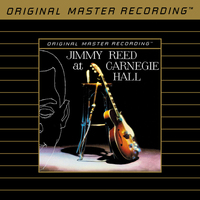 Jimmy Reed at Carnegie Hall1961
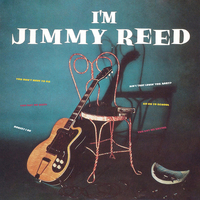 I'm Jimmy Reed1958
 You're Gonna Need My Help 1953 - 19622022Mr. Luck (The Complete Vee-Jay Singles)2017Ain't That Loving You Baby: Singles As & Bs 1953-19612013Blues Masters, Volume 22012The Best of the Vee-Jay Years2007Down in Mississippi2005Essential Boss Man: The Very Best of the Vee-Jay Years, 1953-19662004Big Boss Man2001The Blues...2001Liberty Hall Sessions2001The EP Collection...Plus2000Night Train Revisited1999Boss Man1999The Vee-Jay Box: The Complete Singles and Other Rarities1998Lost in the Shuffle1997Big Boss Man1996Honest I Do & Other Classics1996Jazz & Blues Collection 13: Jimmy Reed1995As Jimmy Is1995The Classic Recordings1994Jimmy Reed is Back1994The Vee-Jay Years1994Speak the Lyrics to Me, Mama Reed1993Live at Liberty Hall, Houston, TX, 19721992Charly Blues Masterworks, Volume 17: Bright Lights, Big City1992The Best of Jimmy Reed1991Bright Lights, Big City1990Greatest Hits1990Ride 'em on Down1989Jimmy Reed1989Bright Lights Big City1988Rockin' With Reed1987Jimmy Reed at Carnegie Hall1986Big Boss Blues198618 Greatest Hits: Compact Command Performances1986Got Me Dizzy1981Little Richard / Jimmy Reed / Solomon King / The Temptations / Dave “Baby” Cortez (La grande storia del rock)1981Street Talkin'1975Wailin' the Blues1969Down in Virginia1969Soulin'1967The New Jimmy Reed Album1967At Soul City1964T'Ain't No Big Thing But He Is Jimmy Reed1963Jimmy Reed Sings the Best of the Blues1963Jimmy Reed Plays 12 String Guitar Blues1963Just Jimmy Reed1962The Best of Jimmy Reed1961Found Love1960Now Appearing1960Rockin' With Reed1959Blues Master WorksGreatest HitsBlues Legends - Back To Back Vol. Three