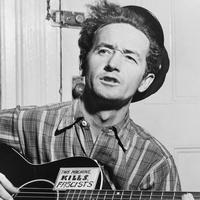
Woody Guthrie
Woodrow Wilson Guthrie (July 14, 1912 – October 3, 1967) was an American singer, songwriter, and composer widely considered to be one of the most significant figures in American folk music. His work focused on themes of American socialism and anti-fascism and has inspired many generations both politically and musically with songs such as "This Land Is Your Land" and "Tear the Fascists Down". Guthrie wrote hundreds of country, folk, and children's songs, along with ballads and improvised works. Dust Bowl Ballads, Guthrie's album of songs about the Dust Bowl period, was included on Mojo magazine's list of 100 Records That Changed the World, and many of his recorded songs are archived in the Library of Congress. Songwriters who have acknowledged Guthrie as a major influence on their work include Steve Earle, Bob Dylan, Lou Reed, Phil Ochs, Johnny Cash, Bruce Springsteen, Donovan, Robert Hunter, Harry Chapin, John Mellencamp, Pete Seeger, Andy Irvine, Joe Strummer, Billy Bragg, Jerry Garcia, Bob Weir, Jeff Tweedy, Tom Paxton, Brian Fallon, Sean Bonnette, and Sixto Rodríguez. Guthrie frequently performed with the message "This machine kills fascists" displayed on his guitar. Guthrie was brought up by middle-class parents in Okemah, Oklahoma. He left Okemah in 1929, after his mother, suffering from the Huntington’s disease that would later kill him too, was institutionalized. Guthrie followed his wayward father to Pampa, Texas, where the elder Guthrie was running a seedy flophouse. "Pampa was a Texas oil boom town and wilder than a woodchuck," Guthrie wrote in his autobiography, and though he lived there for just eight years, the town’s influence on him and his music was undeniable. He married at 20, but with the advent of the dust storms that marked the Dust Bowl period, he left his wife and three children to join the thousands of Texans and Okies who were migrating to California looking for employment. He worked at Los Angeles radio station KFVD, achieving some fame from playing hillbilly music, made friends with Will Geer and John Steinbeck, and wrote a column for the communist newspaper People's World from May 1939 to January 1940. Throughout his life, Guthrie was associated with United States communist groups, although he apparently did not belong to any. With the outbreak of World War II and the Molotov–Ribbentrop non-aggression pact the Soviet Union had signed with Germany in 1939, the anti-Stalin owners of KFVD radio were not comfortable with Guthrie's political leanings after he wrote a song praising the Molotov–Ribbentrop Pact and the Soviet invasion of Poland. He left the station, ending up in New York, where he wrote and recorded his 1940 album Dust Bowl Ballads, based on his experiences during the 1930s, which earned him the nickname the "Dust Bowl Troubadour". In February 1940, he wrote his most famous song, "This Land Is Your Land". He said it was a response to what he felt was the overplaying of Irving Berlin's "God Bless America" on the radio. Guthrie was married three times and fathered eight children. His son Arlo Guthrie became nationally known as a musician. Guthrie died in 1967 from complications of Huntington's disease. His first two daughters also died of the disease. Guthrie was born July 14, 1912, in Okemah, a small town in Okfuskee County, Oklahoma, the son of Nora Belle (née Sherman) and Charles Edward Guthrie. His parents named him after Woodrow Wilson, then Governor of New Jersey and the Democratic candidate who was elected as President of the United States in fall 1912. Charles Guthrie was an industrious businessman, owning at one time up to 30 plots of land in Okfuskee County. He was actively involved in Oklahoma politics and was a conservative Democratic candidate for office in the county. Charles Guthrie was reportedly involved in the 1911 lynching of Laura and L. D. Nelson. (Woody Guthrie wrote three songs about the event in the 1960s. He said that his father, Charles, became a member of the Ku Klux Klan during its revival beginning in 1915. Three significant fires impacted Guthrie's early life. In 1909, one fire caused the loss of his family's home in Okemah a month after it was completed. When Guthrie was seven, his sister Clara died after setting her clothes on fire during an argument with her mother, and, later, in 1927, their father was severely burned in a fire at home. Guthrie's mother, Nora, was afflicted with Huntington's disease, although the family did not know this at the time. What they could see was dementia and muscular degeneration. In the late 1950s and early 1960s, a new generation of young people were inspired by folk singers such as Guthrie. The American Folk Revival was beginning to take place, focused on the issues of the day, such as the civil rights movement and Free Speech Movement. Pockets of folk singers were forming around the country in places such as Cambridge, Massachusetts, and the Greenwich Village neighborhood of New York City. One of Guthrie's visitors at Greystone Park was the 19-year-old Bob Dylan, who idolized Guthrie. Dylan wrote of Guthrie's repertoire: "The songs themselves were really beyond category. They had the infinite sweep of humanity in them." After learning of Guthrie's whereabouts, Dylan regularly visited him. Woody Guthrie died at Creedmoor Psychiatric Center of complications of Huntington's disease on October 3, 1967. According to a Guthrie family legend, he was listening to his son Arlo's "Alice's Restaurant", a recording of which Arlo had delivered to Woody's bedside, shortly before he died. His remains were cremated and scattered at sea. By the time of Guthrie's death, his work had been discovered by a new audience, introduced to them through Dylan, Pete Seeger, Ramblin' Jack Elliott, his ex-wife Marjorie, and other new members of the folk revival, including his son Arlo Guthrie. For a December 3, 1944, radio show, Guthrie wrote a script explaining why he sang the kinds of songs he did, reading it on air: "I hate a song that makes you think that you are not any good. I hate a song that makes you think that you are just born to lose. Bound to lose. No good to nobody. No good for nothing. Because you are too old or too young or too fat or too slim too ugly or too this or too that. Songs that run you down or poke fun at you on account of your bad luck or hard traveling. I am out to fight those songs to my very last breath of air and my last drop of blood. I am out to sing songs that will prove to you that this is your world and that if it's hit you pretty hard and knocked you for a dozen loops, no matter what color, what size you are, how you are built, I am out to sing the songs that make you take pride in yourself and in your work".
Biography from Last.fm, available under CC BY-SA.
Country: US
Deathdate: 1967-10-03
Disambiguation: American singer-songwriter
Gender: Male
Is Living: No
Groups

Albums
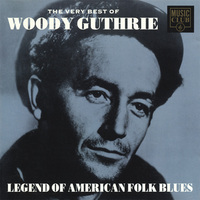 The Very Best of Woody Guthrie1992
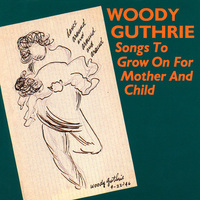 Songs to Grow On for Mother and Child1991
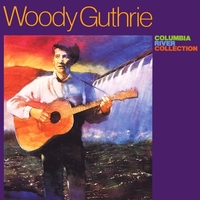 Columbia River Collection1988
 Essential Classics, Vol. 668: Woody Guthrie2024The Father Of American Folk (HD Remastered Edition, Doxy Collection)2018The Best of Woody Guthrie2016American Radical Patriot2013Bound for Glory2012100th Anniversary Collection2012Woody at 100: Selections from the Woody Guthrie Centennial Collection2012This Land Is Your Land: Essential Collection2011My Dusty Road2009Original Folk: The Best of Woody Guthrie2008This Machine Kills Fascists2008Dus't Can't Kill Me2007The Ultimate Collection2007The Beginning2007Live Wire2007Dust Can't Kill Me2007Hard Travelin’ Man2007Some Folk2006The First Rays of Protest in the Twentieth Century2006This Land is Your Land2006Woody Guthrie2006The Very Best of Woody Guthrie2006The Essential Woody Guthrie: Dust Bowl Balladeer2006Pastures of Plenty2004The Woody Guthrie Story2003Woody Guthrie - The folk Collection Disc 12003Forever Gold2003Dejavu Retro Gold Collection2002Hard Travellin'2002The Legendary2002Hard Luck Blues2001Ramblin' Round2000This Land Is Your Land2000900 Miles2000The Asch Recordings, Volumes 1–41999This Land Is Your Land: An All-American Children's Folk Classic1997Sing Out1996Early Masters1996Woody Guthrie's American Song: Cast Album1994Long Ways to Travel: The Unreleased Folkways Masters, 1944-19491994Woody's 20 Grow Big Songs1992One of a Kind1991Woody Guthrie1990Folkways: A Vision Revisited1988Original Recordings Made By Woody Guthrie 1940-19461977Poor Boy1968This Land Is Your Land1967Ballads of Sacco & Vanzetti1965Woody Guthrie Sings Folk Songs, Volume Two1964Library of Congress Recordings1964Woody Guthrie Sings Folk Songs1962Bound for Glory (The Songs and Story of Woody Guthrie)1956Ballads from the Dust Bowl1948Midnight Special1947Songs to Grow On (Work Songs)1947Nursery Days1946Struggle1945Songs by Woody Guthrie1944Songs for Victory: Music for Political Action1944Dust Bowl Ballads1940Cowboy SongsThe Best of the War YearsThe Early YearsBound For GloryThe Early Years