
Sonny Stitt
Edward "Sonny" Stitt (born Edward Boatner, Jr., February 2, 1924 – July 22, 1982), was an American jazz saxophonist of the bebop/hard bop idiom. He was one of the most well-documented saxophonists of his generation, recording over 100 albums. He was nicknamed the "Lone Wolf" by jazz critic Dan Morgenstern, in reference to his relentless touring and devotion to jazz. Early life Edward Boatner was born in Boston, Massachusetts[1] and grew up in Saginaw, Michigan. He had a musical background; his father, Edward Boatner, was a baritone singer, composer and college music professor, his brother was a classically trained pianist, and his mother was a piano teacher.[1] Boatner was soon adopted by another family, the Stitts, who gave him his new surname. He later began calling himself "Sonny". In 1943, Stitt first met Charlie Parker, and as he often later recalled, the two men found that their styles had an extraordinary similarity that was partly coincidental and not merely due to Stitt's emulation. Stitt's improvisations were more melodic/less dissonant than those of Parker. Stitt's earliest recordings were made in 1945 with Stan Getz and Dizzy Gillespie. He had also played in some swing bands, though he mainly played in bop bands. Stitt was featured in Tiny Bradshaw's big band in the early forties. Stitt replaced Charlie Parker in Dizzy Gillespie's band in 1945.[2] Stitt played alto saxophone in Billy Eckstine's big band alongside future bop pioneers Dexter Gordon and Gene Ammons from 1945 until 1956, when he started to play tenor saxophone more frequently, in order to avoid being referred to as a Charlie Parker imitator. Later on, he played with Gene Ammons and Bud Powell. Stitt spent time in a Lexington prison between 1948–49 for selling narcotics. Stitt, when playing tenor saxophone, seemed to break free from some of the criticism that he was imitating Charlie Parker's style, although it appears in the instance with Ammons above that the availability of the larger instrument was a factor. Indeed, Stitt began to develop a far more distinctive sound on tenor.[1] He played with other bop musicians Bud Powell and Eddie "Lockjaw" Davis, a fellow tenor with a distinctly tough tone in comparison to Stitt, in the 1950s and recorded a number of sides for Prestige Records label as well as albums for Argo, Verve and Roost. Stitt experimented with Afro-Cuban jazz in the late 1950s, and the results can be heard on his recordings for Roost and Verve, on which he teamed up with Thad Jones and Chick Corea for Latin versions of such standards as "Autumn Leaves." Stitt joined Miles Davis briefly in 1960, and recordings with Davis' quintet can be found only in live settings on the tour of 1960. Concerts in Manchester and Paris are available commercially and also a number of concerts (which include sets by the earlier quintet with John Coltrane) on the record Live at Stockholm (Dragon), all of which featured Wynton Kelly, Jimmy Cobb and Paul Chambers. However, Miles fired Stitt due to the excessive drinking habit he had developed, and replaced him with fellow tenor saxophonist Hank Mobley. Stitt, later in the 1960s, paid homage to one of his main influences, Charlie Parker, on the album Stitt Plays Bird, which features Jim Hall on guitar and at Newport in 1964 with other bebop players including J.J. Johnson. He recorded a number of memorable records with his friend and fellow saxophonist Gene Ammons, interrupted by Ammons' own imprisonment for narcotics possession. The records recorded by these two saxophonists are regarded by many as some of both Ammons and Stitt's best work, thus the Ammons/Stitt partnership went down in posterity as one of the best duelling partnerships in jazz, alongside Zoot Sims and Al Cohn, and Johnny Griffin with Eddie "Lockjaw" Davis. Stitt would venture into soul jazz, and he recorded with fellow tenor saxophonist Booker Ervin in 1964 on the Soul People album. Stitt also recorded with Duke Ellington alumnus Paul Gonsalves in 1963 for Impulse! on the Salt And Pepper album in 1963. Around that time he also appeared regularly at Ronnie Scott's in London, a live 1964 encounter with Ronnie Scott, The Night Has A Thousand Eyes, eventually surfaced, and another in 1966 with resident guitarist Ernest Ranglin and British tenor saxophonist Dick Morrissey. Stitt was one of the first jazz musicians to experiment with an electric saxophone (the instrument was called a Varitone), as heard on the albums What's New in 1966 and Parallel-A-Stitt in 1967. Later life In the 1970s, Stitt slowed his recording output slightly, and in 1972, he produced another classic, Tune Up, which was and still is regarded by many jazz critics, such as Scott Yanow, as his definitive record. Indeed, his fiery and ebullient soloing was quite reminiscent of his earlier playing. He also recorded another album with Varitone, Just The Way It Was - Live At The Left Bank in 1971 which was released in 2000. Stitt joined the all-star group Giants of Jazz, which also featured Art Blakey, Dizzy Gillespie, Thelonious Monk, Kai Winding and bassist Al McKibbon) and made albums for Atlantic Records, Concord Records and Emarcy Records. His last recordings were made in Japan. In 1982, Stitt suffered a heart attack, and he died on July 22 in Washington, D.C..[2]
Biography from Last.fm, available under CC BY-SA.
Country: US
Deathdate: 1982-07-22
Gender: Male
Is Living: No
Albums
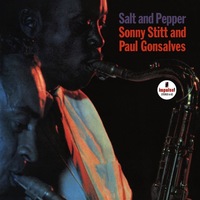 Salt and Pepper1963
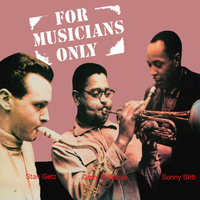 For Musicians Only1957
 istina (Live Belgrade '74)2025The Giants Of Jazz (Live Paris '72)2023Boppin' in Baltimore: Live at the Left Bank2023For Musicians Only - The Complete Sessions: Live & Studio2019Ornithology2018The Classic Albums Collection 1957-19632017England 1958 / Chicago 19572014Blows the Blues2012Swings the Most2012My Mother's Eyes2011Sonny Stitt Plays Arrangements From the Pen of Johnny Richards and Quincy Jones2011NYC Jazz Masters '722011The Complete Late Quartets2010Burnin'2009Complete Recordings2008Legends of the Saxophone2008No Greater Love2007Move On Over… The Eddie Buster Sides2007Stitt's Bits: The Bebop Recordings, 1949-19522006The Complete Original Quartet Recordings2005Work Done2005The Chronological Classics: Sonny Stitt 1951-19532004Modern Jazz Archive: Sonny Stitt2004In Walked Sonny2004Just Friends (Live At Bubba's Jazz Restaurant, 1981)2004Personal Appearance2004The Chronological Classics: Sonny Stitt 1950-19512003Goin' Down Slow2003Rockin' At The Hi-Hat2002Sonny Stitt Plays2002Inter-Action2002Left Bank Encores2002The Complete Roost Sonny Stitt Studio Sessions2001God Bless Jug and Sonny2001The Chronological Classics: Sonny Stitt 1946–19502001The Boss Men2001Brothers-42001Midnite Jazz & Blues: Waltz for Diane2000In Style2000Just the Way It Was: Live at the Left Bank2000Sonny, Sweets & Jaws2000What's New199912!1999Givin' Away The Store1999Legends of Acid Jazz, Vol. 21998How High the Moon1998Best Of The Rest1998Just In Case You Forgot How Bad He Really Was1998The Night Has a Thousand Eyes1997Made For Each Other1997The Bebop Boys1997I Should Care1996Legends of Acid Jazz1996Night Letter1996Jazz At The Hi-Hat Volume 21996The Jazz Masters1996Stitt's Bits1996Verve Jazz Masters 501995Sonny Stitt Plays Arrangements From The Pen Of Quincy Jones1995Soul Summit1994In Stockholm 1960 Complete1992Prestige First Sessions, Volume 21992Jazz at the Hi-Hat1992The Verve Years (1956-57)1992The Bop Fathers Volume 21991Eddie "Lockjaw" Davis & Sonny Stitt1991in Brazil - with Zimbo Trio1991Jaws & Stitt at Birdland1991Sits in With the Oscar Peterson Trio1991Stockholm 19601990Soul Classics1988The Last Stitt Sessions Vol. 1 & 21984Tune-Up!1983Sonny's Last Recordings - The Bubba Sessions1983Moonlight in Vermont1983Loose Walk1980Sonny's Back1980Everyday I Have the Blues1978Blues For Duke1978I Remember Bird1977Jug & Sonny1977Together Again for the Last Time1976My Buddy - Sonny Stitt Plays For Gene Ammons1976Forecast: Sonny & Red1976Mellow1975Satan1974The Champ1974Tornado1974So Doggone Good1973I Cover The Waterfront1973Black Vibrations1972The Giants of Jazz1972Prime Cuts1972The Best Of Sonny Stitt With Brother Jack McDuff1972Move on over.....1972Constellation1972You Talk That Talk!1971Donny Brook1970